
Joyful Relief For Baby Albino Elephant After Days Of Captivity
Time was of the essence as they raced against the clock to free the distressed calf from its ordeal.

Damjan Milenkovic
- Published on
In the rugged terrain surrounding Kruger National Park in South Africa, a distressing scene unfolded as a helpless baby elephant became ensnared in a deadly trap. For four agonizing days, the young calf struggled against the unforgiving grip of the snare, its desperate cries echoing through the wilderness.
The trap inflicted deep wounds on the elephant's face and ears, threatening its very survival. Amidst the vast expanse of wilderness, a glimmer of hope emerged in the form of dedicated volunteers from the Hoedspruit Endangered Species Centre.
Responding swiftly to reports of the trapped elephant, the team embarked on a rescue mission fraught with challenges and uncertainty. Time was of the essence as they raced against the clock to free the distressed calf from its ordeal.
Upon reaching the scene, the rescuers were met with a heart-wrenching sight. The baby elephant, now named Khanyisa, stood trapped and vulnerable, her once-majestic form marred by the cruel contraption that ensnared her.
With careful precision and unwavering determination, the team worked tirelessly to release Khanyisa from the snare's grasp. The rescue operation was not without its obstacles.
The thick underbrush and rugged terrain posed formidable barriers, testing the resilience and resourcefulness of the rescue team. Despite these challenges, their unwavering commitment to saving Khanyisa remained steadfast.
Finally, after hours of painstaking effort, Khanyisa was freed from the snare's clutches. However, the ordeal had taken its toll, leaving the young elephant with grievous injuries; deep wounds marred her face and ears.
With Khanyisa's immediate safety secured, the next challenge lay in ensuring her swift recovery and rehabilitation. Transported to the Hoedspruit Endangered Species Centre, Khanyisa found herself in the care of dedicated caregivers who were determined to see her through her healing journey.
Despite the severity of her injuries, there was hope that Khanyisa would make a full recovery under their watchful eye. The Hoedspruit Endangered Species Centre, originally established as a cheetah breeding project, had evolved into a sanctuary for wildlife in need.
Through their dedication to conservation and sustainability, they provided a lifeline for vulnerable species like Khanyisa, offering them a second chance at life in the wild.
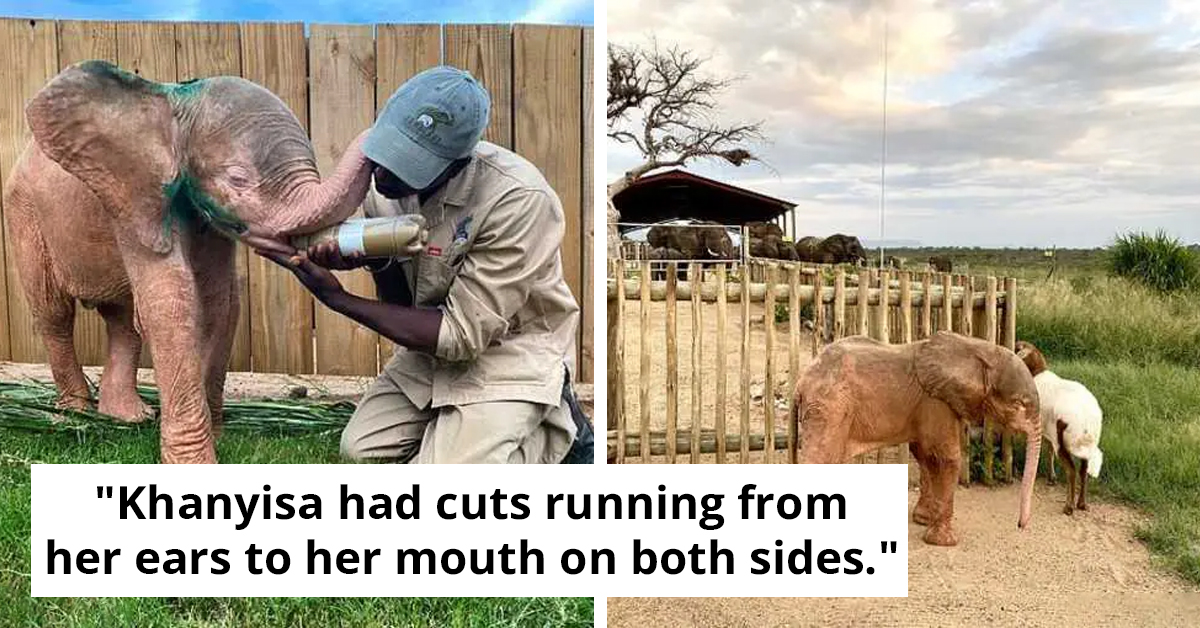
"Khanyisa had cuts running from her ears to her mouth on both sides."
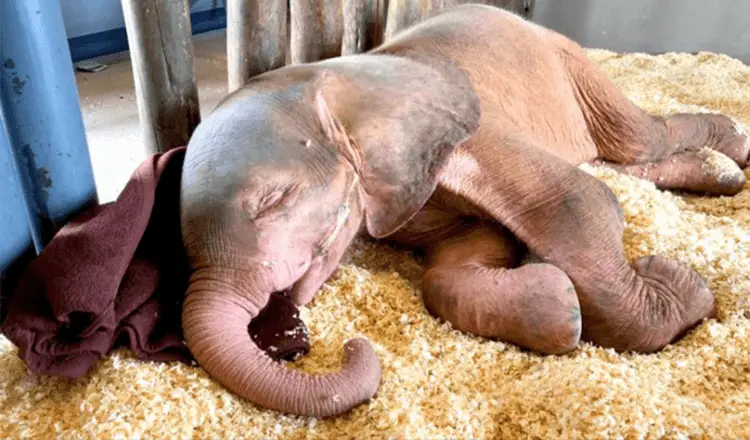
"Carer Herman from Hoedspruit Elephant Rehabilitation and Development looking after albino elephant calf, Khanyisa, after she was rescued from a barbed wire snare in South Africa."
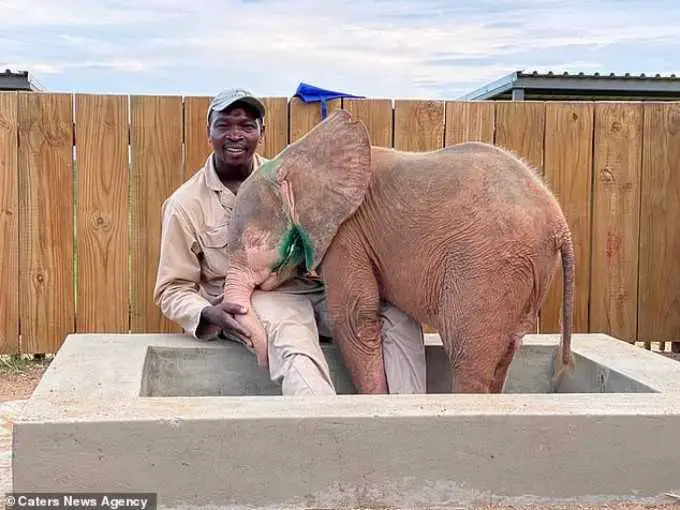
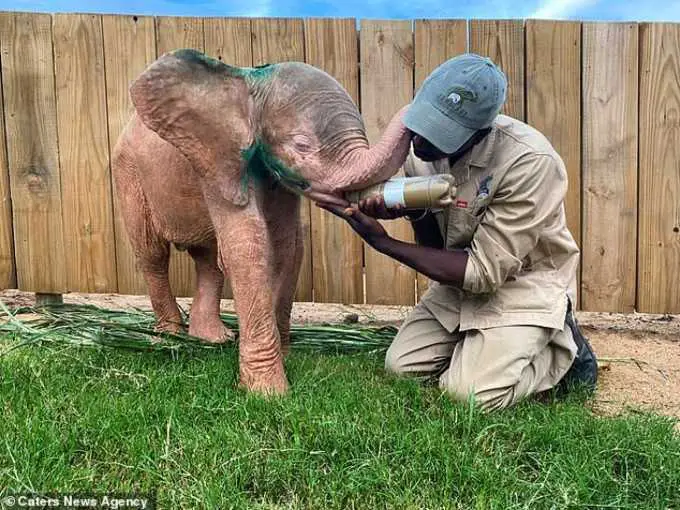
"Herman feeds Khanyisa with the bottle."
The Importance of Rapid Response
Wildlife rescue operations often operate under immense time constraints, especially when dealing with injured or trapped animals. Dr. Joyce Poole, an elephant behavior expert, emphasizes that the psychological stress on a young elephant can be profound, impacting its long-term health and social behaviors.
In her extensive work with elephants, Poole notes that immediate intervention can prevent irreversible trauma. She advocates for enhanced training for local wildlife officials to recognize signs of distress, enabling quicker, more effective responses that could save lives.
In the face of wildlife entrapment, it's crucial to consider prevention strategies. Dr. Chris Packham, a renowned naturalist, suggests that community education is key to reducing human-wildlife conflicts. He advocates for local workshops that teach proper waste management and wildlife-friendly farming practices.
Such initiatives can minimize the likelihood of animals venturing into human territories, thereby decreasing the risk of entrapment. Packham believes that engaging communities in conservation efforts fosters a sense of responsibility towards local wildlife, ultimately leading to more harmonious coexistence.
"Khanyisa at her new home."
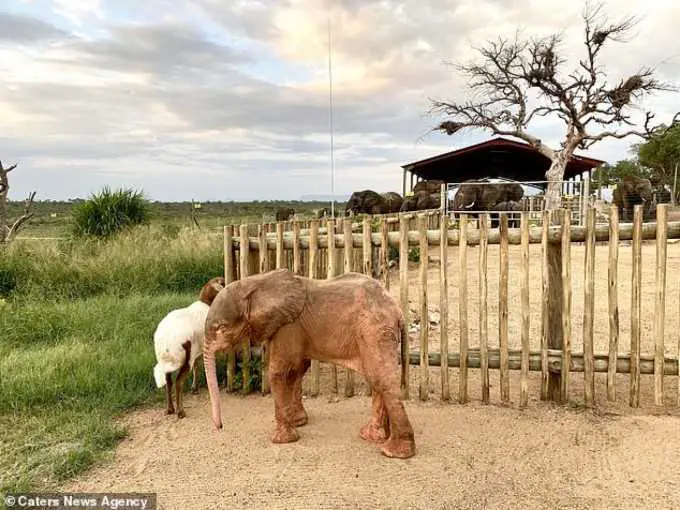
As Khanyisa embarked on her journey towards healing, her story captured people's hearts worldwide. Through her ordeal, Khanyisa became a symbol of hope, inspiring others to join the fight to protect and preserve our planet's precious wildlife.
Her story served as a rallying cry for conservation efforts worldwide, reminding us of the importance of standing together to safeguard the future of our planet's most vulnerable inhabitants. And as Khanyisa took her first steps towards recovery, she did so not just as an elephant, but as a symbol of resilience, courage, and hope for generations to come.
Practical Steps for Healing
Overall, the rescue of the baby albino elephant highlights a pressing need for enhanced wildlife protection strategies. Experts like Dr. Joyce Poole and Dr. Chris Packham underscore the importance of immediate action and community involvement in wildlife conservation. As they point out, addressing the root causes of human-wildlife conflict through education and awareness can lead to fewer incidents of entrapment.
By fostering a collaborative approach that includes local communities in conservation efforts, we can ensure a safer environment for both wildlife and humans, ultimately benefiting the ecosystem as a whole.