
Woman Gets Abused By Her Husband For Buying Him Sneakers With His Money, Gets Furious When She Returns It
There’s a thrill that comes with opening presents, but this one received a bad response.

Stephanie Roemer
- Published on

People keep their fingers crossed, waiting for Christmas or their birthdays, and they do this for one special thing—presents. There’s a thrill that comes with opening presents, and it’s because you never know what’s inside them.
When someone goes out of their way to buy you a gift, the best thing to do is appreciate them. When people buy you gifts, it means they care about you and have you in mind.
But for the Redditor in today’s story, she received a bad response to her kind gesture. She took to the AITA subreddit community to present her issue and hear what other Redditors thought about her actions.
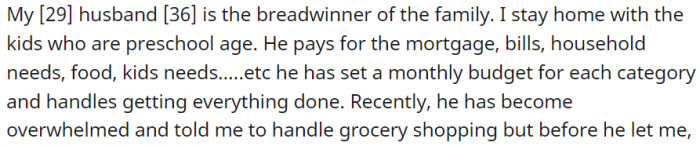
It happens that the 29-year-old OP is married with kids, and her husband, who is 36, is the breadwinner of the family as he pays all the bills. Her husband asked her to handle grocery shopping, but first, she’d have to list what she wanted to buy so he would know how much that would leave his account.
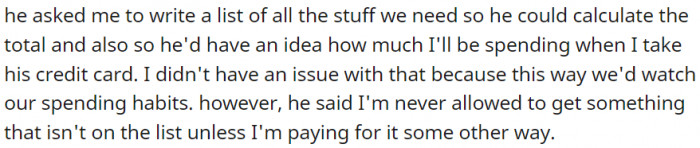
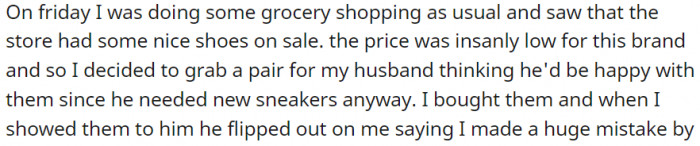
He also told the OP that she is not allowed to get something that isn't on the list unless she’s "paying for it some other way." Well, the OP went shopping one day and bought a "low-priced" sneaker for her husband, but instead of thanking and appreciating the OP for her kind gesture, her husband took the whole situation way overboard.
Read the full story in the OP’s own words below.
And here's the headline...

My husband is the breadwinner
I'm not allowed to get something that's not on the list
Gift-Giving as a Psychological Process
Gift-giving is often framed as a gesture of care and thoughtfulness, but it can also trigger complex emotional responses. According to research published in the Journal of Consumer Research, the act of giving and receiving gifts is intertwined with social and cultural expectations that can significantly influence emotional outcomes. For instance, the study highlights how personal interpretations of gifts can lead to varying emotional reactions, often based on the perceived intent behind the gift.
When a gift is considered thoughtful and well-aligned with the recipient's desires, it fosters feelings of appreciation and connection. Conversely, if the gift is perceived as inappropriate or unwelcome, it can lead to feelings of resentment or anger, as seen in the situation described in the article. Understanding this dynamic can help individuals navigate their emotional landscapes during gift exchanges, fostering healthier interactions.
I decided to grab a pair
In my defense...
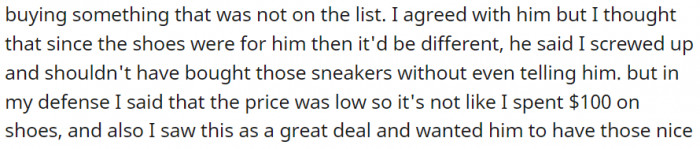
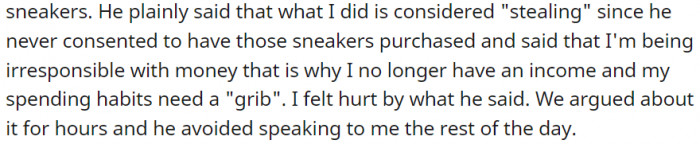
He called what I did stealing
The incident of returning a gift can reflect deeper relational dynamics, particularly in romantic partnerships. Dr. John Gottman, a leading researcher in relationship dynamics, emphasizes that how couples handle conflict and disappointment can reveal their overall relationship health. In his studies, Gottman found that couples who engage in constructive discussions about unmet expectations tend to have more satisfying relationships than those who resort to blame or withdrawal.
This suggests that the response to receiving a gift—or the subsequent action of returning it—can serve as a litmus test for communication styles within the relationship. If individuals in a relationship can express their feelings about gifts openly and respectfully, it may lead to greater understanding and intimacy.
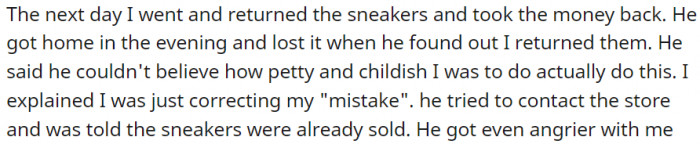
I returned the sneakers the next day
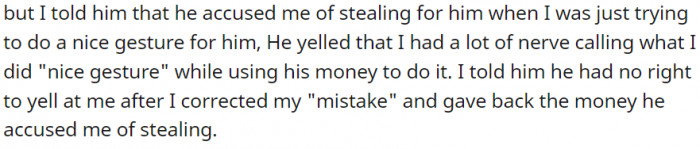
He yelled that I used his money
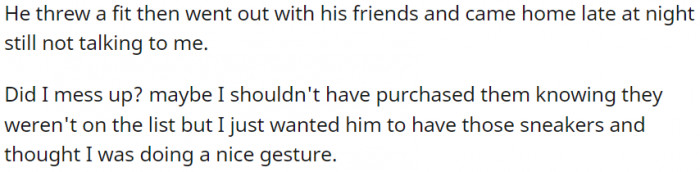
Did I mess up?
The Role of Expectations in Relationships
Expectations play a crucial role in shaping our emotional responses in relationships. According to research published by the American Psychological Association, unrealistic expectations can lead to disappointment and conflict. The concept of 'relationship expectations' refers to the beliefs individuals hold about how their partners should behave, which can often stem from cultural norms, past experiences, or personal ideals.
When these expectations are not met, it can result in feelings of betrayal or anger, as seen in the scenario where the husband reacted negatively to the gift. Addressing these expectations through open dialogue can help partners align their views and reduce misunderstandings, ultimately leading to healthier relationship dynamics.
The post received quite a lot of attention, garnering 24K upvotes and close to 4K comments. Here are some of the most upvoted comments by Redditors.
1. So many red flags in this short story
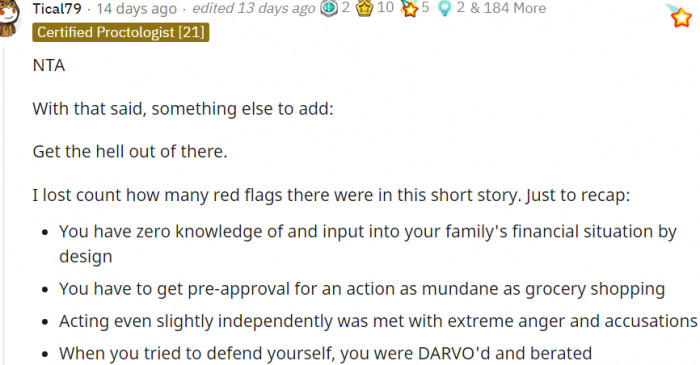
2. You should stop buying him Christmas and birthday presents
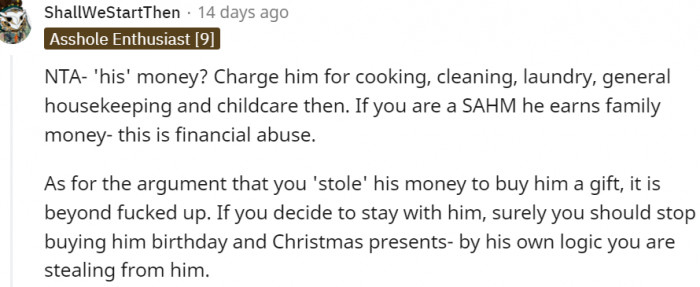
3. He's controlling and you need an exit plan
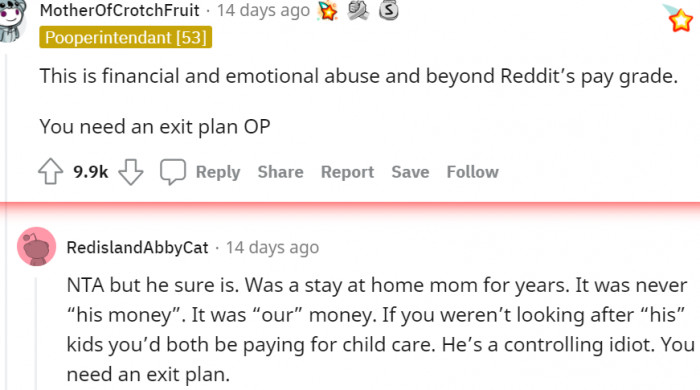
Social psychology offers valuable insights into how our perceptions are influenced by social norms and cultural contexts. The phenomenon of 'social comparison,' where individuals evaluate their own worth based on comparisons with others, can play a significant role in gift-giving scenarios. Research by Festinger (1954) on social comparison theory demonstrates that individuals often assess their feelings of adequacy by observing how others behave.
In this case, the husband's reaction could stem from a perceived inadequacy related to societal norms regarding gift expectations. Understanding this concept might help individuals reflect on their feelings, recognizing that their emotional responses may be influenced more by societal pressures than by personal preferences.
4. There's no winning with this type of person
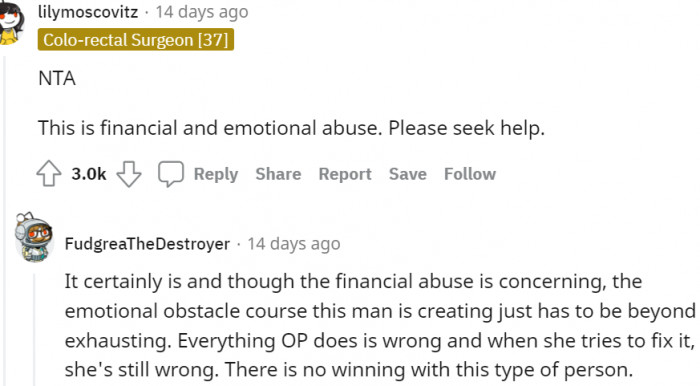
5. What you're doing is valuable as well
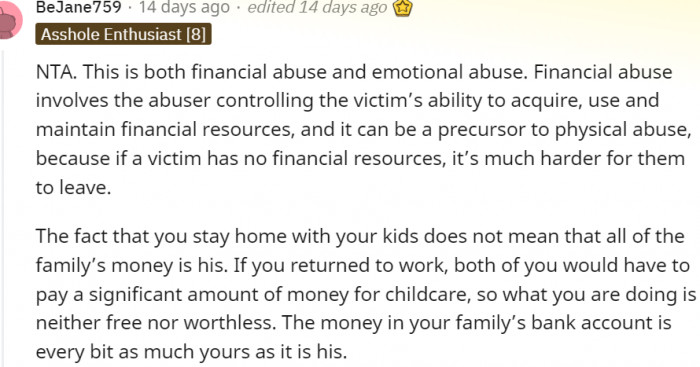
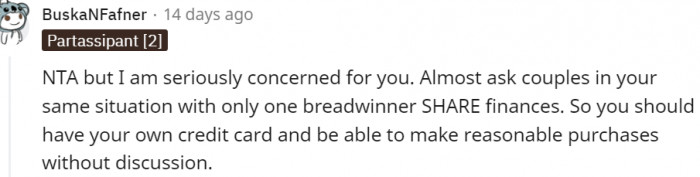
6. A Redditor is seriously concerned
Practical Strategies for Healthy Communication
To foster healthier communication in situations involving gifts and expectations, couples can utilize several evidence-based strategies. According to Dr. Julie Schwartz Gottman, a renowned clinical psychologist, one effective method is to practice 'active listening,' where partners focus on truly understanding each other's perspectives without immediately responding.
Additionally, establishing a routine for discussing feelings and expectations around gift-giving can create a more transparent dialogue. This proactive approach can help mitigate misunderstandings and foster a sense of partnership, allowing both individuals to voice their thoughts and preferences without fear of negative repercussions.
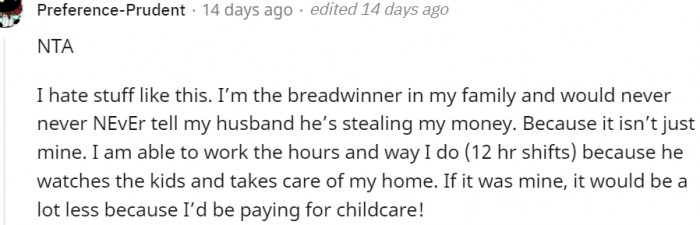
7. Someone shares her brief relatable story
8. Financial and emotional abuse are still abuse
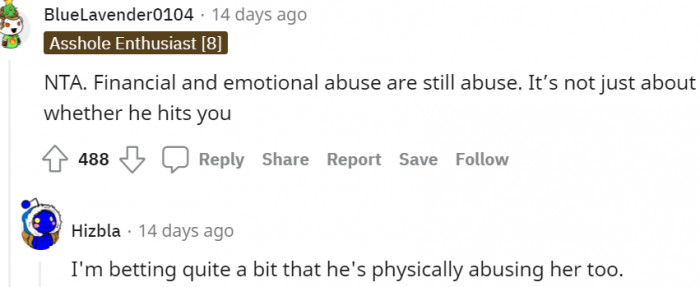
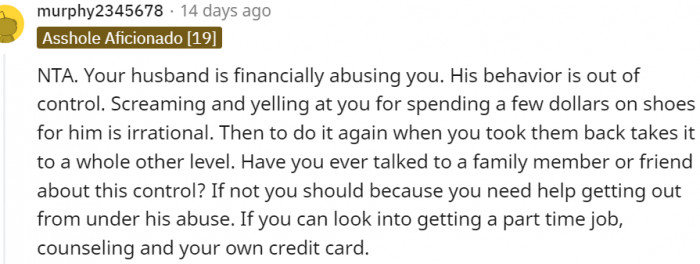
9. Your husband's behavior is out of control
Behavioral psychology provides insights into the patterns of emotional responses that can arise from specific behaviors. The concept of 'reinforcement' explains how certain actions are encouraged or discouraged based on the consequences they produce. In the case of receiving an unwanted gift, the husband's reaction may reinforce a pattern of negative emotional responses, creating a cycle of conflict.
Understanding this cycle can empower individuals to break free from maladaptive patterns by consciously choosing to address their feelings in a constructive manner, rather than reacting impulsively. This awareness can facilitate healthier interactions and reduce the likelihood of emotionally charged disputes.
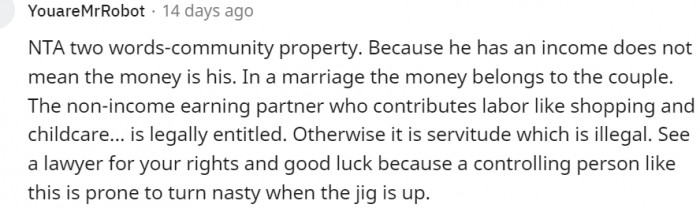
10. Because he earns doesn't mean the money is his
11. Hope you and your kids are okay?

12. He sounds like a horrible, tedious little man

Emotional Regulation and Relationships
Emotional regulation is a critical skill in maintaining healthy relationships, particularly during times of stress or disappointment. Research published in the Journal of Personality and Social Psychology indicates that individuals who effectively manage their emotions tend to have more satisfying and stable relationships. This skill involves recognizing one’s emotional triggers and responding to them in a constructive manner.
In the context of the article, learning to regulate emotions around gift-giving can prevent misunderstandings from escalating into larger conflicts. Couples can benefit from practicing mindfulness techniques or engaging in cognitive-behavioral strategies that promote emotional awareness and adaptive responses, leading to a more harmonious relationship.
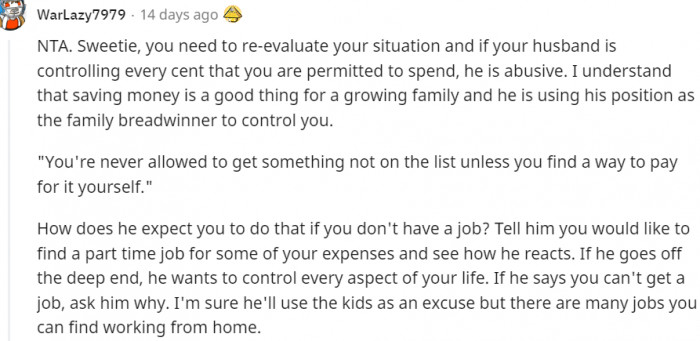
13. There are many jobs you can do while at home
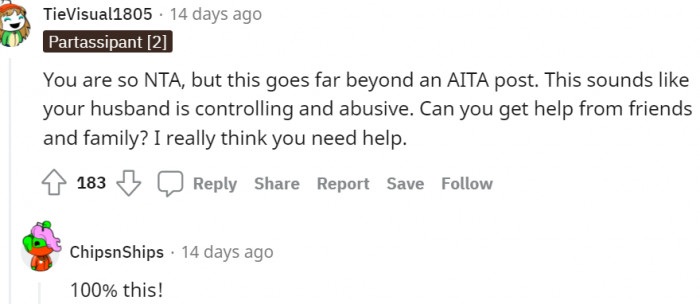
14. Someone really thinks the OP needs help
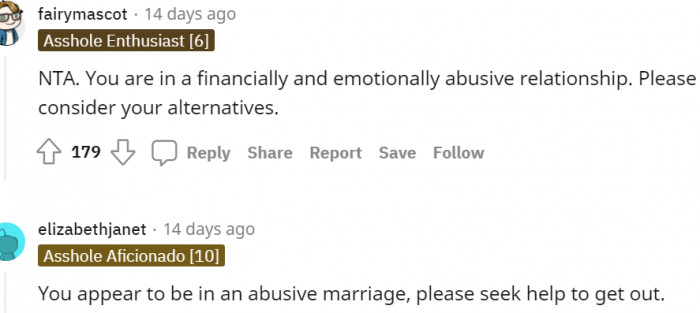
15. Please consider your alternatives
Social influence theory explains that our interactions and behaviors can be significantly shaped by the people around us. Research in this field shows that individuals often modify their behaviors to align with societal expectations or peer norms, which can lead to a conflict between personal desires and social pressures.
In the situation described, the husband's reaction to the gift could be influenced by external expectations about masculinity or financial independence. Recognizing the impact of social influences on personal behavior can help individuals better understand their reactions and encourage them to reflect on the origins of their emotional responses.
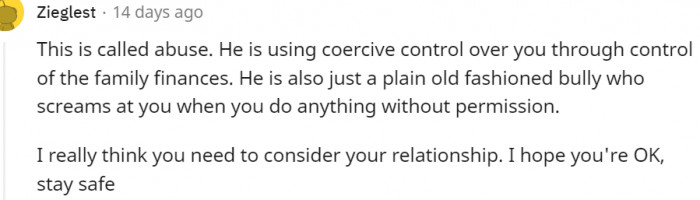
16. He is using coercive control over you
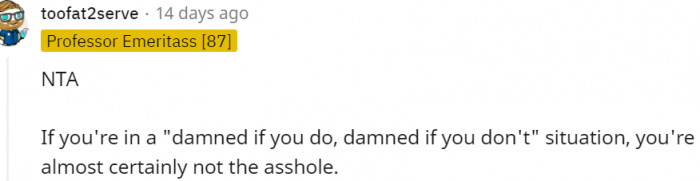
17. Damned if you do, damned if you don't situation
18. Provide yourself with your own allowance

Understanding Relationship Dynamics Through Conflict
Conflict in relationships, while often viewed negatively, can serve as a catalyst for growth and understanding. Research indicates that healthy conflict resolution is associated with improved communication and relationship satisfaction. Couples who view conflict as an opportunity for growth rather than a threat tend to develop deeper emotional connections.
In navigating gift-related tensions, reframing conflict as a chance to explore underlying feelings and expectations can lead to more meaningful discussions. This shift in perspective can empower couples to approach disagreements with curiosity rather than defensiveness, fostering a more resilient relationship.
19. Look at your relationship from an outside point of view
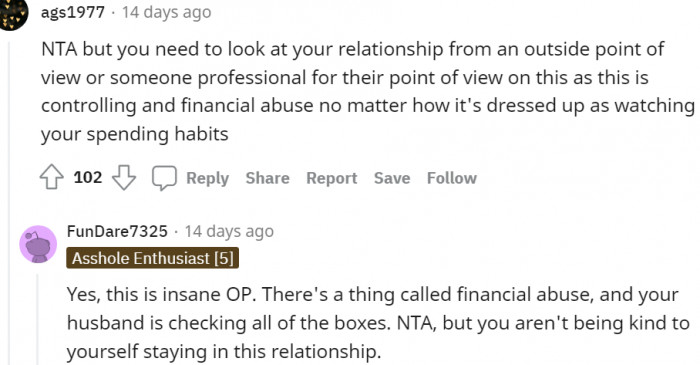
20. Put an end to this
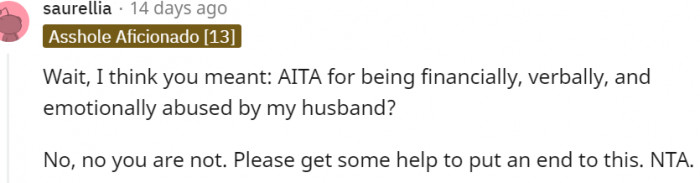
21. He wants you to be financially dependent on him
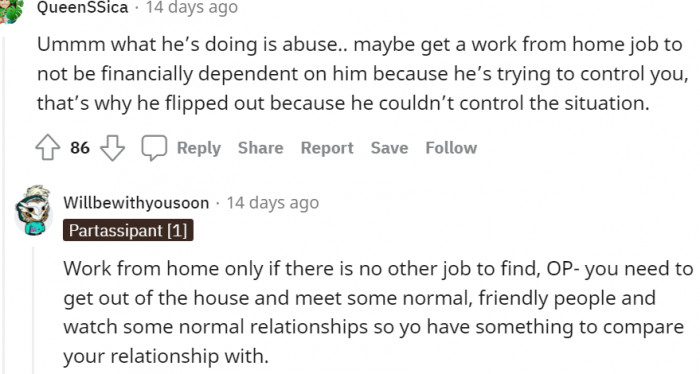
Finally, understanding the role of empathy in relationships can significantly enhance emotional connectivity. Studies in emotional intelligence highlight that individuals who practice empathy—recognizing and responding to the feelings of others—tend to experience more fulfilling interpersonal relationships. Developing empathy encourages partners to consider each other’s perspectives during conflicts, such as the situation involving the gift.
Practicing empathy can lead to more compassionate responses and a deeper understanding of one another's feelings, which can diffuse potential conflicts before they escalate. Couples can benefit from exercises that promote empathy, such as discussing each other's feelings during moments of tension, enhancing their emotional bond.
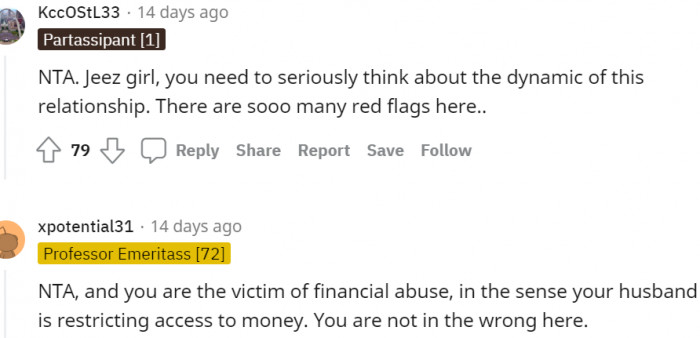
22. You are so not in the wrong here
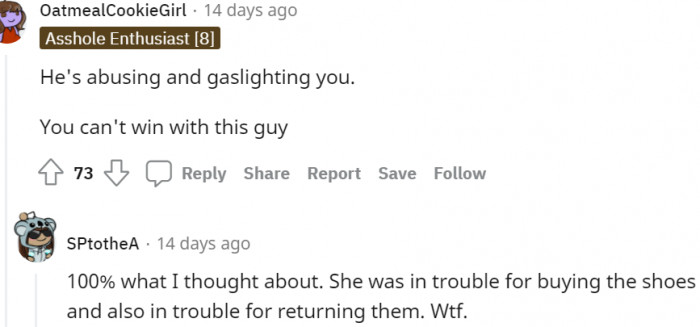
23. He's abusing and gaslighting you
It feels so bad to be abused by someone you did a nice gesture for. And even when you try to correct it, the person still finds fault with that action too.
You’re now left on the fence, not knowing exactly what to do anymore. What is your take on the OP’s story?
Drop your opinions in the comments below.
Expert Opinion
The husband's reaction to the gift might be explained by a perceived violation of his expectations or boundaries, which may stem from societal norms or personal beliefs about financial independence. His anger could also be a reflection of feeling disrespected or undermined. However, the way he expresses his feelings might suggest a lack of healthy communication skills in the relationship, which can create tension and conflict.Understanding the Deeper Patterns
The interplay of gift-giving and emotional responses encapsulates the complex dynamics present in many relationships. Understanding the underlying psychological principles, such as attachment styles, emotional regulation, and social influences, can help individuals navigate their emotional experiences more effectively. Research consistently emphasizes that fostering open communication and empathy can lead to healthier interactions and a deeper connection between partners.
Ultimately, relationships thrive when individuals can express their needs, address their expectations, and respond to each other with kindness and understanding, transforming potential conflicts into opportunities for growth and intimacy.