
Woman's Last Goodbye To Her Parrot Moves All To Tears
African Grey parrots, like Sinbad, are incredibly intelligent.

Damjan Milenkovic
- Published on
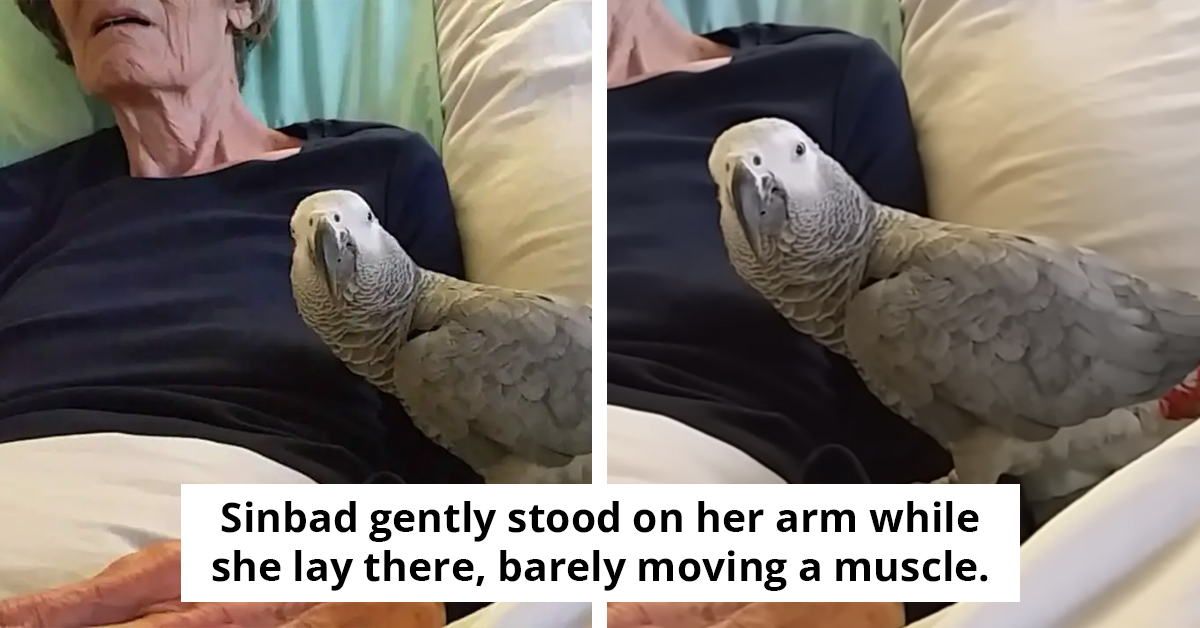
Losing a close friend is never easy. It’s a tough time for everyone, including our animal companions. Take Sinbad the parrot, for example. He recently had to say goodbye to his owner, a friend he had for 25 years.
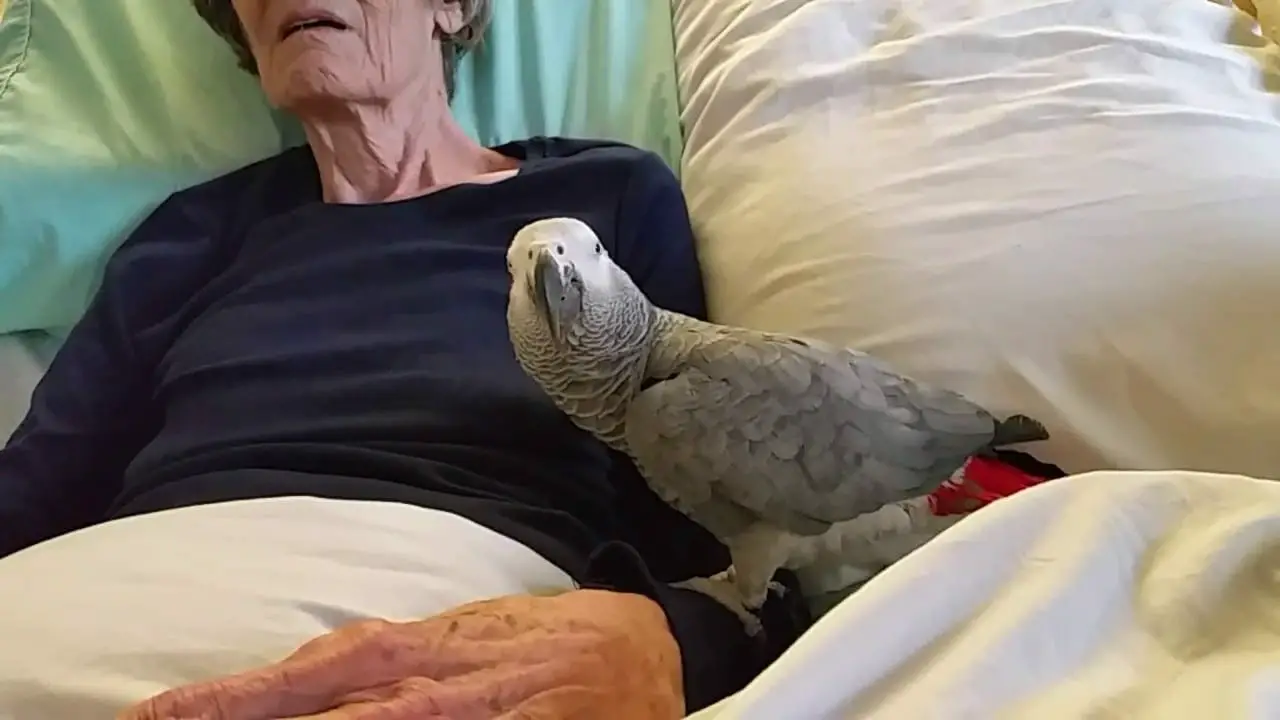
Parrots are more than just colorful birds; they're intelligent and sensitive creatures. Sinbad is no exception. He is known for his gentle nature, especially during his owner’s final moments. Without a sound, he sat quietly on her arm, then gently moved to her stomach. It was a sad but touching moment, captured on video by her daughter.
Watching that video, you can't help but feel moved. The bond between pets and their owners is special; this moment reminds us of that. If you’ve ever loved a pet, you’ll understand.
African Grey parrots, like Sinbad, are incredibly intelligent. They can talk like humans and understand a great deal. They’re like having a clever child around! Because they’re so smart, they can read our feelings and comprehend what we say. That’s why they make such good friends.
However, parrots feel sad when their owners get sick or pass away, just like we do. They might stop eating or talking. They miss the love and attention they receive from their owners. That’s how deep their feelings go.
Sinbad gently stood on her arm while she lay there, barely moving a muscle.
African Grey parrots are fascinating birds, renowned for their intelligence and ability to mimic human speech with remarkable accuracy. These parrots possess a brain-to-body size ratio similar to that of higher primates, making them some of the most intelligent bird species.
One of the most intriguing aspects of African Grey parrots is their social nature. They are incredibly social creatures, thriving on interaction with their human caretakers and other birds. In the wild, African Greys are rarely alone, preferring the company of their flock.
This social need carries over to captivity, where they often form strong bonds with their human families. They are known to seek attention and can become quite attached to their human companions, displaying behaviors that are often interpreted as affectionate, such as cuddling and vocalizing their names or special phrases they associate with their loved ones.
However, their intelligence and need for social interaction mean that African Grey parrots require a lot of mental stimulation and social engagement. Without this, they can easily become bored and develop behavioral issues such as feather plucking or aggression.
Thus, they are best suited for individuals or families who can dedicate significant time and attention to their care. Overall, African Grey parrots can indeed "love" their human families in the sense that they enjoy and seek out interaction and can form deep, affectionate bonds. However, understanding and meeting their complex social and cognitive needs is essential to nurturing a healthy, happy relationship with these remarkable birds.
Understanding Parrot Emotions
Dr. Irene Pepperberg, a leading expert on parrot cognition, emphasizes the emotional depth of African Grey parrots like Sinbad. According to her research, these birds not only exhibit intelligence but also strong emotional connections with their human companions.
She notes that parrots can recognize and respond to human emotions, which illustrates their sensitivity. This capacity for emotional engagement is profound, often leading to behaviors that reflect their understanding of social dynamics.
Dr. Pepperberg suggests that fostering a supportive environment for parrots, with plenty of interaction and stimulation, can enhance their emotional well-being significantly.
"Grieving parrot."
Sinbad's experience highlights how deeply animals can bond with humans. Losing his owner was akin to losing a beloved family member, demonstrating just how close parrots can get to their human companions.
Seeing Sinbad act so heartbroken after his owner passed away reminds us that these intelligent birds experience profound emotions. Yet, amidst all that sadness, there's a glimmer of hope at the end of the tunnel.
Thanks to the patience of his owner's family, Sinbad slowly began to feel better and cope with his loss. Most importantly, Sinbad's story shows us why animals deserve all the care, respect, and love we can give them for always being there for us.
Veterinary behaviorists advocate for understanding the grieving process in pets, particularly in cases like Sinbad the parrot. These professionals highlight that animals can experience grief similarly to humans, leading to changes in behavior and health.
They recommend strategies for helping pets cope with loss, such as maintaining routines, providing additional attention, and introducing new toys or activities to stimulate their minds. It's crucial to recognize the signs of distress in pets and to consult with a veterinarian for tailored advice on managing their emotional health.
Research-Based Understanding
In summary, the bond between humans and their animal companions, like Sinbad the parrot, reflects deep emotional ties that transcend species. Research shows that understanding these emotions can significantly improve the quality of life for both parties involved.
Veterinary behaviorists and animal cognition experts agree that addressing the emotional needs of pets, especially during times of transition or loss, is vital. By fostering a nurturing environment and seeking professional guidance, pet owners can enhance their companions' well-being, helping them navigate both joy and sorrow.