
Man Sparks Online Debate After Making His Heavily Pregnant Wife Get Up At 3am To Tend To Their Baby
If both mom and dad are exhausted, who has the responsibility of tending to the baby at night?

Jesse Ubani
- Published on

In the bustling life of a devoted couple, the responsibilities of work, parenthood, and an incoming baby have succeeded in causing a rift that neither is prepared to own up to. Our narrator (Original Poster) finds himself in the midst of this whirlwind, juggling career demands and his growing family's needs.
With a loving wife who is six months pregnant and a charming 1.5-year-old, each day is a delightful adventure filled with joy and a hint of weariness. Together, they have established a routine that balances their roles and ensures their little one receives the attention he deserves.
Nighttime rituals were once a shared duty, but OP took it upon himself to lead the charge in sleep training their child. Recognizing his wife's fatigue during her pregnancy, OP decided to maintain the arrangement of tending to their child during the night when needed.
As fate would have it, OP’s professional life demanded his undivided attention during a crucial time. He was heavily involved in planning a once-a-year conference, which gradually drained his strength as the event drew closer.
After a long, draining conference, OP returned home, desperately seeking rest. Unfortunately, their child woke up at 3 am and needed someone to put him back to sleep.
Overwhelmed with exhaustion, OP asked his wife to handle it, as he had already made it clear that he was stepping back from late-night duties for that particular day.
In the morning, OP woke up to an angry wife, who labeled him as inconsiderate for leaving their son's care entirely to her. She highlighted her own fatigue from pregnancy and the added responsibility of dropping off and picking up the child from childcare throughout the week.
Reflecting on the situation, OP questions whether he made the right decision by not tending to the child during the night and seeks to understand his wife's perspective.
Scroll down to find out the verdict of the Reddit community.
Let's dig into the details

A bit of background
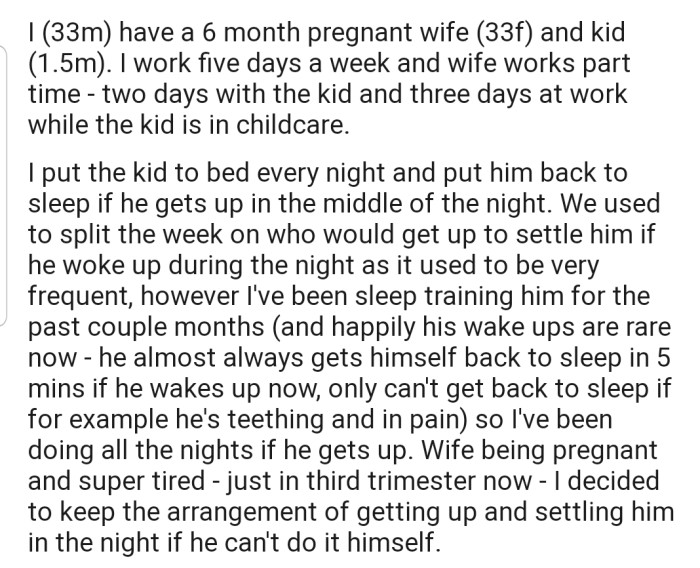
OP had a conference to prepare for, so he asked his wife to cater to their son for the night

Shared Responsibilities in Parenting
The decision to require a heavily pregnant wife to tend to their baby at 3 AM raises critical questions about shared responsibilities in parenting.
Research in family psychology emphasizes that equitable sharing of parenting duties is vital not only for the well-being of the child but also for the mental health of both parents.
When one partner feels overwhelmed, it can lead to resentment and strain on the relationship.
Nighttime Parenting and Shared Responsibilities
The expectation for one partner to handle nighttime parenting duties alone can lead to feelings of resentment and stress. Research in family psychology highlights the importance of shared responsibilities in caregiving, especially during the early stages of parenthood.
Studies indicate that an equitable distribution of nighttime duties can significantly enhance relationship satisfaction and reduce stress levels for both partners. When both parents engage in nighttime caregiving, it fosters a sense of teamwork and mutual support.
Understanding Shared Responsibilities in Parenting
This situation highlights the ongoing debate surrounding parental responsibilities, particularly in the context of shared caregiving.
Dr. Michael Kimmel, a noted sociologist, emphasizes that societal expectations often place disproportionate demands on mothers, leading to conflicts in parenting roles.
Understanding these dynamics is essential for couples to find equitable solutions during the nighttime caregiving process.
After a long day at the conference, OP returned to get some rest. However, the next morning, his wife slammed him for making her cater to their son at 3am without offering to help

Here's what the Reddit community had to say about this story:
"If this is the one and only time this happens, because of your yearly conference, NTA."

"NTA...Yes, it’s exhausting being a pregnant parent, but that’s life."

Moreover, societal norms often dictate traditional gender roles that can exacerbate these situations.
Studies show that rigid adherence to these roles can lead to dissatisfaction and conflict in relationships.
Encouraging open dialogue about roles and responsibilities can lead to more balanced and satisfying partnerships.
Moreover, the psychological concept of burnout is relevant in this context. Parenting, especially during the night, can lead to emotional and physical exhaustion, which can negatively impact the relationship. Research published in the Journal of Family Psychology shows that burnout is more likely to occur when one partner feels overwhelmed by responsibilities and lacks support.
Addressing burnout through open communication and shared responsibilities can help alleviate stress and improve overall well-being.
Research published in the Journal of Family Psychology indicates that equitable divisions of labor in parenting contribute to healthier family dynamics.
When both parents participate actively, it not only alleviates stress but also strengthens the partnership.
Recognizing the need for shared responsibilities can help reduce tension and resentment.
"You’re both exhausted from parenting, and better communication could have solved this."

This Redditor has an unpopular opinion to give

"NTA...You just had one very intense week, where you needed some help with your kid duties."

The Importance of Teamwork in Parenting
Effective parenting is often characterized by teamwork and mutual support.
Research published in the Journal of Family Psychology indicates that couples who collaborate in parenting decisions report higher relationship satisfaction.
Fostering teamwork can help both partners feel valued and respected, reducing stress and conflict.
The Role of Empathy in Parenting Dynamics
Empathy is key in understanding the experiences and challenges faced by one's partner in parenting. When partners can empathize with each other's struggles, it fosters connection and cooperation. Research indicates that empathetic interactions can significantly improve relationship satisfaction and reduce conflict.
A study published in the American Psychological Association found that couples who practice empathy tend to navigate parenting challenges more effectively, leading to a more harmonious family environment.
Encouraging Cooperative Parenting
Experts recommend developing a parenting schedule that accommodates both partners' needs and capacities.
Creating a plan together fosters cooperation and ensures that both parents feel valued and involved.
Additionally, discussing feelings of exhaustion and stress can help partners develop empathy for each other's experiences.
"This was just a perfect storm of two tired people dealing with a situation where you're both depleted and not at your best."

"It seems perfectly reasonable for her to take on this task on occasion when you are really busy with work."
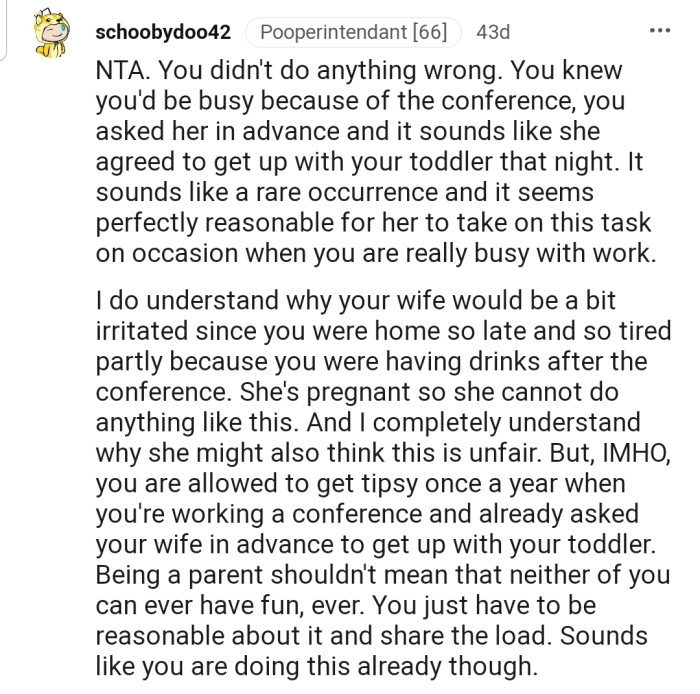
This story delves into the complexities of balancing responsibilities and the sacrifices made in the face of exhaustion.
The majority of the Reddit community has rallied behind one notion: No one is to blame in this situation, as both parents were genuinely fatigued. The key to a resolution? The power of communication.
Hopefully, OP and his wife can talk things out and better prepare for a situation like this in the future.
We would love to hear your thoughts on this story. Join the conversation in the comments below.
Dr. John Gottman’s research on relationships suggests that maintaining open lines of communication is vital in co-parenting.
Couples are encouraged to share their feelings about parenting duties and support one another in moments of stress.
Building a strong partnership in parenting requires ongoing dialogue and mutual support.
Expert Opinion
This situation illustrates the common strain that can occur in shared parenting responsibilities, particularly during nighttime caregiving.
From a psychological perspective, it’s essential for couples to communicate openly about their expectations and to work together to find solutions that ensure both partners feel respected and involved.
Analysis & Alternative Approaches
This incident underscores the need for clear communication and cooperation in parenting roles.
As research suggests, sharing responsibilities and maintaining open communication can foster healthier family dynamics during the challenging transition to parenthood.
Additionally, the concept of active listening can enhance communication between partners. Active listening involves fully engaging with what the other person is saying and validating their feelings. Research shows that active listening can lead to improved emotional connection and understanding in relationships.
Incorporating active listening techniques into discussions about parenting responsibilities can help partners feel heard and appreciated, ultimately leading to a more supportive dynamic.
Practical Strategies for Cooperative Parenting
To foster cooperation in nighttime parenting, couples should consider establishing a clear plan for sharing duties. Research suggests that when partners outline their responsibilities and expectations, it can reduce misunderstandings and promote teamwork.
Additionally, scheduling regular check-ins to discuss feelings about parenting duties can help both partners stay aligned and support one another. According to studies in the Journal of Marriage and Family, such practices can lead to greater relationship satisfaction and less conflict.
Expert Opinion
This situation underscores the importance of shared responsibilities in parenting, particularly during the challenging nighttime hours. It's essential for both partners to communicate openly about their needs and expectations.
By working together, couples can alleviate stress and foster a more supportive family environment.
Analysis & Alternative Approaches
In summary, understanding the dynamics of nighttime parenting and shared responsibilities is crucial for maintaining a healthy relationship. Research consistently supports the notion that equitable distribution of caregiving duties and fostering empathy can enhance relationship satisfaction.
By implementing these strategies, couples can navigate the challenges of parenting together and strengthen their bond.
Additionally, practical solutions can enhance collaborative parenting.
Implementing strategies like shared calendars and checklists can help couples manage responsibilities more effectively.
These tools can facilitate communication and ensure that both partners are aware of their responsibilities, ultimately reducing stress.
Expert Opinion
This situation illustrates the common struggle regarding shared responsibilities in parenting.
From a psychological standpoint, fostering teamwork and communication can lead to healthier relationships and improved family dynamics.
Analysis & Alternative Approaches
In conclusion, promoting teamwork and equitable sharing of parenting responsibilities is crucial for maintaining healthy relationships.
Research underscores the importance of open communication and collaboration to enhance satisfaction within partnerships.
By addressing these dynamics, couples can create a more supportive environment for themselves and their child.