
Young, Independent Woman Tells Her Mom She's On Her Own With Her Cancer Because She Never Took Her To The Doctor When She Was a Kid
That led to several health issues that OP is still dealing with.

Damjan Milenkovic
- Published on

It is impossible to overstate the value of having a loving and supportive family. When people are in danger, they quickly seek help from their family members.
Is it, however, acceptable to expect assistance from someone you turned down when they were in need? Is it reasonable to expect help from a daughter you've refused to take to the doctor when she was a child?
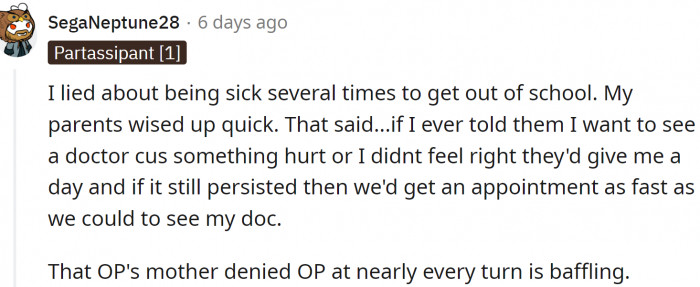
A daughter who now has to deal with serious medical issues because of the parent's neglect? And all that because she lied a couple of times about being sick to get out of school.
What kid doesn't do that? There are a variety of other reasons why children may not speak the truth.
Young children may lie to see what happens. Kids who are self-conscious about their appearance may lie to appear more mature.
Because they don't want others to worry, depressed or anxious children may lie. While most daughters would gladly assist their parents in need, Redditor u/childhoodrants refused because she was neglected as a child.
OP (Original Poster) was feeling slightly guilty for not helping her mom, who has a serious medical condition. So, she turned to this popular subreddit and asked other users to know if she was right or wrong.
Read her story and think about how you would react:
OP asks:

She gave a bit of context to the whole story:

Because she faked being sick a couple of times to get out of school, her mom never took her to the doctor for anything—even serious health issues.

The Impact of Childhood Experiences
Research in developmental psychology suggests that adverse childhood experiences (ACEs) can have profound and lasting effects on an individual's health and well-being. A study published in the 'American Journal of Preventive Medicine' indicates that the more ACEs a person has, the higher their risk for chronic health problems, including cancer (Felitti et al., 1998). This aligns with the principles of attachment theory, which emphasize that early relationships with caregivers can shape an individual's emotional and physical health later in life.
In this case, the daughter's assertion regarding her mother's lack of medical care during childhood highlights the critical role of parental support in health outcomes. Neglect during formative years can lead to feelings of abandonment and self-worth issues, often manifesting as chronic health problems down the line. As attachment styles formed in childhood influence adult relationships and coping mechanisms, the mother's failure to provide necessary medical support may have contributed to her daughter's current struggles.
Knee pains, allergies, asthma... None of this was considered serious by OP's mom.
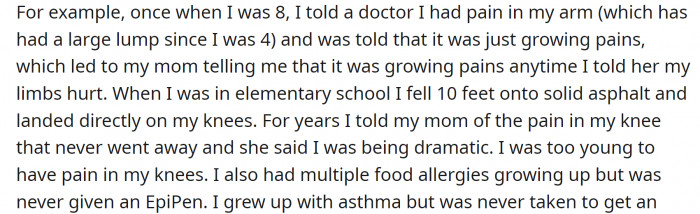
The list goes on:
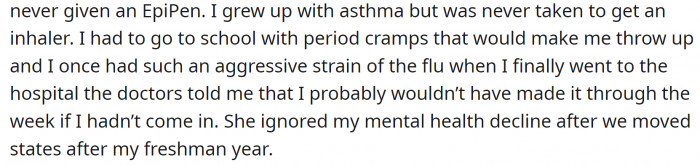
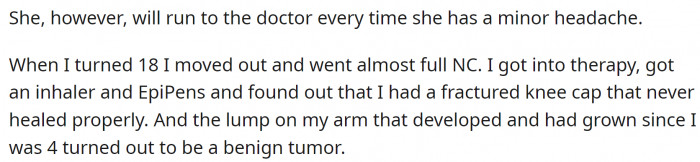
But Mom took good care of her own health. So OP moved out the first chance she got. And she started therapy for all her health issues.
A clinical psychologist specializing in family dynamics explains that the complex interplay between parental neglect and adult health issues often creates a cycle of emotional distress. When a parent fails to meet a child's basic needs, including medical care, it can lead to feelings of worthlessness and resentment in the child. These feelings can persist into adulthood, affecting not only the individual's health but also their relationships.
This dynamic can be understood through the lens of emotional neglect, which has been shown to lead to maladaptive coping strategies, such as avoidance or emotional suppression. A meta-analysis published in the 'Journal of Child Psychology and Psychiatry' indicated that individuals with a history of emotional neglect are more likely to develop anxiety and depression, further complicating their health landscape.
OP and her mom are basically NC and only communicate regarding OP's younger sister.
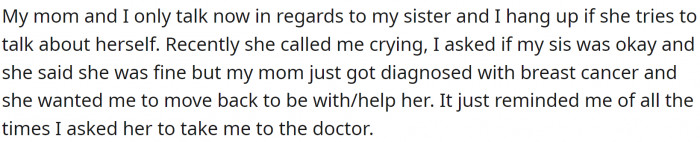
So, when her mom called her and told her she was diagnosed with breast cancer, OP refused to move in and take care of her.

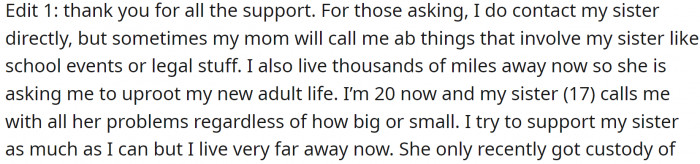
OP does talk often with her sister but also wants to consult with her mom.
Navigating Family Relationships
In situations like this, it's essential to explore effective communication strategies. Research from the 'Harvard Negotiation Project' emphasizes the importance of expressing feelings and needs clearly, which can help to mitigate misunderstandings and promote healing. The daughter might benefit from employing 'I' statements to articulate her feelings about her childhood experiences without placing blame directly on her mother.
For example, saying 'I feel unsupported when I think about my childhood medical care' rather than 'You never took me to the doctor' might foster a more constructive dialogue. Moreover, family therapy can be a valuable resource, providing a safe space for both parties to discuss their feelings and perspectives. Studies indicate that families who engage in therapy can significantly improve communication patterns and emotional understanding (Johnson et al., 2005).
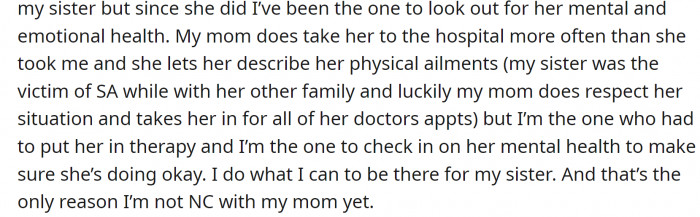
Sadly, her sister has severe trauma issues and needs care.
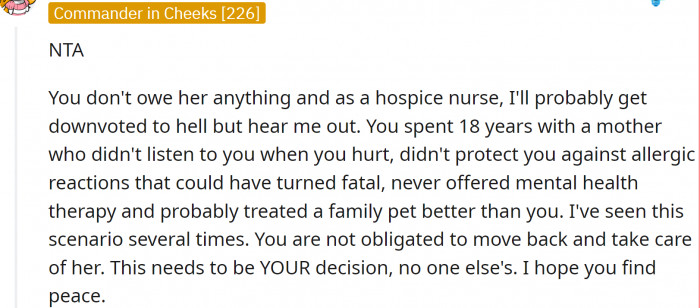
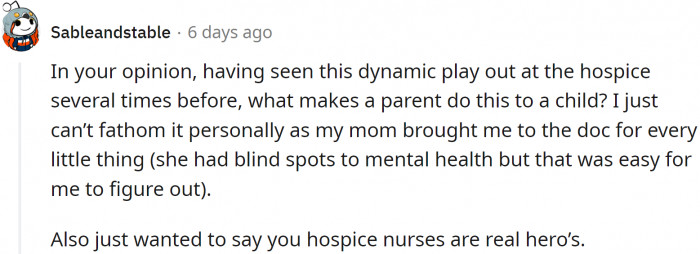
A hospice nurse said:
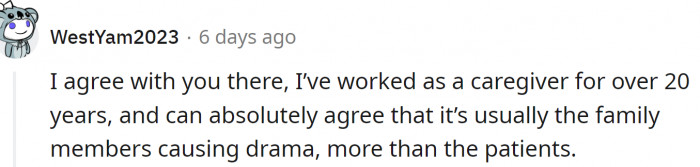
Another professional caregiver replied:
Social psychologists have found that the concepts of guilt and obligation often complicate familial relationships, particularly in cases of perceived neglect. A study in the 'Journal of Social Issues' discusses how feelings of guilt can hinder open communication, leading to resentment instead of resolution. The daughter's feelings of abandonment may be compounded by societal expectations that dictate loyalty to one’s parents, despite their shortcomings.
Understanding this social dynamic can empower the daughter to recognize that her feelings are valid, and she is not solely responsible for maintaining the relationship. This awareness can be the first step in breaking the cycle of guilt and fostering healthier emotional boundaries. Additionally, recognizing that it's okay to seek support from outside sources, such as friends or support groups, can provide a necessary buffer during this challenging period.
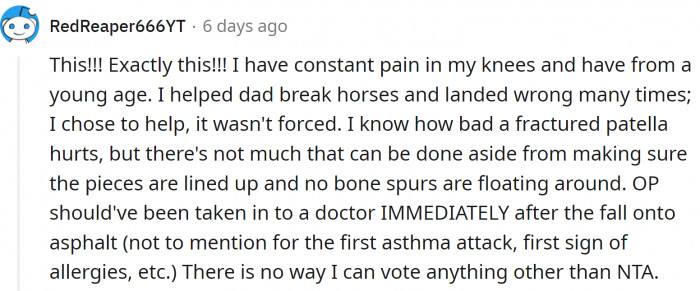
People with similar health problems contributed:
People ask:
The answer is not pretty:
The Role of Forgiveness
Forgiveness can have significant psychological benefits, particularly in reconciling feelings of resentment and anger toward a parent. Research in the field of positive psychology shows that the act of forgiving can lead to improved mental health outcomes, including reduced anxiety and depression (Worthington et al., 2007). However, forgiveness is often misunderstood; it's not about absolving the other person of responsibility but rather freeing oneself from the burden of negative emotions.
For the daughter, exploring forgiveness might involve acknowledging her feelings of hurt and betrayal while also recognizing her mother's limitations as a caregiver. Engaging in practices such as journaling or guided therapy can help in processing these emotions effectively. According to studies, individuals who actively work on forgiveness report a greater sense of peace and emotional well-being over time.
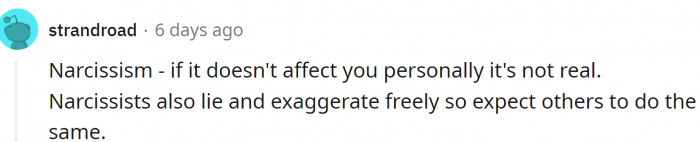
Narcissistic parents just don't want to be bothered:
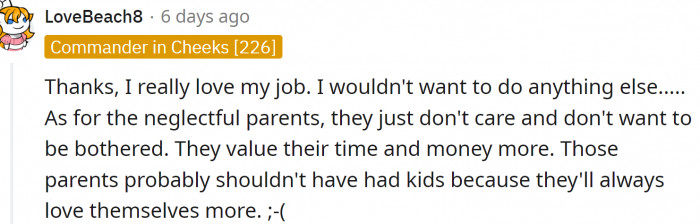
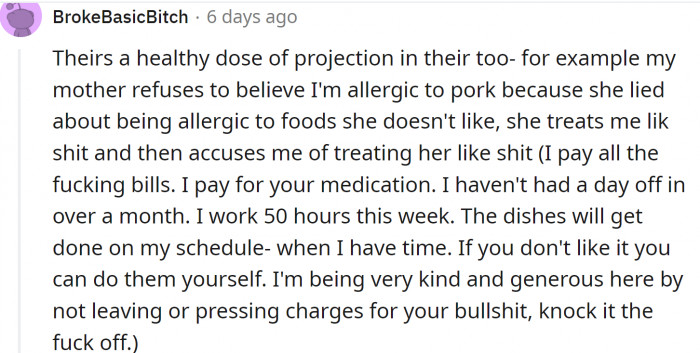
Projection:
People who went completely NC said:

According to research in family psychology, navigating the complexities of familial relationships often involves understanding the broader familial patterns that shape individual experiences. A study published in 'Family Relations' emphasizes that family history and dynamics play a crucial role in shaping individual identities and health outcomes. This suggests that the mother-daughter relationship may be influenced by generational patterns of behavior, where neglect could be a learned response rather than a conscious choice.
Identifying these patterns can empower both the daughter and the mother to recognize that their relationship isn't solely defined by past grievances. Acknowledging these patterns can open the door for healing conversations and the potential for a more supportive relationship moving forward, aligning with the principles of family systems theory.
Family values:
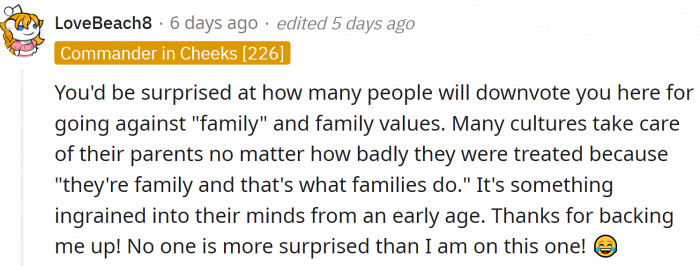
The bottom line is: This 'Family Values' thing goes both ways.

Kids lie all the time. But that doesn't justify not providing them with proper medical care. Does anything justify that?
Seeking Professional Support
In situations involving complex emotional and health issues stemming from childhood, seeking professional support can be invaluable. The American Psychological Association recommends therapy as a means to explore and understand these deeply rooted feelings. Cognitive-behavioral therapy (CBT) has been shown to be particularly effective in addressing issues related to childhood trauma, allowing individuals to reframe their narratives and develop healthier coping strategies.
Engaging with a therapist who specializes in family dynamics can help the daughter navigate her feelings of neglect while also addressing any health-related anxieties she may experience. According to a study published in the 'Journal of Clinical Psychology,' individuals who engage in therapy report improved emotional regulation and health outcomes, illustrating the potential for healing through professional guidance.
"Mens sana in corpore sano," as the ancient Romans put it, "means a healthy mind in a healthy body," and this proverb currently appears to be more true than ever. In today's environment, it is critical to be healthy at all times, and this is nearly impossible without high-quality medical treatment.
And when you are denied that as a kid, the health issues will only become more serious. A small injury in childhood can grow to be very complicated.
We hope OP will work things out and find peace.
Expert Opinion
This situation is a classic example of how childhood trauma and neglect can shape adult behaviors and relationships. The daughter's decision to refuse assistance to her mother seems to be a response to the neglect she experienced as a child. It's a protective mechanism, driven by unresolved feelings of resentment. Remember, folks—our early experiences often lay the groundwork for how we handle stress, adversity, and interpersonal relationships later in life.Analysis & Alternative Approaches
Research consistently underscores the profound impact that early familial experiences can have on adult health and emotional well-being. As indicated by studies in developmental psychology, unresolved feelings of neglect can manifest as chronic health issues and relational difficulties later in life. Understanding these dynamics not only sheds light on the daughter's current struggles but also provides pathways for healing.
Through effective communication, the exploration of forgiveness, and potential therapeutic support, both the daughter and the mother can begin to reconstruct their relationship and address the past. As noted in numerous psychological studies, the journey toward healing often involves both recognizing the challenges of the past and embracing the possibilities for a healthier future.