
"No Whining, No Crying!" - 40 Of The Most Absurd Workplace Policies That Left Employees Baffled
"Is this even legal?"

Sophia Cantiller
- Published on
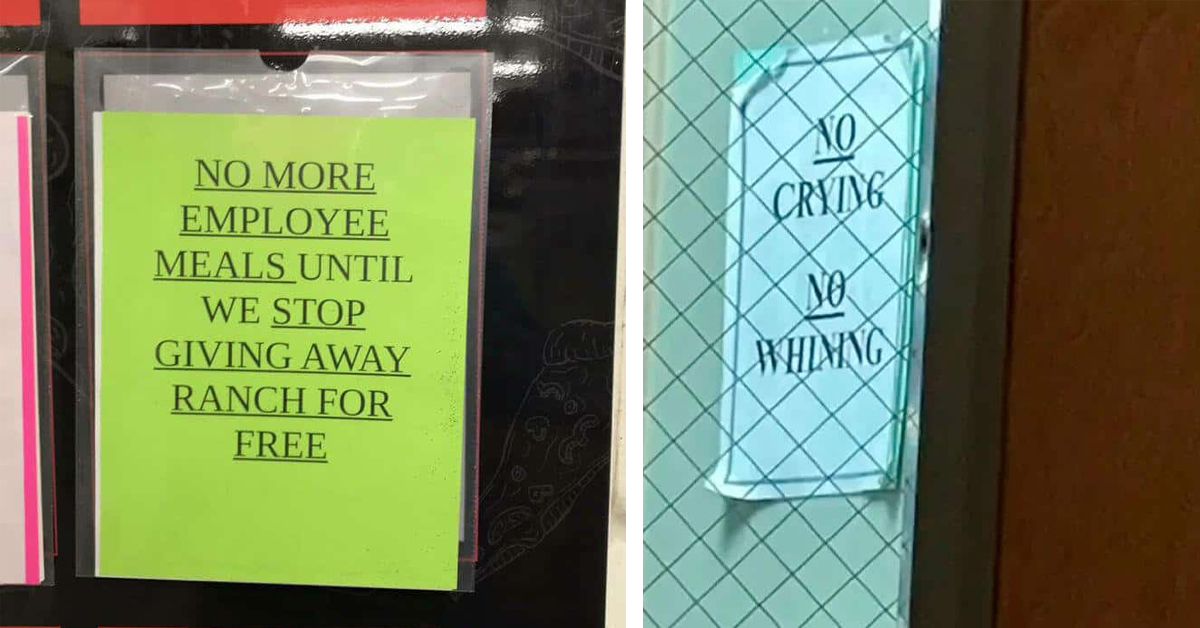
We've all had that one boss who seems to excel at creating the most nonsensical rules at work. From banning basic necessities to enforcing laughably strict policies, these horrible bosses have a remarkable talent for transforming the office into a minefield of sheer ridiculousness.
Dive into the bizarre world of workplace bans, as shared by employees who have endured these questionable decisions. Prepare to be both amused and bewildered by tales of prohibitions on everything from bathroom breaks to sitting down.
Grab your favorite (hopefully not banned) snack and settle in for a hilarious ride through the most outlandish office policies ever encountered. These stories offer a glimpse into the absurd lengths some managers will go to exert control, often at the expense of employee morale and productivity.
Prepare to be both entertained and astonished by the sheer creativity (or lack thereof) displayed in these workplace bans.
The tales range from the mildly amusing to the downright ludicrous, leaving readers wondering if they've stepped into an alternate reality where logic and reason have been banished from the workplace. As you delve into these stories, you'll find yourself questioning the sanity of those in charge and wondering how such policies ever came to be.
Just take a look...
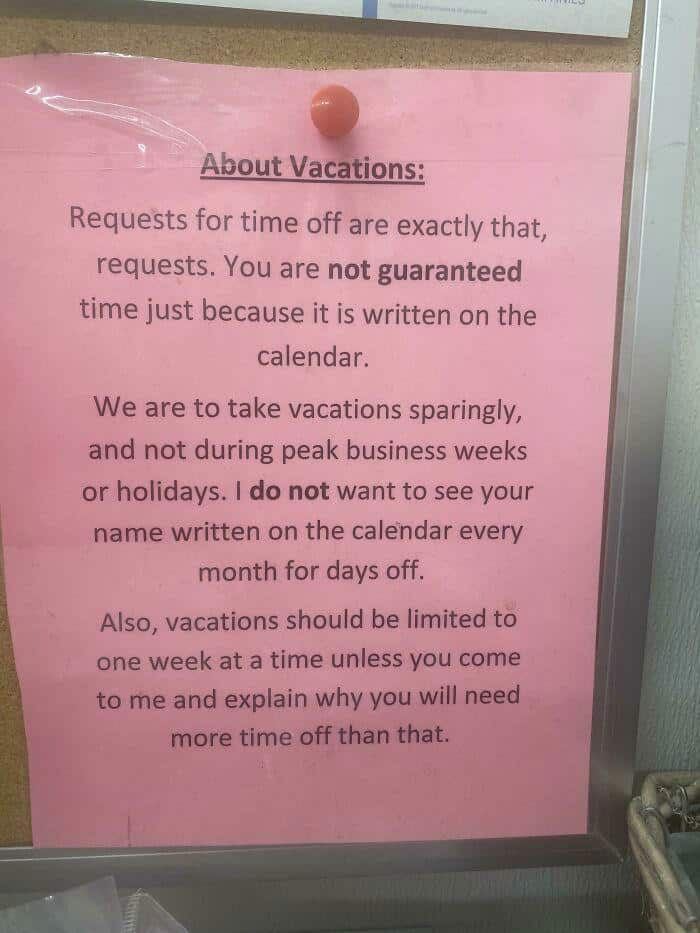
1. "Hung Up Next To PTO Calendar At New Job"
2. "I Wasn’t Allowed To Use A Notebook At My Cashier Job"

3. "You Are Not Allowed To Sit; This Is Not An Office Job." The Last Order Was 90 Minutes Ago
Workplace policies that seem absurd often stem from a lack of understanding of employee needs and realities. According to Simon Sinek, leadership is about creating a safe environment where employees feel valued. Policies that ban basic necessities or impose unnecessary restrictions can lead to decreased morale and productivity.
Leaders should engage in open dialogues with their teams to understand their perspectives and needs better. Fostering a culture of trust can help eliminate these nonsensical policies and encourage collaboration.
4. "I’m So Done With This Petty, Asinine Bulls*it?"
5. "You Are Not Allowed Basic Human Interaction On The Clock"
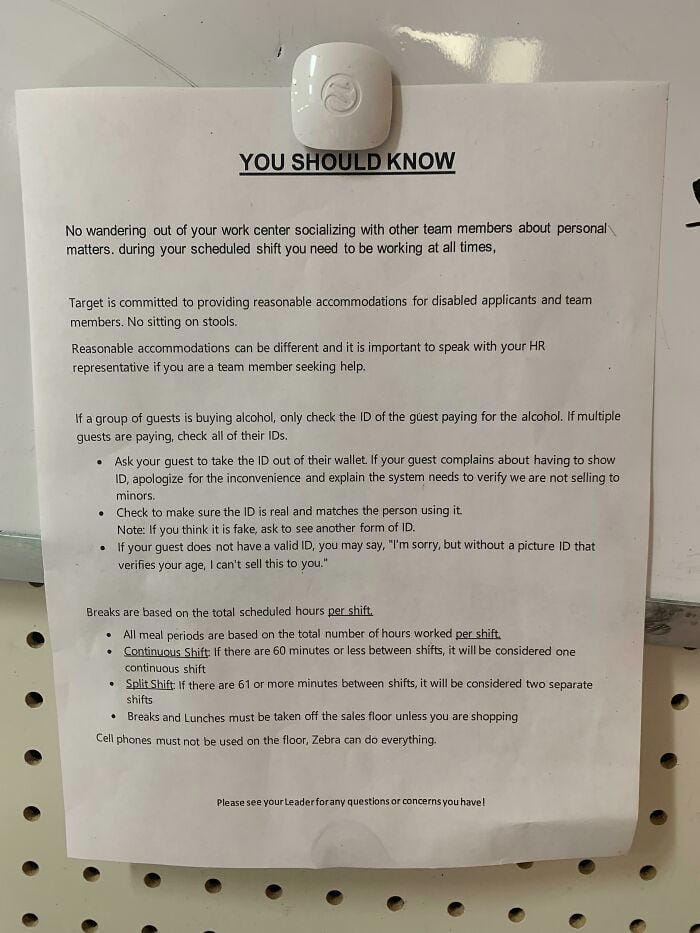
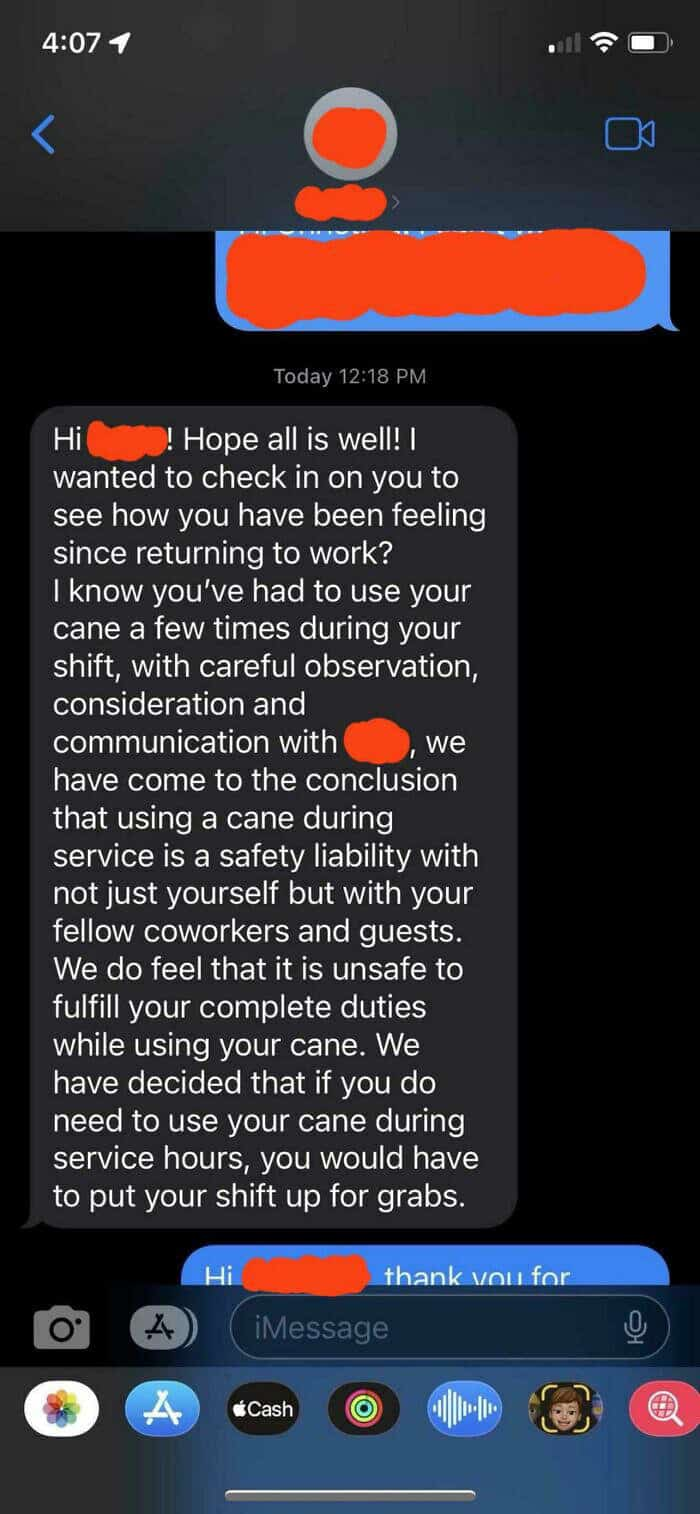
6. "Workplace Won’t Allow Use Of Mobility Device; What’s The Legality On This? (Rhode Island)"
Dr. Brené Brown, a renowned researcher on vulnerability, stresses the importance of emotional safety in workplaces. She argues that when employees don't feel safe to express their emotions, it can lead to disengagement and high turnover rates.
In her work, she emphasizes that leadership should cultivate environments where employees can voice concerns without fear of retribution. This approach not only enhances job satisfaction but also boosts overall productivity and innovation.
7. "Is This Even Right?"
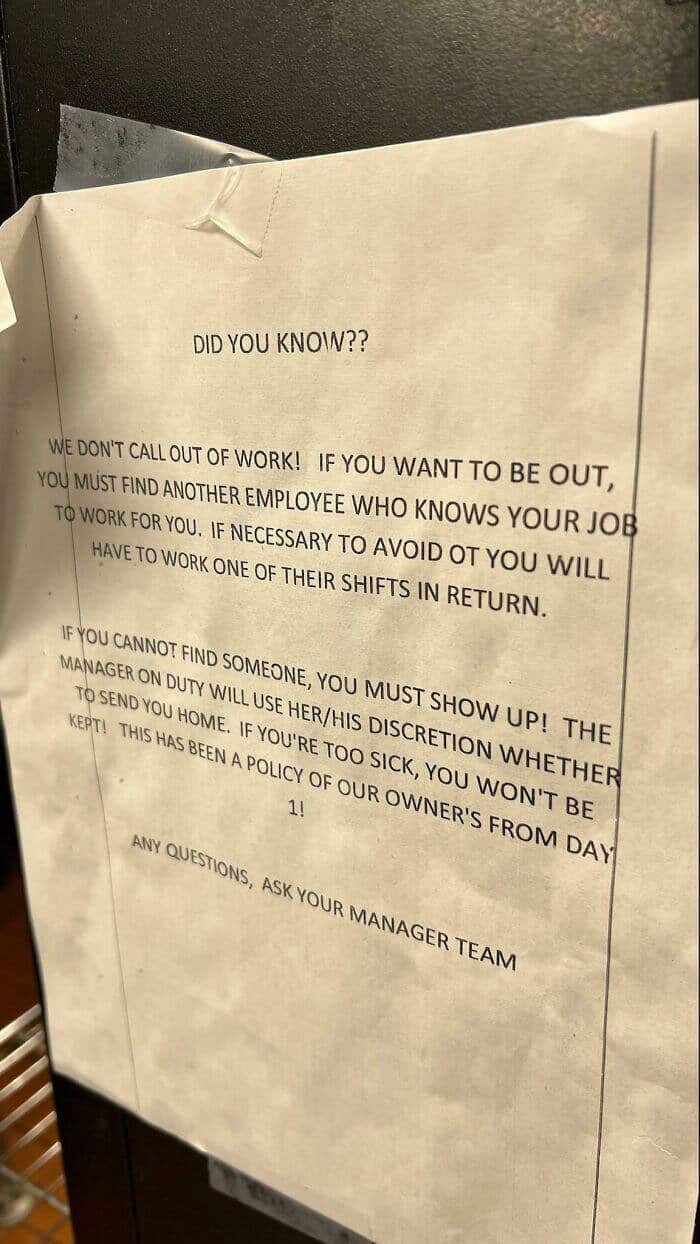
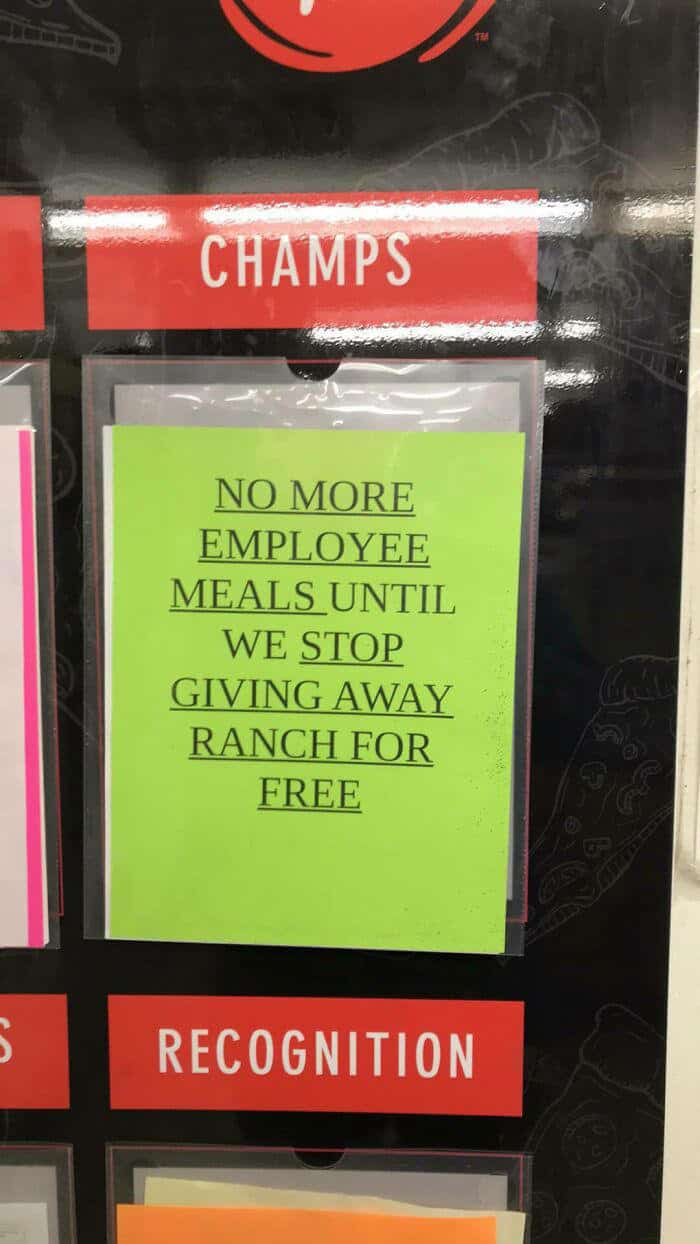
8. "Is This Even Legal? Stopped At A Restaurant For Lunch And Saw This Sign In The Employee Area"
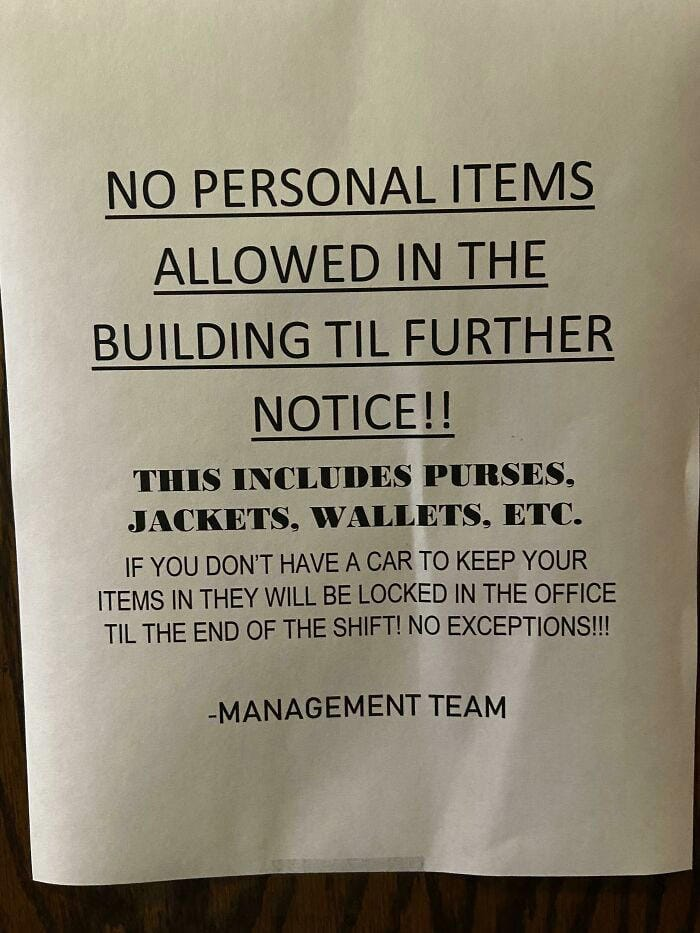
9. "Under New Management"
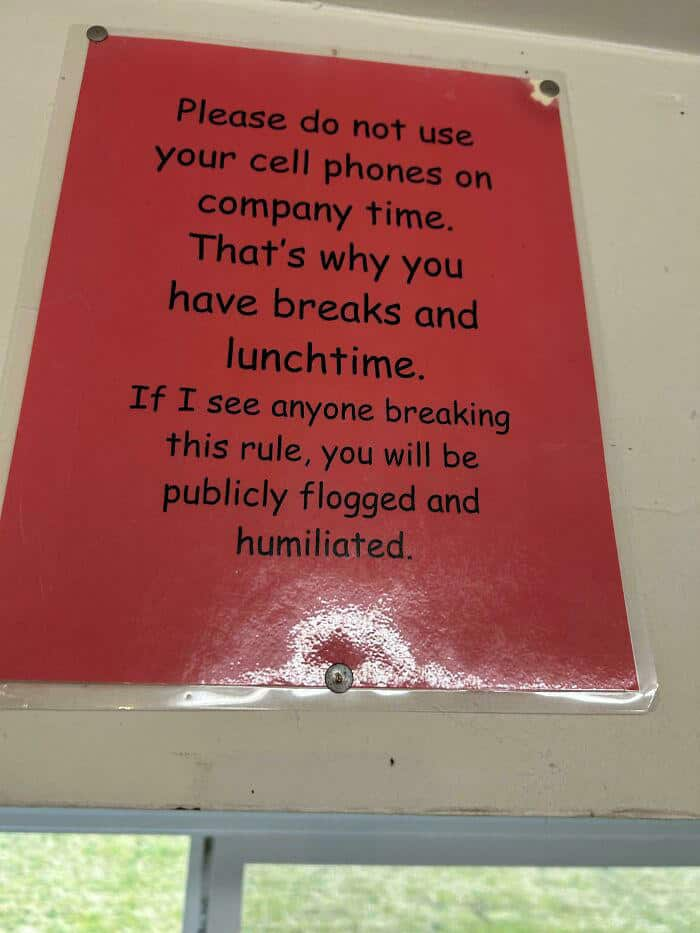
Policies like 'no whining, no crying' reflect a deeper misunderstanding of emotional intelligence in the workplace. Daniel Pink emphasizes that motivation is driven by autonomy, mastery, and purpose, not rigid rules. Research shows that allowing emotional expression can lead to better team dynamics.
Instead of stifling emotions, organizations should encourage emotional intelligence training, helping employees communicate their feelings constructively, which can lead to improved workplace relationships.
10. "My BF’s Snapchat Memory From 2017 – Posted At His Old Job At A Grocery Store"

11. "For Who, Then?"
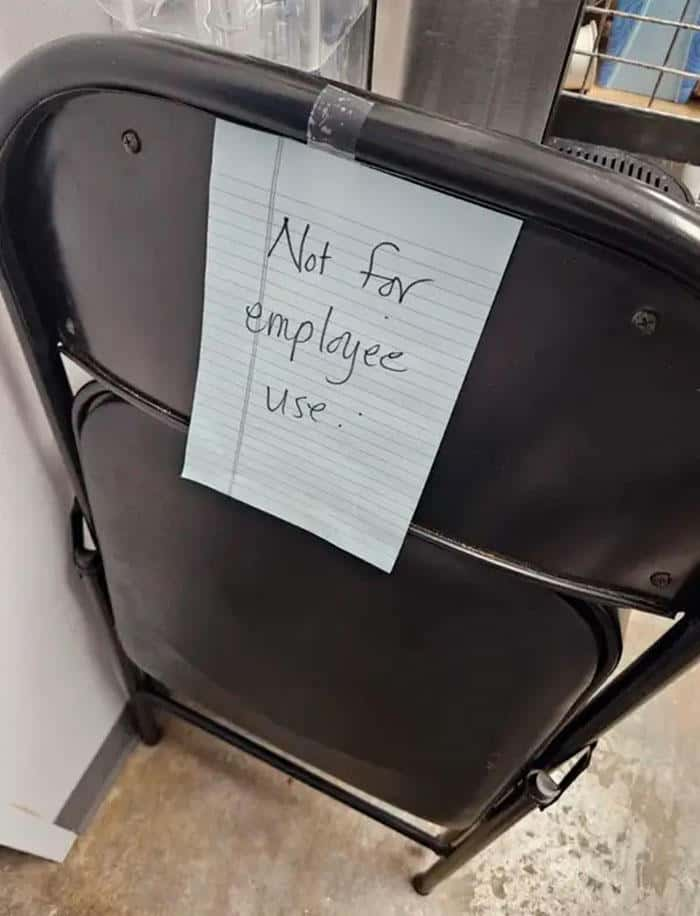
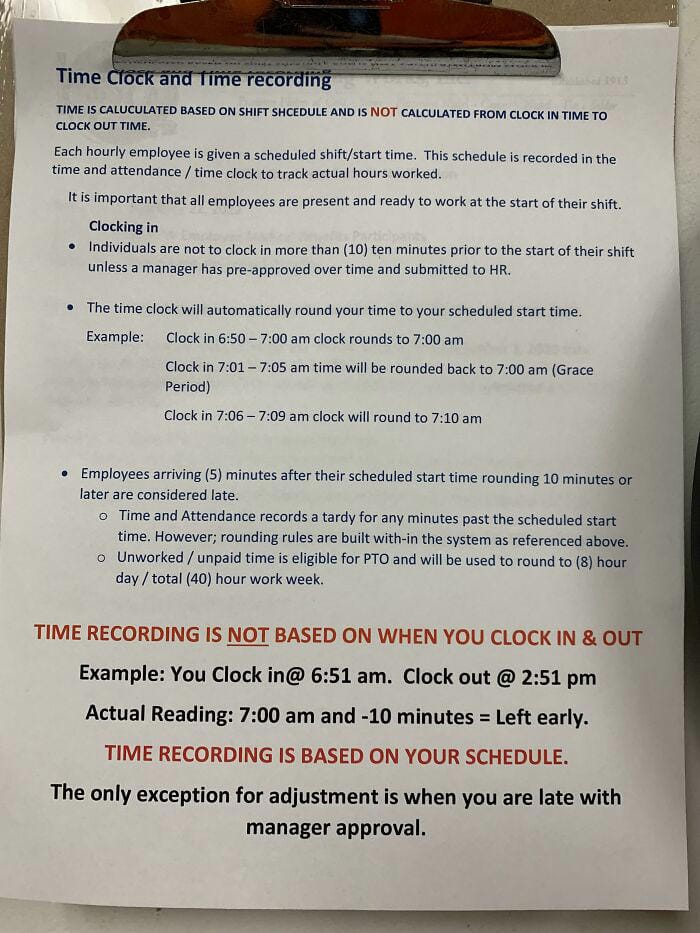
12. "People Have Been Clocking In 10 Minutes Early For 20+ Years. Now We’re Not Allowed To Do That, And If We Do, Our PTO Will Be Used. Everyone Is Now Going To Clock In At 7:04 Every Single Day. I Can’t Wait Until They Notice They’re Actually Getting Less Time From Employees By Implementing This"
Many bizarre workplace policies can be seen as a reflection of archaic management styles. Dr. John Kotter, a leading expert in change management, suggests that organizations should embrace adaptability and innovation to thrive.
He notes that inflexible policies can hinder employee engagement and creativity. Leaders should focus on fostering a culture that embraces change and encourages feedback, allowing the workforce to evolve alongside the organization.
13. "This Workplace That Doesn’t Allow Crying On The Job"

14. "Amazon Is Inhumane"

15. "Company Response To Union Fighting For Our Wages"
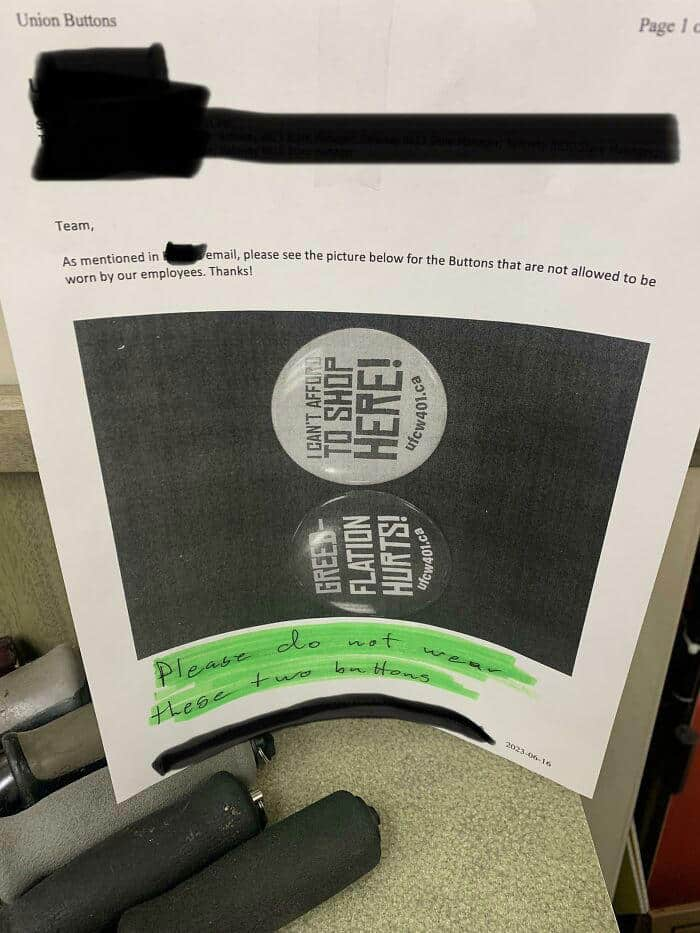
Understanding the psychological impact of absurd policies is crucial. Research by psychologists like Dr. Amy Cuddy indicates that when individuals feel powerless, their performance suffers. Policies that seem trivial can evoke feelings of helplessness among employees.
To counteract this, organizations should implement participatory decision-making processes. Engaging employees in policy creation can lead to more relevant and accepted guidelines, enhancing overall morale.
16. "Manager Just Posted This On The Facebook Group For My Work. We Work In A Very Hot Pub, And We’re Not Allowed Soft Drinks (The ‘Pepsi Or Anything’) On Tap. Yes, The Managers Help Themselves To Free Food And Drinks. I’ll Be Handing In My Notice After My Shift Tomorrow"

17. "My Work Doesn’t Allow You To Use A Toilet As A Toilet"

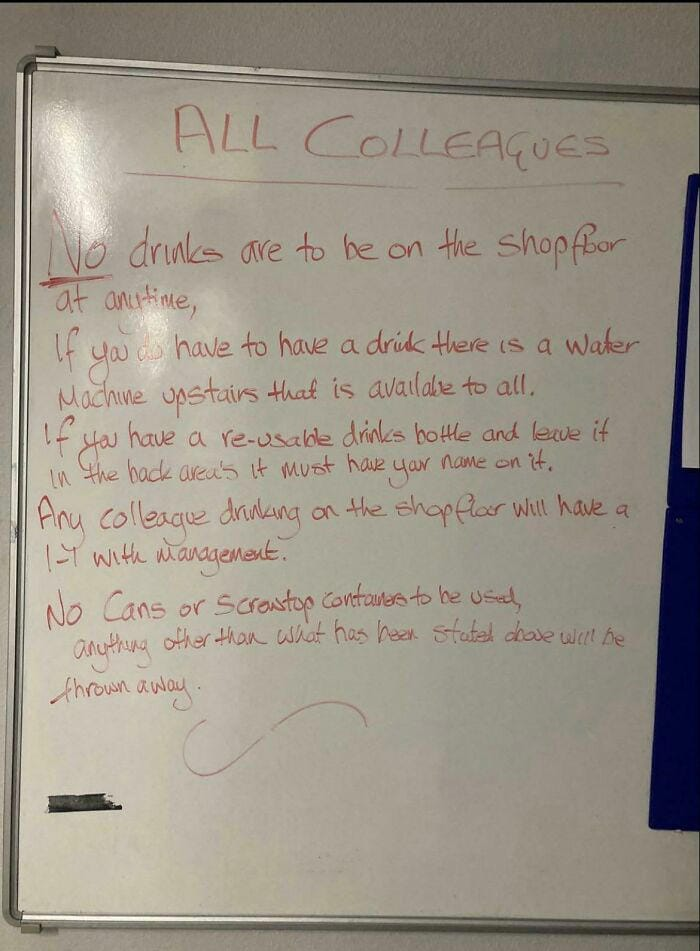
18. "Supermarket Chain In The UK Not Allowing Employees To Have Water Next To Them In A Heatwave"
A relationship expert emphasizes the importance of communication in preventing misunderstandings about workplace policies. Open dialogue can clarify intentions and help employees feel more involved in the decision-making process.
This approach can also mitigate feelings of frustration and confusion. By encouraging feedback and fostering a culture of transparency, organizations can develop policies that align with employee needs and enhance workplace harmony.
19. "What Are They Going To Do If I Don’t Follow Policy? Fire Me?"
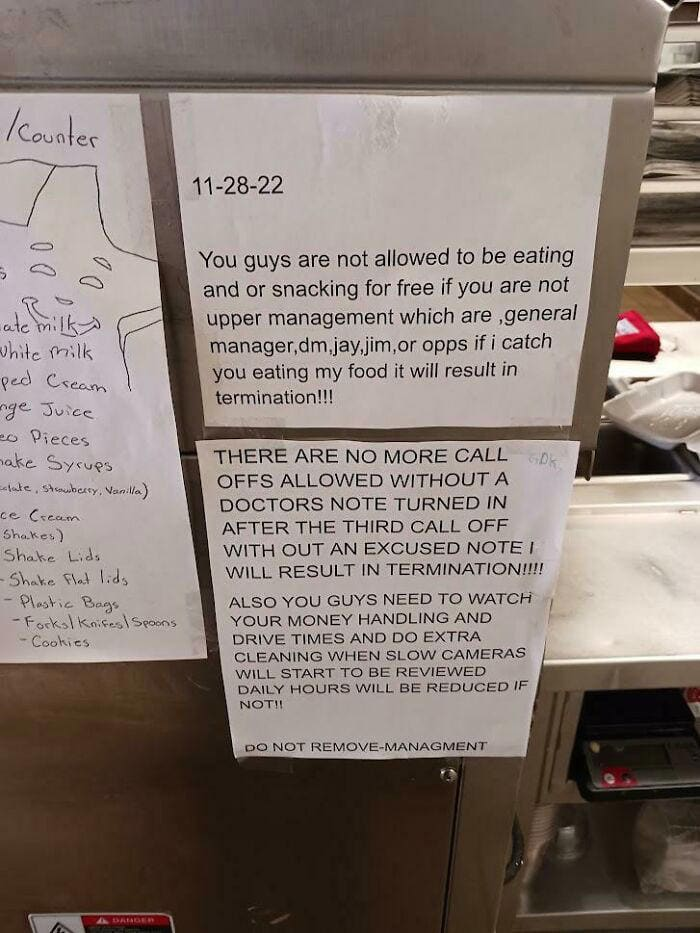
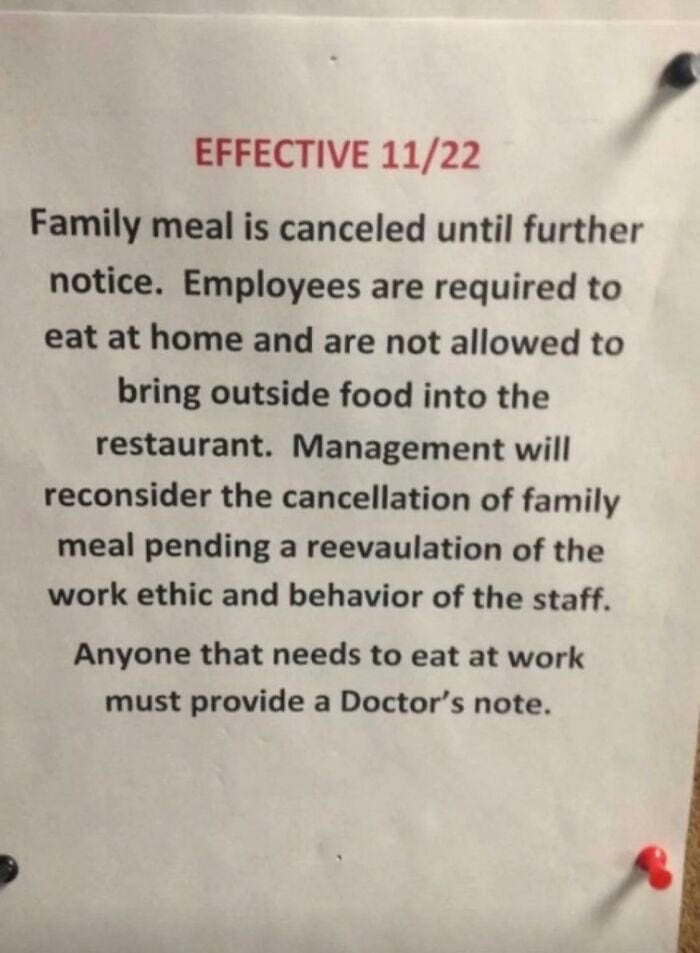
20. "Employees Need A Doctor’s Note To Eat At Work"
21. "You Are Not Allowed To Sit; This Is Not An Office Job." The Last Order Was 90 Minutes Ago

Motivational speaker Tony Robbins suggests that absurd workplace policies might indicate deeper issues within a company's culture. Such policies may stem from fear-based leadership rather than a focus on empowering employees.
To improve workplace culture, Robbins recommends conducting regular surveys and feedback sessions to gauge employee sentiment. This allows leaders to address concerns proactively and pivot away from counterproductive policies.
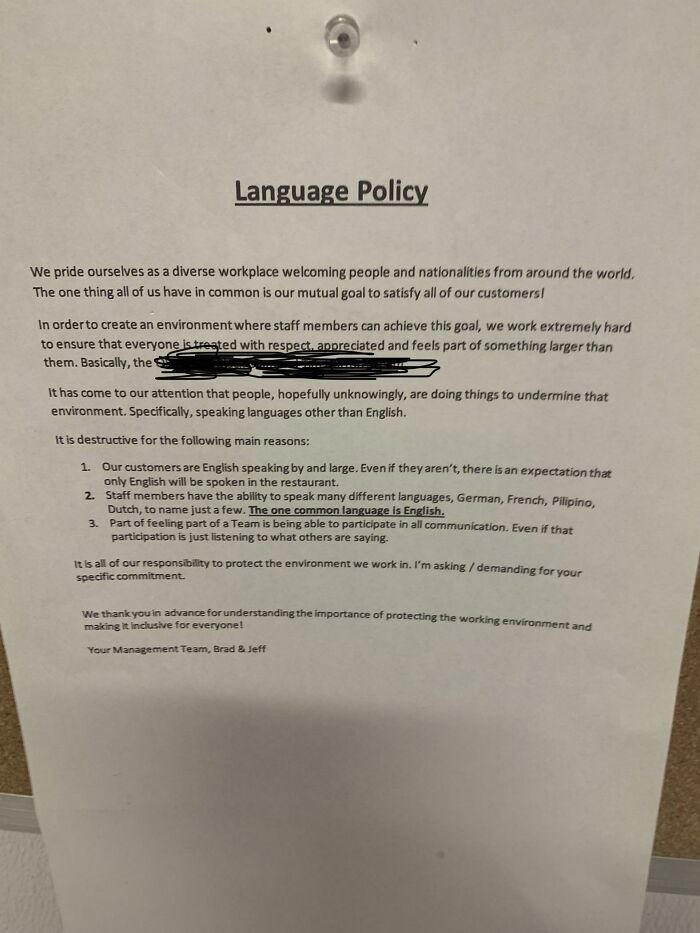
22. "My Store’s Language Policy Of A 'Diverse Work Environment'"
23. "This USPS Mail Sorting Facility Where You Read And Enter Addresses All Day And Are Not Allowed To Speak"
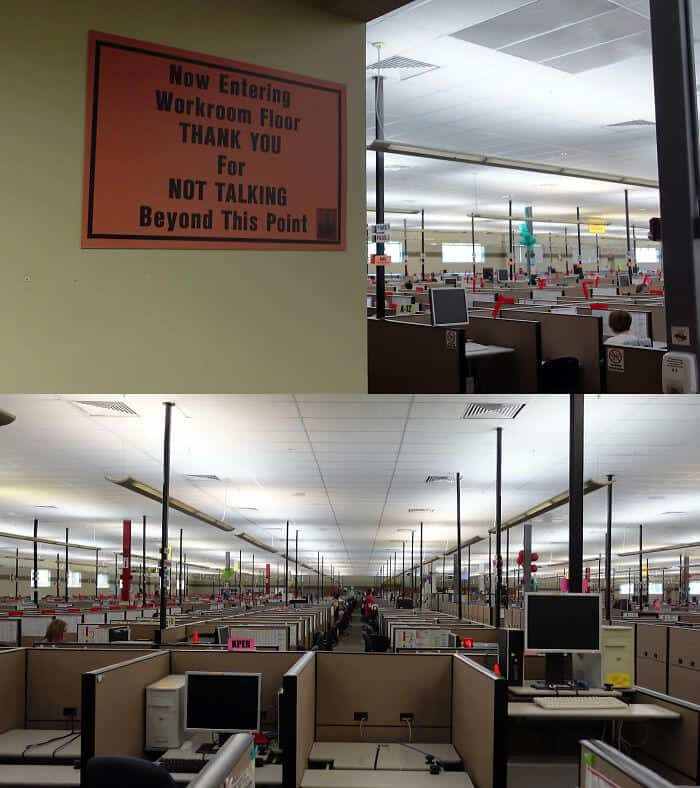
24. "Okay, Boss?"
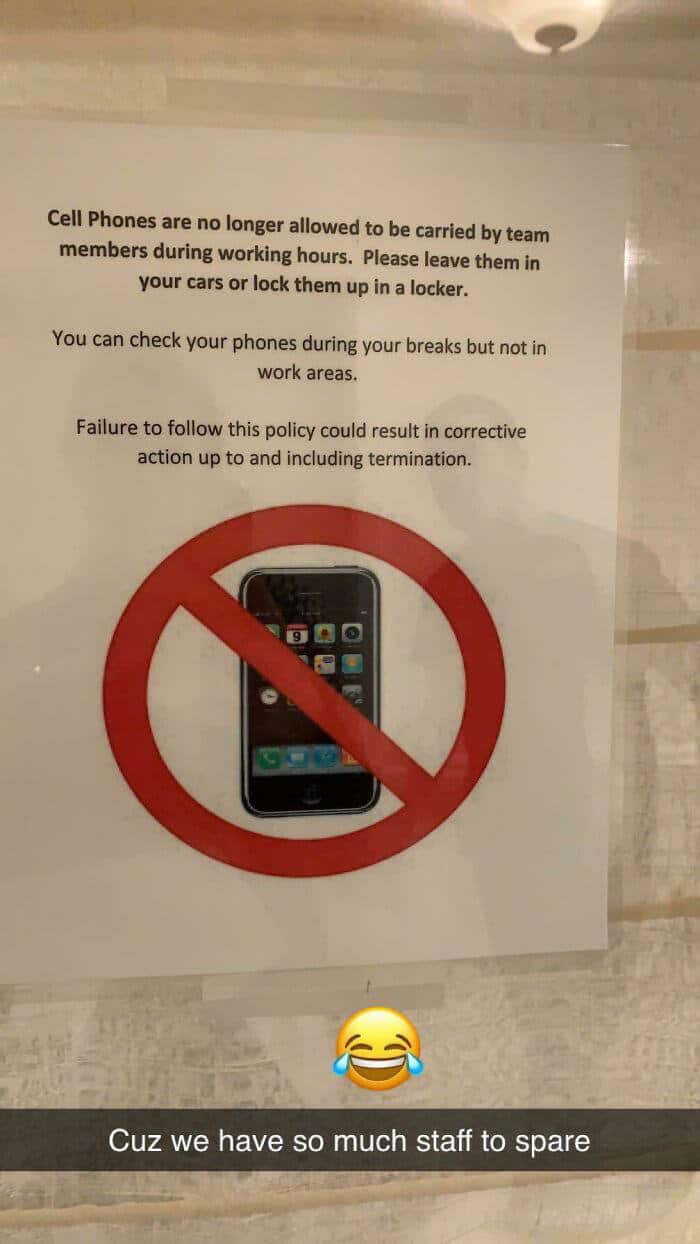
Dr. Judith Beck, a cognitive therapist, notes that rigid policies can lead to stress and anxiety among employees. Her research highlights that cognitive restructuring—reframing negative thoughts—can help employees cope better with workplace challenges.
Organizations should consider providing resources for mental health support and training in resilience. This not only aids employees but also contributes to a healthier work environment overall.
25. "My Old Employer's Wife Who 'Worked' There Made This After Finding A Needle Beside A Dumpster"
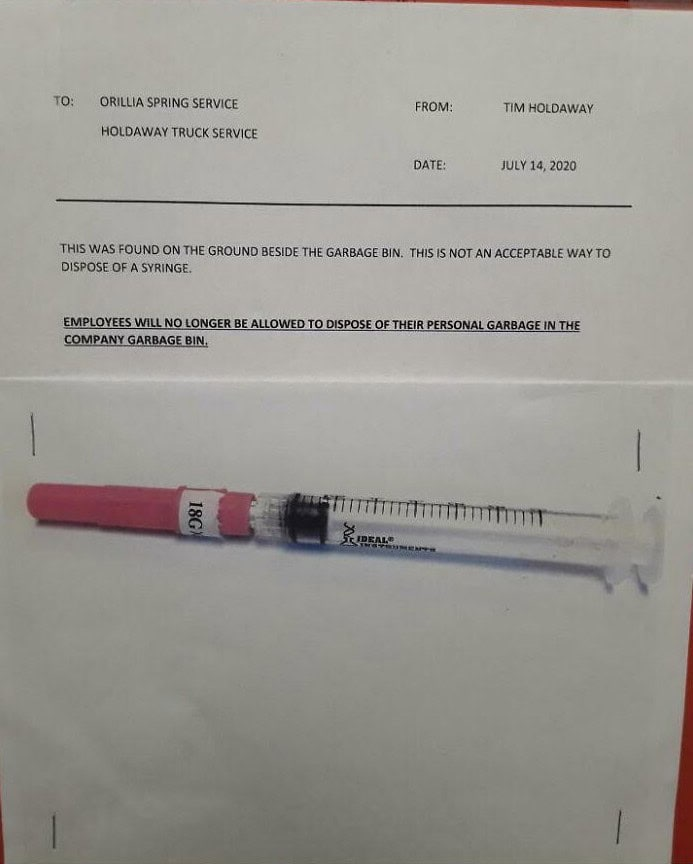
26. "I Work At A Dispensary Where We Are Not Allowed To Have Food/Drinks On The Floor. Thirsty? Wait Until Break. Which We Only Get Three Of In A Twelve-Hour Shift"
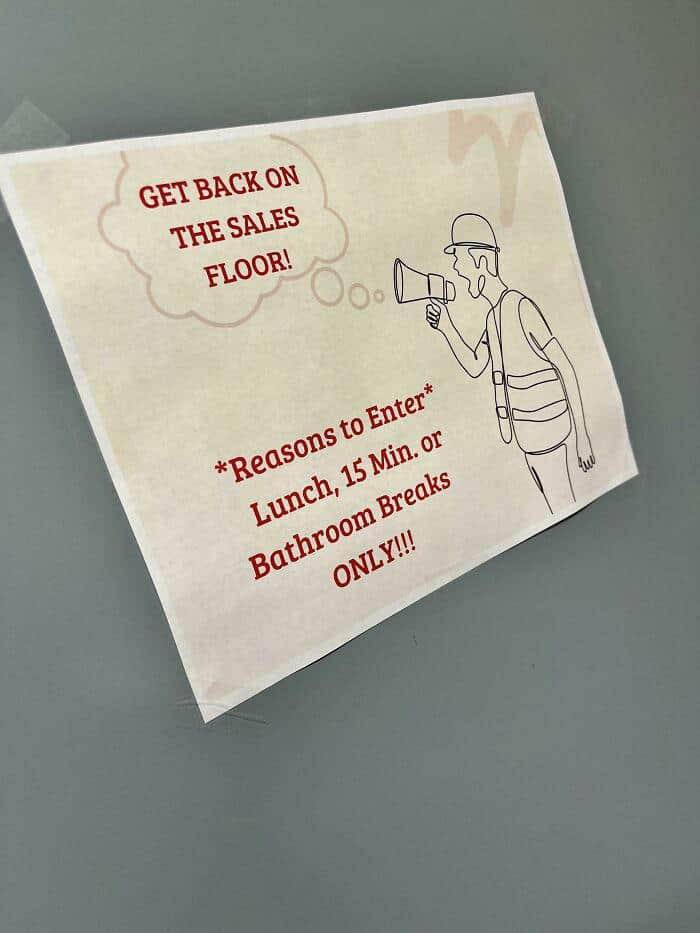
27. "There’s No Way This Is Legal, Right?"
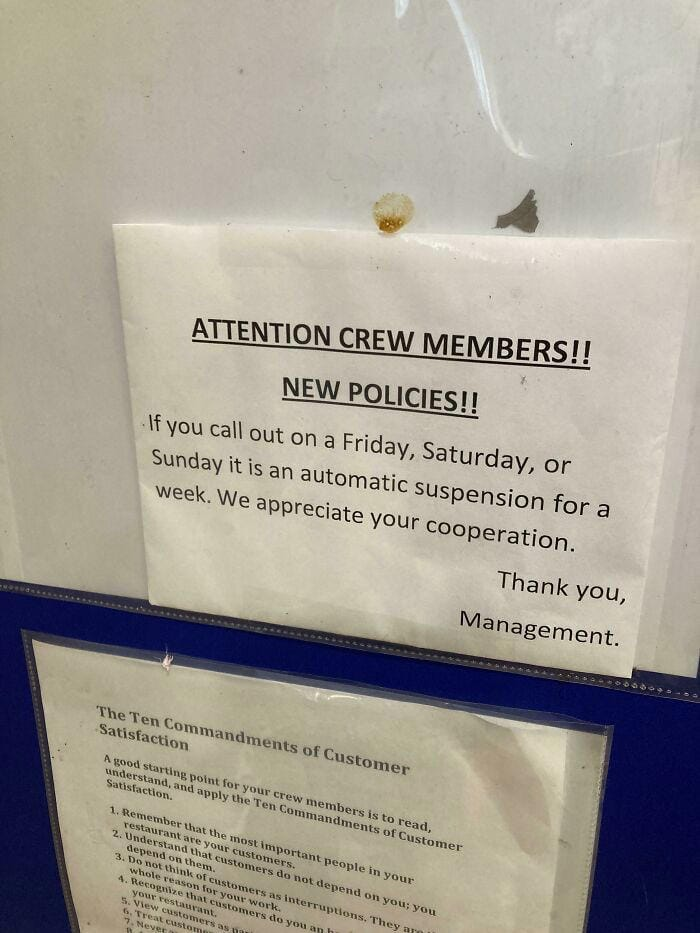
In navigating absurd workplace policies, it's vital to approach the issue with empathy. As Gretchen Rubin points out, understanding human nature and motivations can lead to more effective policies. Employers should take the time to understand why certain rules exist and whether they genuinely serve employee interests.
By conducting regular reviews of workplace policies through employee feedback, organizations can ensure that rules remain relevant and supportive.
28. "No Water For Children. I Quit Today"

29. "How My Workplace (Fast-Food) Feels About Its Employees Staying Hydrated"
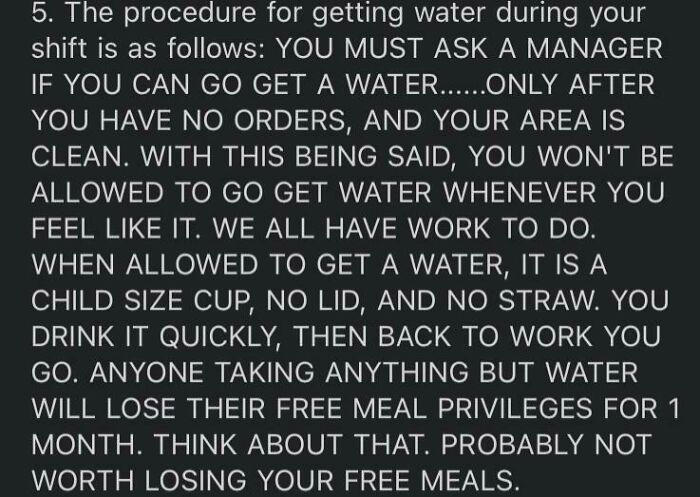
30. "While Some Complain Of Too Much Tipping, Some Are Canceling The Idea"

Dr. Dan Siegel, a prominent psychiatrist, emphasizes the importance of emotional awareness in the workplace. He believes that fostering a culture of emotional intelligence can help mitigate the negative effects of absurd policies.
Organizations can implement training sessions focused on emotional regulation and empathy skills, equipping employees with tools to navigate workplace challenges constructively. This approach can lead to a more harmonious and productive environment.
31. "F**k Our Employees, And The Customers Who Want To Support Them." -Baskin Robbins
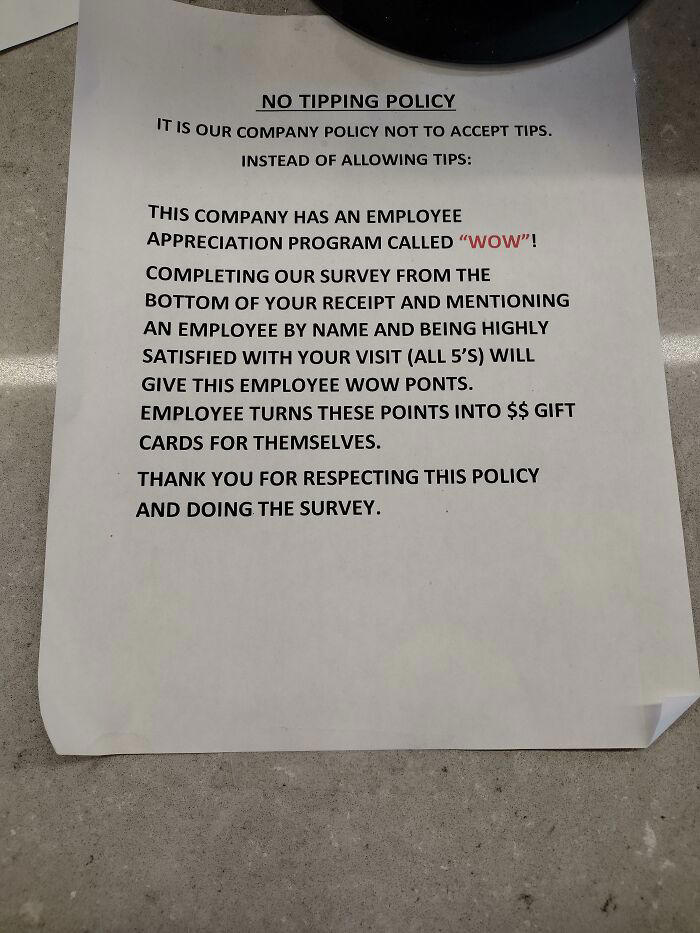
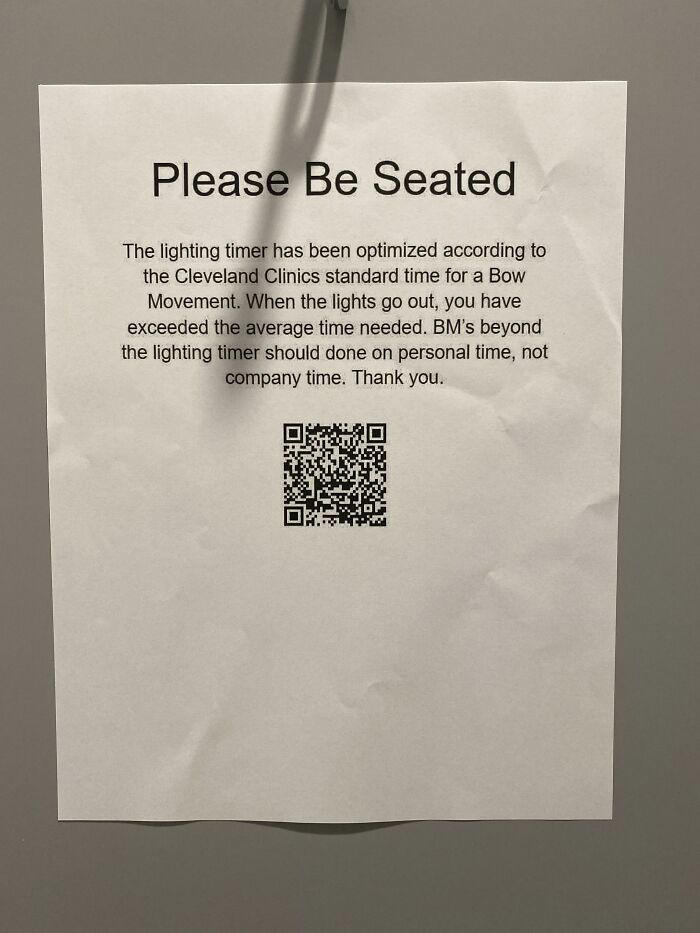
32. "So This Is The Sign Posted On The Bathroom Door At Work Today"
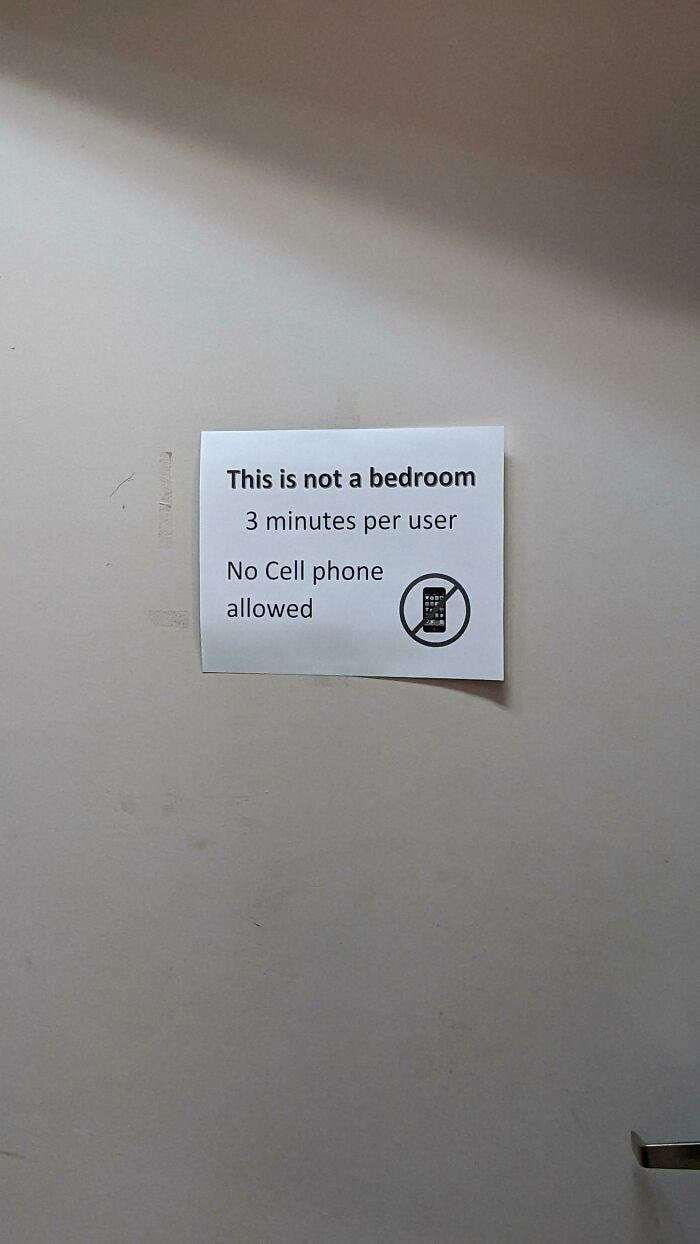
33. "Got This Gem"
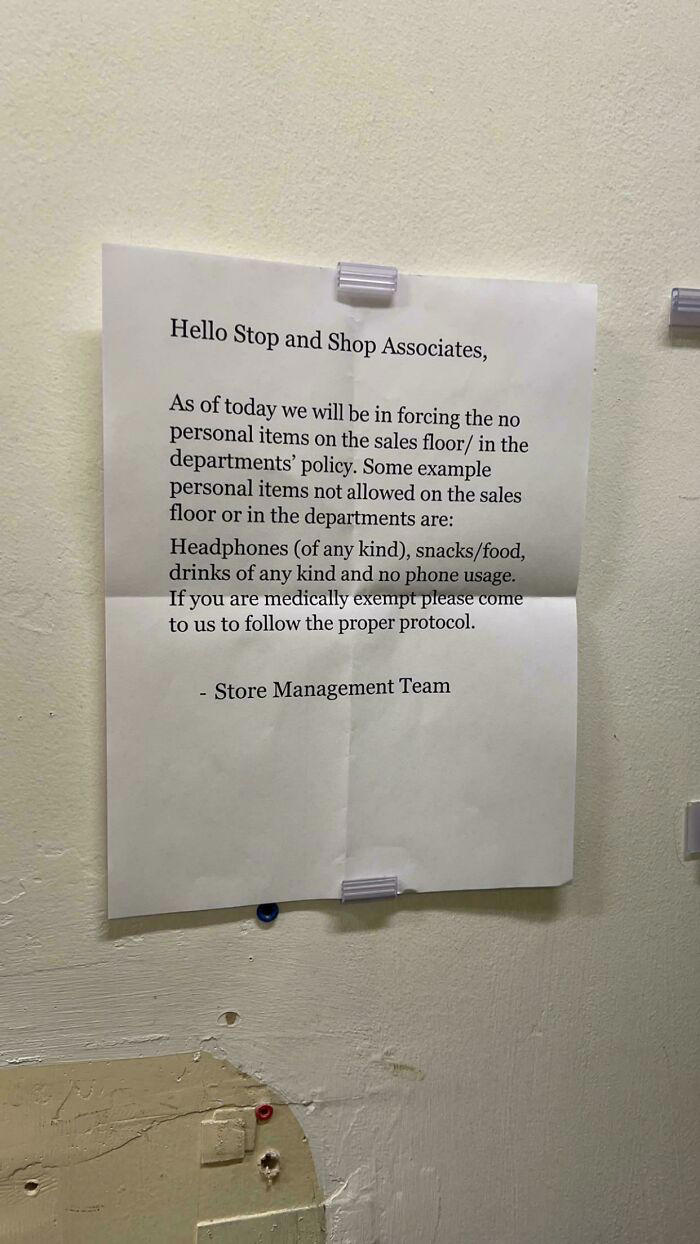
Examining the origins of workplace policies can be revealing. Often, outdated rules stem from a lack of awareness of modern work dynamics. Harvard Business School researchers advocate for regular policy reassessments to ensure alignment with current employee needs.
By engaging employees in these reviews, companies can create a more inclusive environment that values input and encourages collaboration, ultimately leading to more effective policies.
34. "Because Sitting Is Such A Bad Thing When The Job Is Perfectly Capable Of Being Done While Sitting Down"
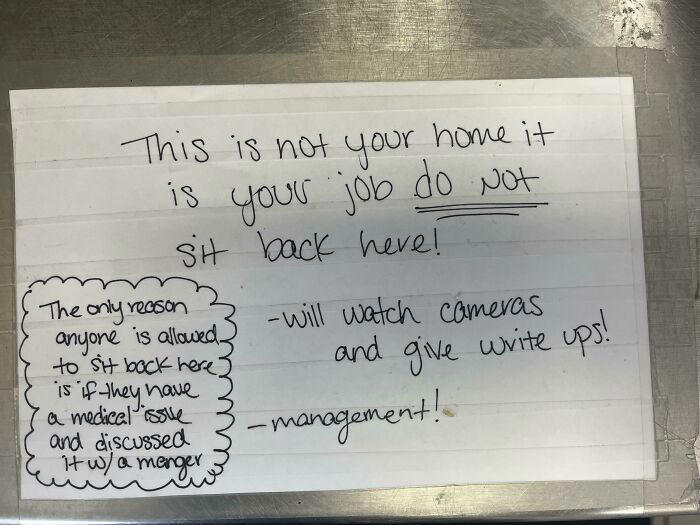
35. "Management Didn’t Even Try To Hide This"
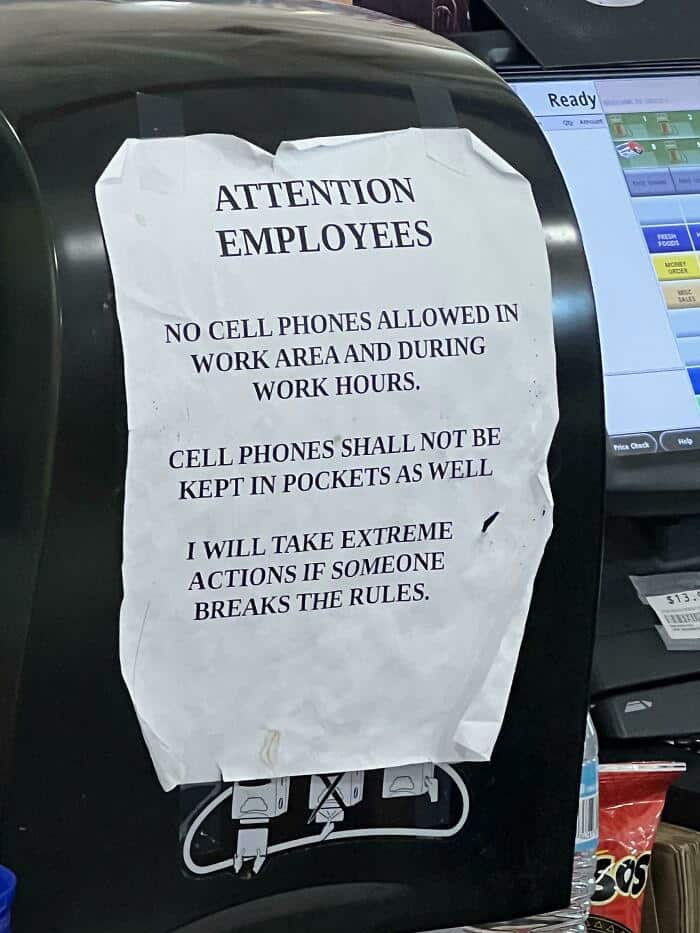
36. "My Job Has Been Lying About The Break Rules For The Year And A Half I’ve Been Here"
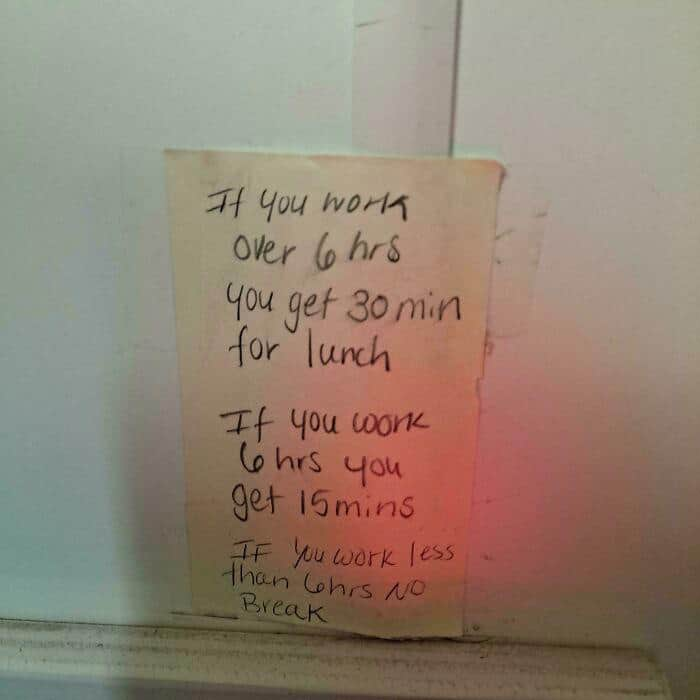
Workplace absurdities can often be mitigated through proactive leadership strategies. Consulting with employees about their experiences can illuminate which policies are effective and which are simply cumbersome.
A collaborative approach to policy-making can help ensure that rules are not only necessary but also beneficial, fostering a sense of ownership among employees. This can significantly improve morale and engagement at work.
37. "You Cannot Be Serious"
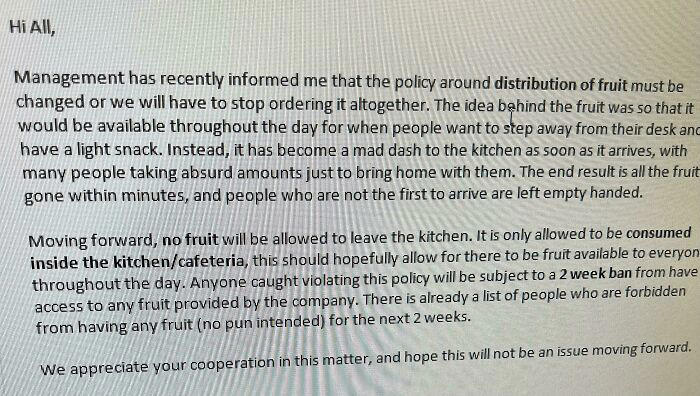
38. "Recently Posted At Work"
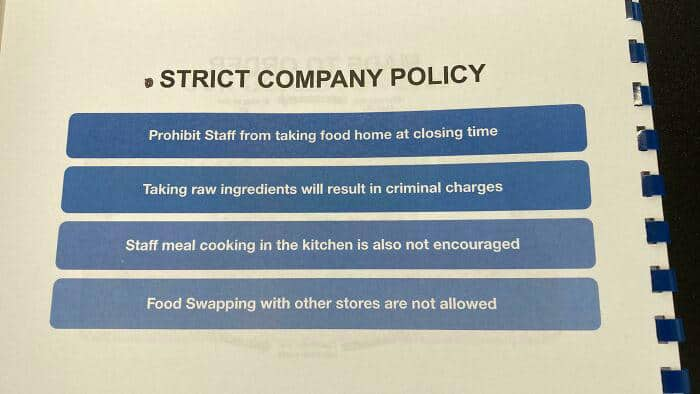
39. "Top Rule Was Added Because A New Member Of Staff Who Couldn’t Afford To Buy Food Took Home A Portion Of The Food That Was Going To Be Thrown Out Anyway"
40. "This Is A Calendar Of The Weeks We’re Allowed To Take A Vacation For (In Green). In Orange Is Not Possible. Yellow Means 'Maybe After We Talk About It, But Realistically? Probably Not.' 13 Weeks In Green. 39 To Bargain For Or To Forget"

Amidst the absurdity, there's a certain dark humor that can be found in the shared experience of enduring such nonsensical rules. It's a reminder that even in the face of the most ridiculous workplace bans, a little laughter can go a long way in maintaining one's sanity and sense of perspective.
Comment down your thoughts, or share this article for all your family and friends to see!
In conclusion, absurd workplace policies often reflect deeper organizational issues that need addressing. By fostering open communication, engaging employees in policy development, and emphasizing emotional intelligence, companies can create a more harmonious work environment.
Experts agree that positive workplace culture should prioritize employee well-being, leading to enhanced productivity and satisfaction. As organizations evolve, regularly reviewing and adapting policies to meet the needs of their workforce is essential for long-term success.