
Man Gets Ripped Online For Refusing To Serve Alcohol To A Woman With A Baby And Judging Her Choices
He didn't feel comfortable serving her one light beer because she might "drive home drunk" with her child.

Damjan Milenkovic
- Published on
There's no denying that people who work in the food service industry have to put up with a lot. From rude customers to long hours to being under-tipped, they see it all.
But it's not always the customers who are the problem. Sometimes, food service workers can be pretty darn rude themselves.
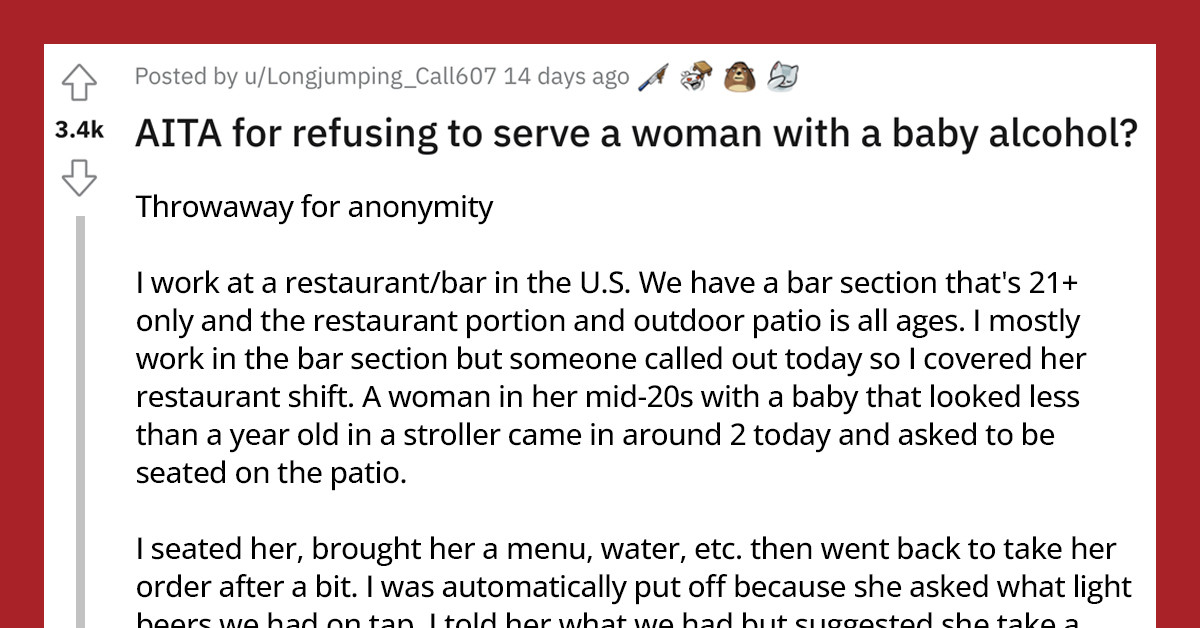
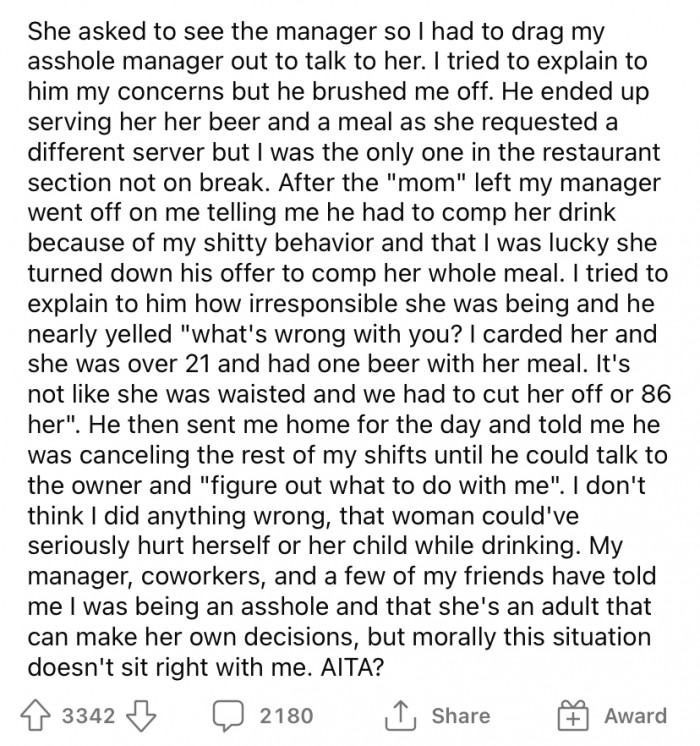
Recently, Reddit user u/Longjumping_Call607 posted a story to the AITA (Am I The A**hole?) subreddit, which probably didn't get quite the response he was hoping for. You see, the Redditor works in a restaurant where, as he explains, he was "put off" by a woman who came in with her baby.
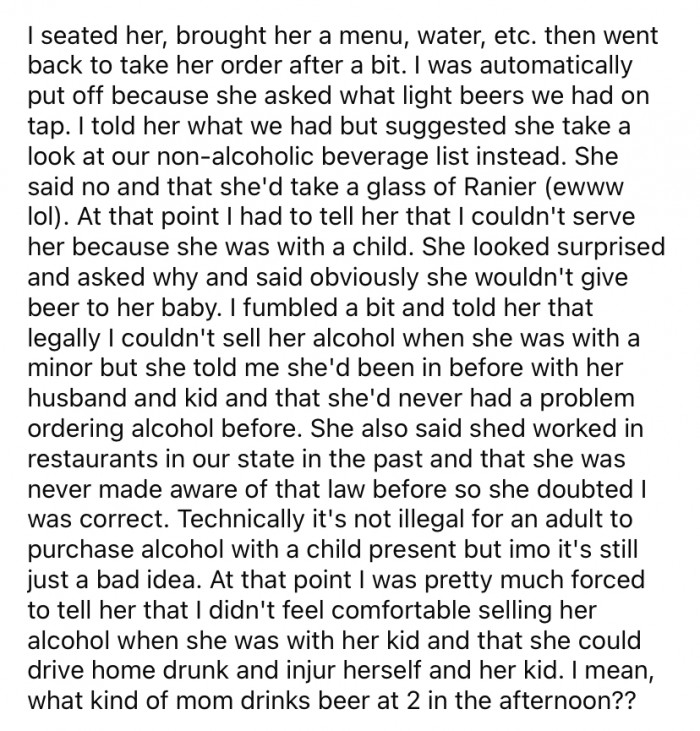
He said the woman asked him what light beers the bar had on tap, to which the OP suggested she take a look at the non-alcoholic drinks menu. The woman refused and asked for a glass of Rainier (an American beer).
The OP told her he would not serve her alcohol because she was with a minor, and it was "illegal." However, the woman understandably wasn't buying it.
She explained to the Redditor that she had previously been to the restaurant with her husband and their baby, and there had never been an issue with ordering alcohol. She also told him that she had worked in restaurants herself, so she knew there was nothing illegal about her ordering a beer.
At that point, the OP had no choice but to come clean and tell her he just didn't feel comfortable serving her alcohol. His reasoning was that she might "drive home drunk" with her child.
Naturally, the woman asked to speak to the restaurant manager, who promptly served her the beer and arranged for a different server to look after her. Our OP was then sent home for the day after being told he was being ridiculous.
So, the man turned to the Reddit community to ask if he was in the wrong. As always, they had plenty to say on the matter, and we have some of their best responses below.
The Reddit user asked, "AITA for refusing to serve a woman with a baby alcohol?"
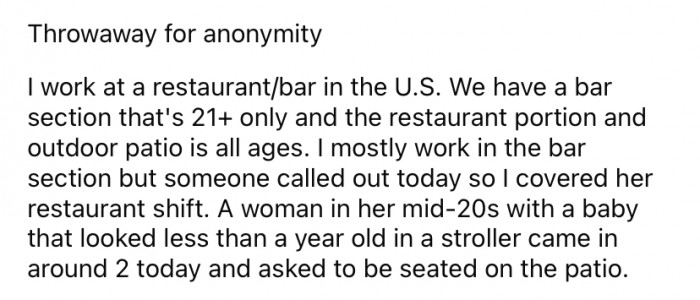
He explained that a woman came into the restaurant where he works with a baby for lunch.
The woman asked him what light beers the bar had on tap, to which the OP suggested she take a look at the non-alcoholic drinks menu. The woman refused and asked for a glass of Rainier (an American beer).
After claiming that it was "illegal" for him to serve her alcohol, the OP eventually came clean and said he didn't feel comfortable serving her the drink because she "might drive home drunk" with her child. And, of course, she wasn't buying it.
The Role of Empathy
Empathy plays a critical role in interpersonal interactions, especially in service-oriented professions. Research published in the journal Social Cognitive and Affective Neuroscience indicates that empathetic individuals are more likely to consider the circumstances of others before passing judgment. In this case, the server's refusal to serve alcohol to a woman with a baby may stem from a lack of empathy, leading to a snap judgment based on his own fears rather than an understanding of her situation.
Empathy can be enhanced through training programs that teach active listening and perspective-taking skills, which can significantly improve service interactions and reduce conflicts. By fostering a culture of empathy among food service professionals, establishments can create a more supportive environment for both employees and customers.
Naturally, the woman asked to speak to the restaurant manager, who promptly served her the beer and arranged for a different server to look after her.
Here's how people reacted.
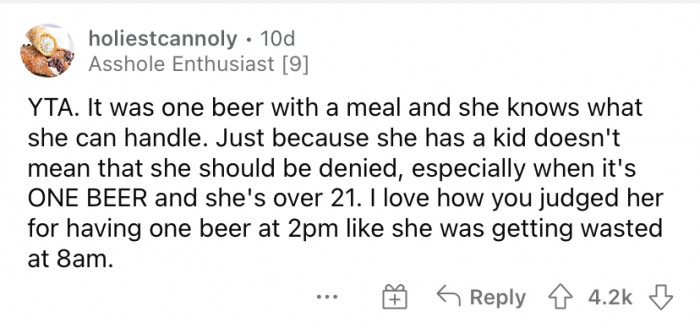
"The logic doesn't make sense."
The decision to refuse service based on personal judgment often reflects underlying biases and assumptions, which can be problematic. A study from the University of California, Berkeley, found that personal stereotypes can cloud judgment and lead to unfair treatment of individuals based on their circumstances (Bennett et al., 2019). This highlights the importance of self-awareness in service roles, where employees must recognize and challenge their biases to serve all customers fairly.
Encouraging self-reflection through training and open dialogue can help service workers identify their biases and improve their decision-making processes. This approach not only enhances customer satisfaction but also promotes a more equitable service environment.
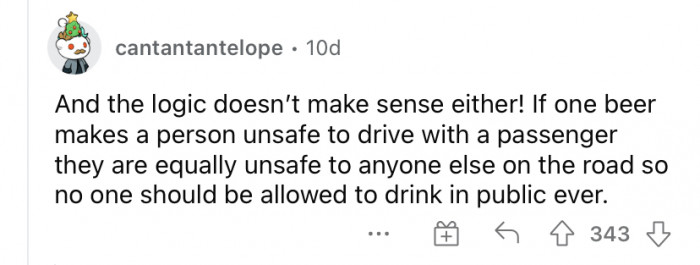
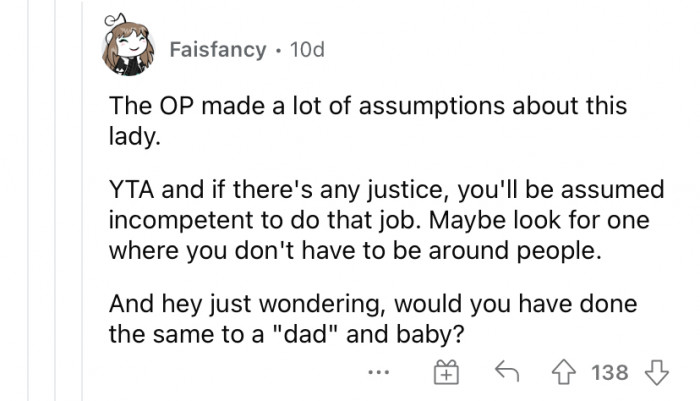
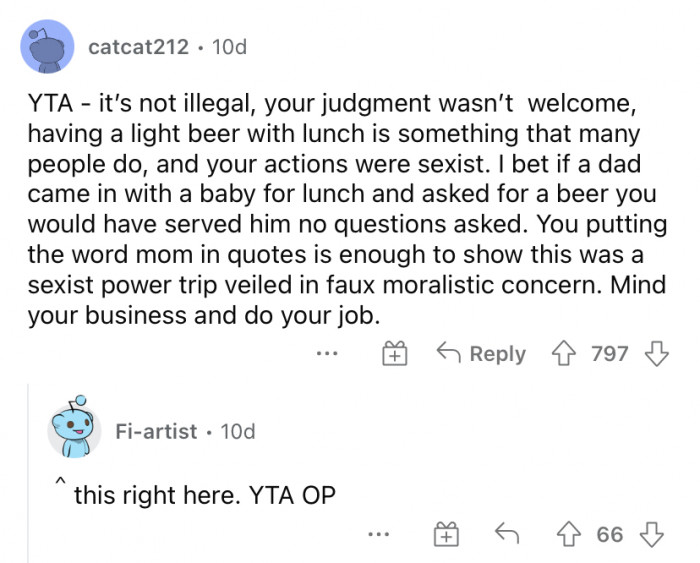
What if it was "a dad and baby?"
It's not the first time.
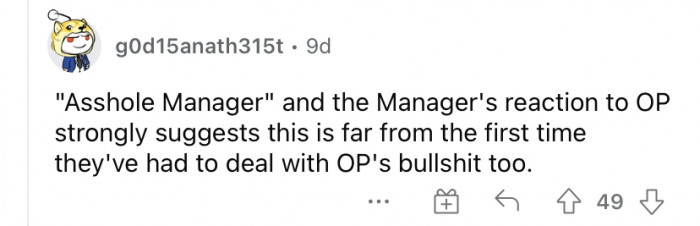
"It's not your f***ing call to make."
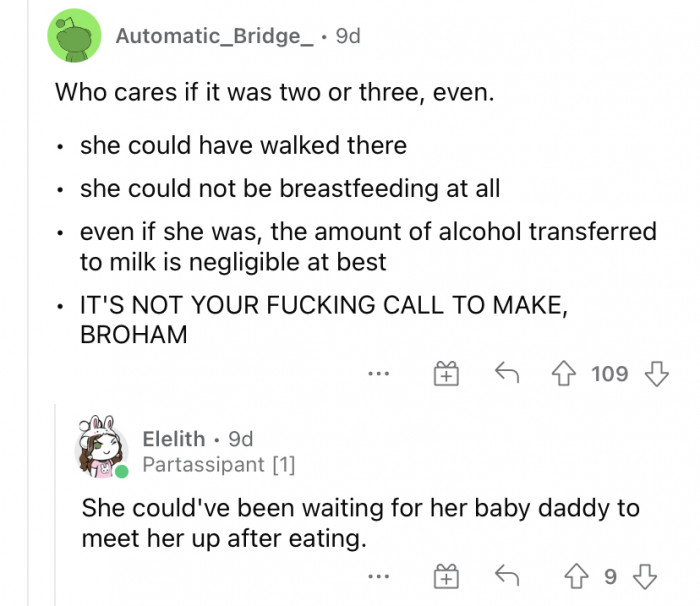
Understanding Decision-Making Under Stress
Decision-making under stress can often lead to irrational judgments, as highlighted by research from Yale University. The study found that stress can significantly impair our ability to process information and make sound decisions, often leading to overgeneralizations or impulsive choices (Yerkes-Dodson Law). The server in this scenario may have reacted based on an instinctual fear of potential harm rather than a rational assessment of the situation.
To combat this, service industry training programs can incorporate stress management techniques, such as mindfulness and emotion regulation strategies, which help employees maintain clarity and composure during high-pressure interactions. By equipping workers with these skills, establishments can reduce the likelihood of biased or emotionally driven decisions.
"YTA."
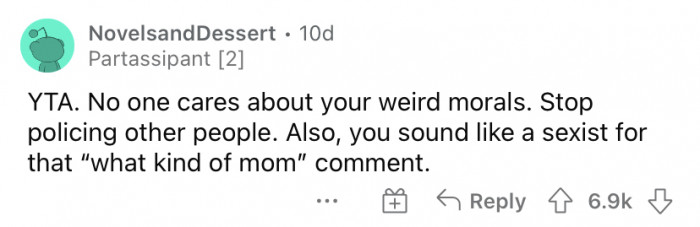
Doesn't every mom?
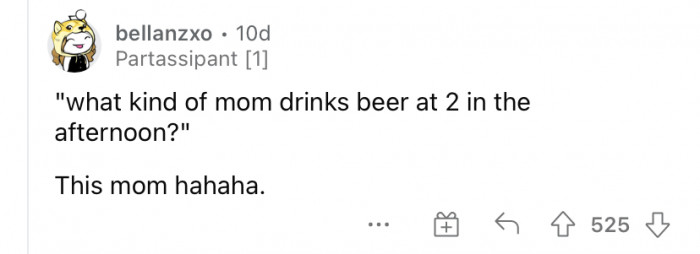
"What an a**hole."

Social norms significantly influence behavior, particularly in public settings. The server's reaction may reflect societal expectations about motherhood and alcohol consumption, revealing an implicit belief that mothers should never drink alcohol, especially in the presence of their children. Research from the University of Michigan shows that such societal norms can create stigmas that unfairly judge parenting choices, leading to guilt and shame for those who deviate from these norms (Kearney & Levine, 2015).
To address these stigmas, educational programs can help promote a more nuanced understanding of parental choices, emphasizing the importance of context and individual circumstances. Creating supportive communities that validate diverse parenting styles can reduce the pressure and isolation felt by parents, ultimately leading to healthier societal attitudes.
"Yuck, YTA."
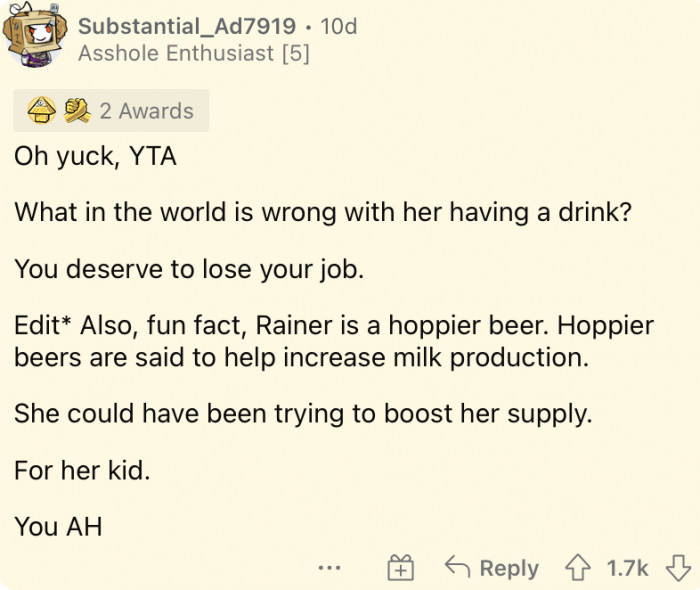
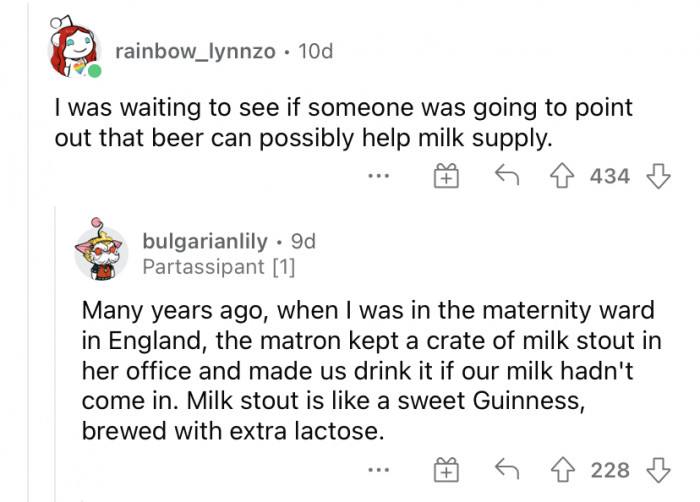
It's science.
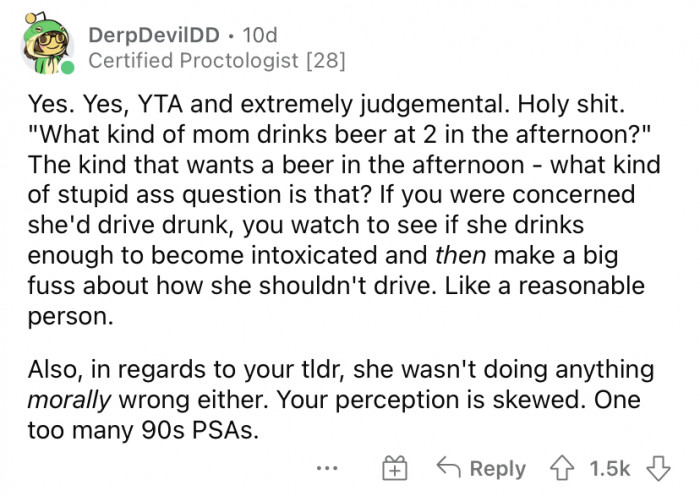
"Your perception is skewed."
The Impact of Judgment on Relationships
Judgment in social interactions can lead to detrimental effects on relationships, particularly in customer-service dynamics. Research indicates that when service workers express negative biases or judgments, it can result in a breakdown of trust and rapport with customers (Homburg et al., 2016). In this case, the server's judgment may not only harm his relationship with the customer but could also impact the overall atmosphere of the establishment.
Training in emotional intelligence for service employees can enhance their ability to manage their responses and foster positive interactions. By focusing on relationship-building rather than judgment, service professionals can create a welcoming environment that encourages customer loyalty and satisfaction.
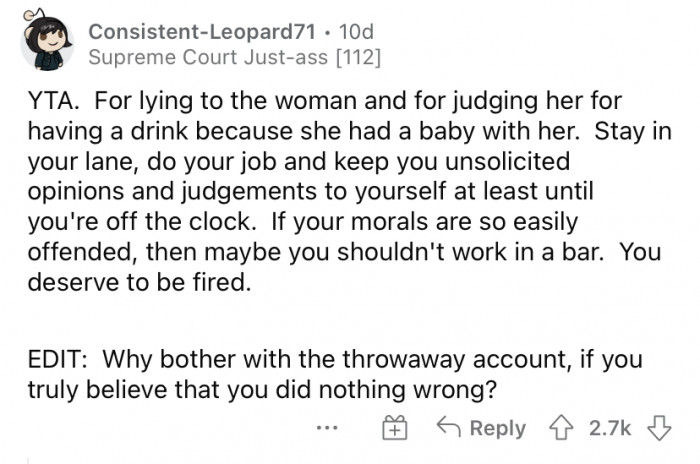
"Stay in your lane."
"This poor mom was probably looking for one peaceful dinner."

"Your judgment wasn't welcome."
It’s vital to understand the psychological underpinnings of the judgments we make, particularly in emotionally charged situations. Studies reveal that individuals often project their fears and insecurities onto others, leading to defensive or overly cautious behavior (Gross, 2015). The server may have acted out of concern for the safety of the child, but this concern could stem from personal fears about responsibility or parenting.
To mitigate these defensive reactions, organizations can promote workshops focusing on self-awareness and emotional processing. By encouraging employees to explore their motivations and triggers, they can respond more constructively rather than reactively, enhancing both their personal growth and professional interactions.
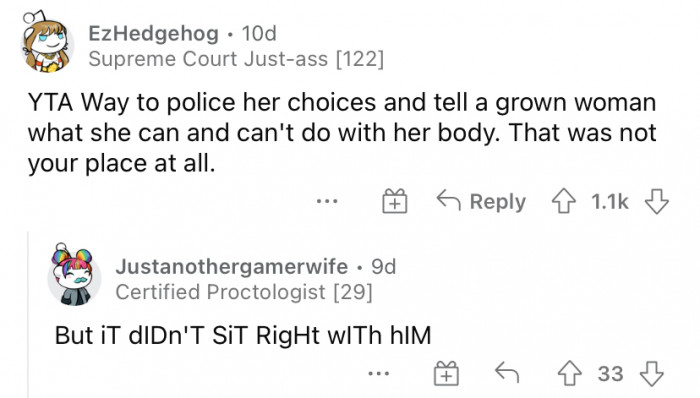
"Not your place."
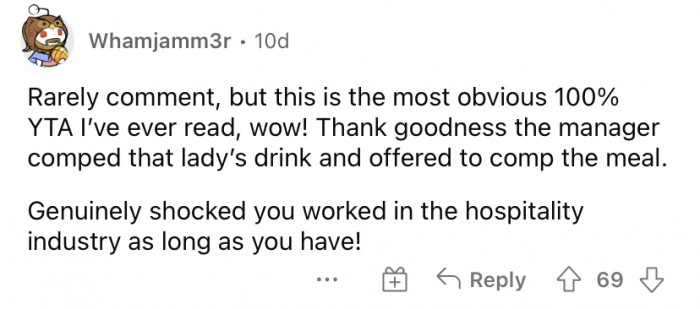
"The most obvious 100% YTA I've ever read."
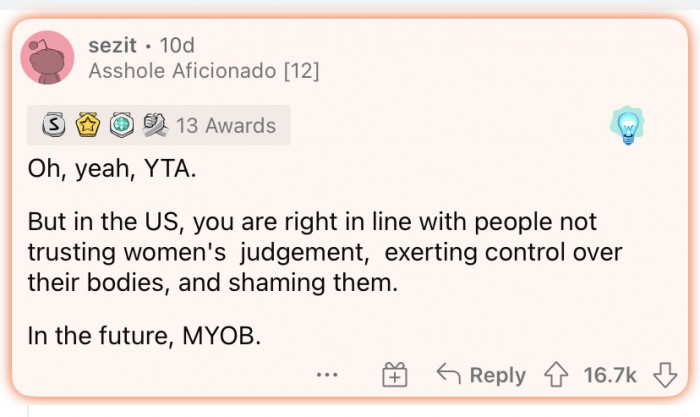
"MYOB."
Practical Solutions for Service Staff
For food service workers facing similar dilemmas, practical solutions can help navigate complex customer interactions. One approach is implementing a 'pause and reflect' policy, where employees take a moment to consider their responses before acting. Research indicates that taking brief pauses can improve decision-making quality by reducing impulsivity and allowing for more thoughtful consideration of various factors (Baumeister et al., 2018).
Additionally, role-playing exercises during training can prepare staff for challenging scenarios, allowing them to practice empathy and critical thinking in a safe environment. These strategies not only empower employees but also enhance customer experiences, leading to a more positive service culture overall.
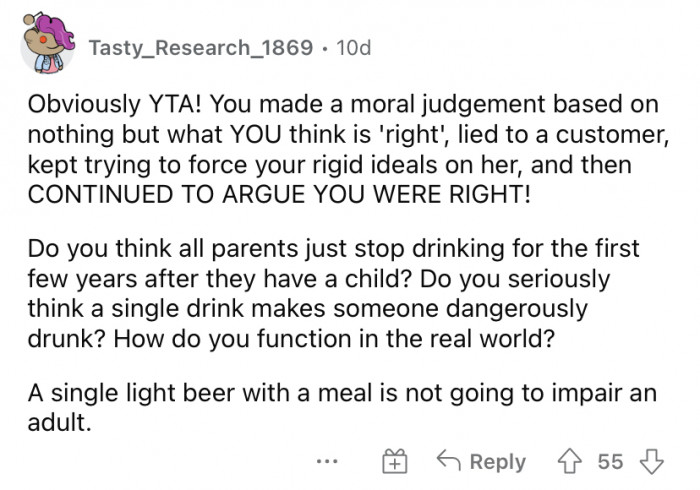
"A single light beer with a meal is not going to impair an adult."
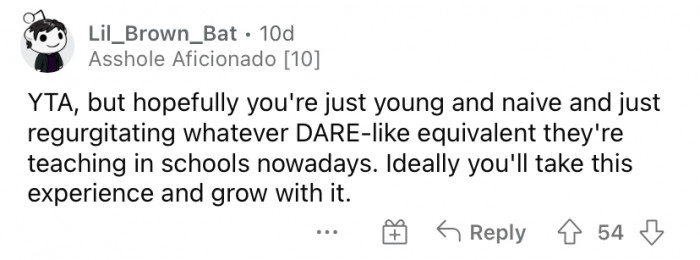
"Hopefully you're just young and naive."
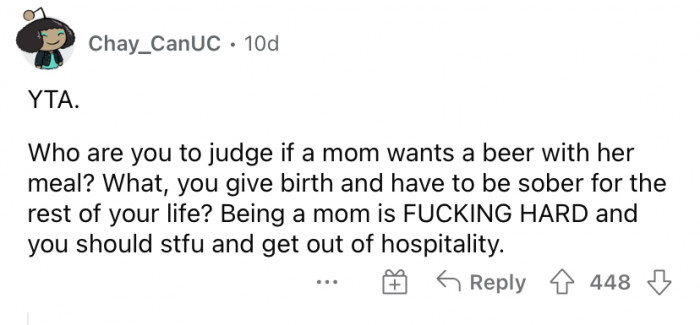
"Who are you to judge?"
Understanding the psychological mechanisms behind our reactions can lead to more compassionate interactions. Research indicates that cultivating an attitude of curiosity rather than judgment can foster empathy and understanding (Haidt, 2006). In the context of the server's refusal, asking questions rather than making assumptions would have likely led to a more constructive dialogue.
Encouraging service staff to practice curiosity in their interactions can transform potentially confrontational situations into opportunities for connection and understanding. Training that emphasizes open-ended questions and active listening can create a more inclusive environment where all customers feel valued and respected.
What's your take on this one? Do you think our OP was out of line, or do you think he was being reasonable to refuse service to the woman?
Either way, surely the fact that he lied about it being "illegal" to serve her in the first place isn't a great look, right? Let's hope he learned an important lesson on refraining from judgment in the future.
We would love to hear your opinions on this. You can share your thoughts with us in the comment section below.
Expert Opinion
The server's refusal to serve the woman with a baby likely stems from a mix of personal biases and societal expectations regarding motherhood. His instinctual fear about her drinking while parenting may have overshadowed any rational assessment of the situation, reflecting how strong emotions can cloud judgment. When service workers are equipped with better empathy and decision-making training, they can make more thoughtful choices that foster a supportive atmosphere for everyone involved.Behavioral specialists highlight that reactions like the server's are often rooted in a mix of personal biases and societal pressures, which can cloud judgment in emotionally charged situations. Research consistently shows that with proper training focusing on empathy, decision-making under stress, and bias recognition, service workers can significantly improve their interactions with customers. Ultimately, fostering a culture of understanding and compassion not only benefits individual relationships but also enhances the overall environment in service sectors, leading to better outcomes for both employees and customers alike.