
Orangutan Struggles to Defend Home Against Encroaching Excavator
The shocking reality is that over 2.5 million acres of forests are lost every year due to deforestation.

Damjan Milenkovic
- Published on
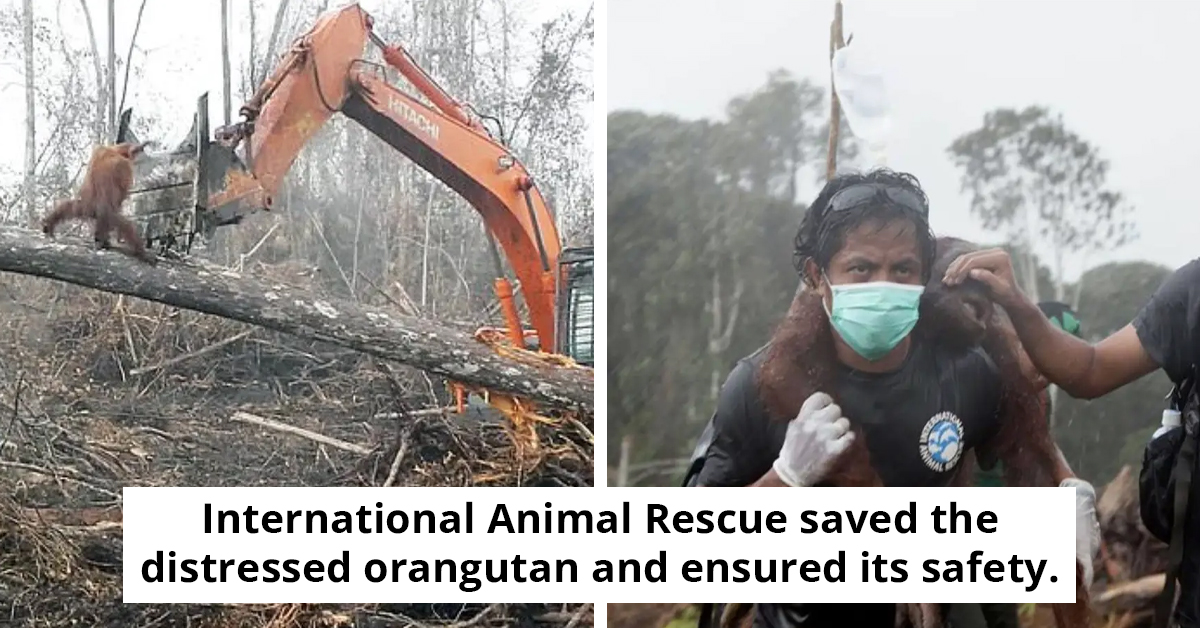
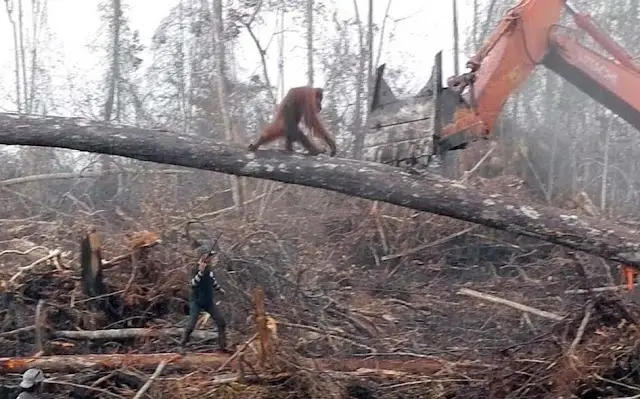
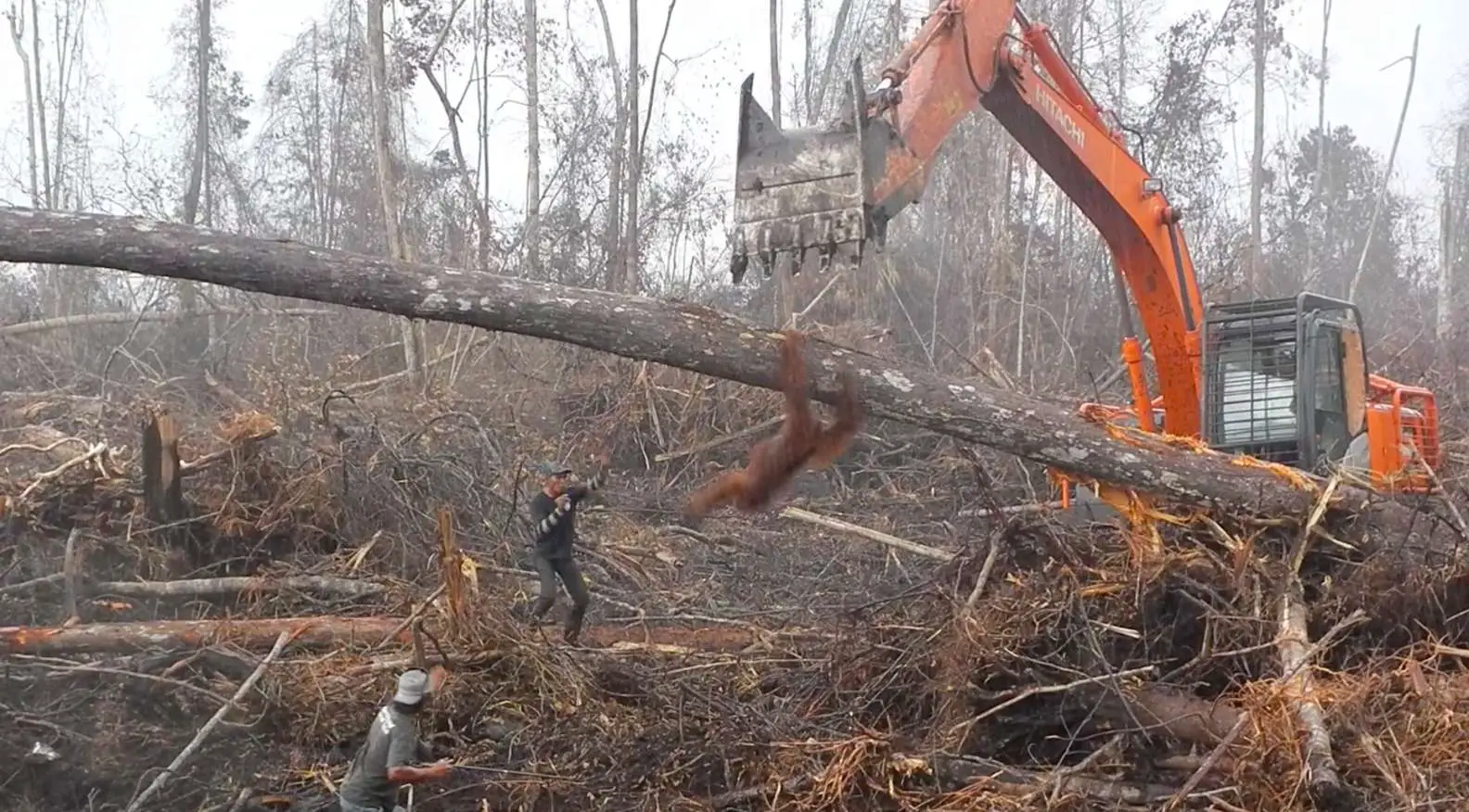
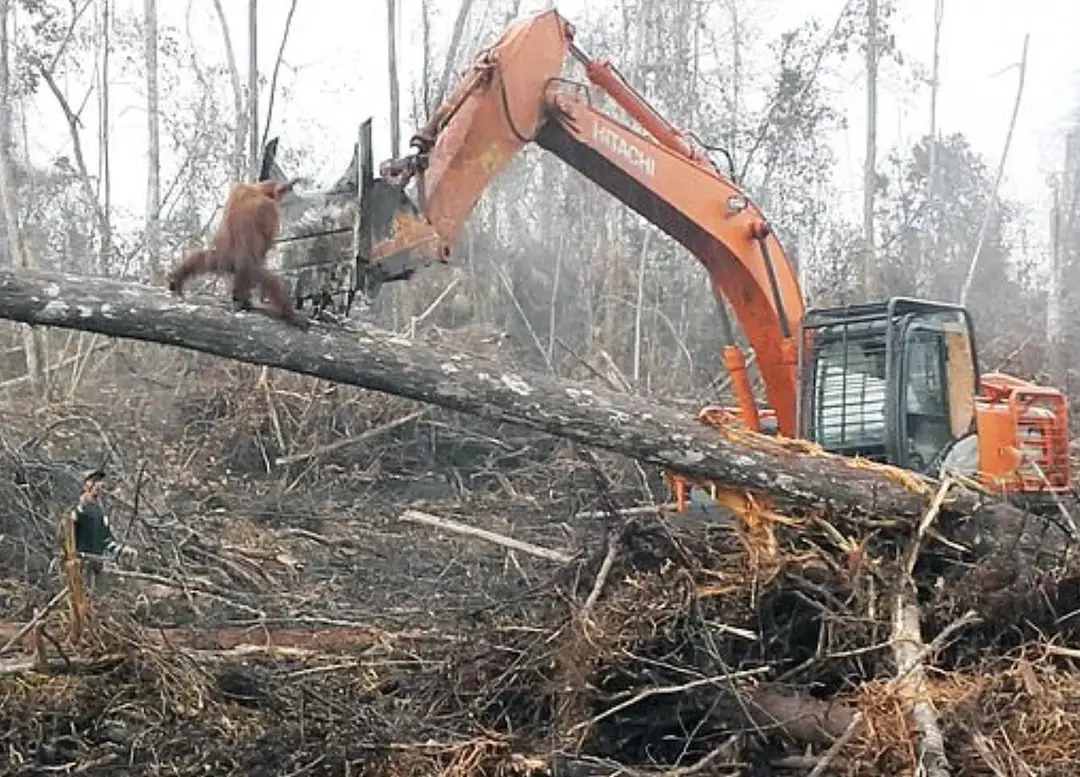
Social media users have been stunned by distressing footage of an orangutan fiercely attempting to defend its habitat from an excavator. Despite its valiant efforts, the helpless primate is unable to prevent the destruction of its home with its bare hands.
This image poignantly reminds us of the devastating effects of deforestation on our planet, as thousands of innocent animals lose their habitats and entire species face extinction. In this particular case, the heart-wrenching sight of the orangutan witnessing the destruction of its forest home highlights the tragic consequences of human actions on our fragile ecosystem.
Despite the orangutan’s desperate resistance, its home is ultimately reduced to rubble. The International Animal Rescue aided the distressed orangutan, rescuing the primate and ensuring its safety.
The organization also shared the heart-wrenching footage, which was captured in the Sungai Putri forest of West Kalimantan, Indonesia, the natural habitat of the critically endangered Bornean orangutans.
Tragically, the orangutan’s home has been shrinking as entire forests are cleared to make way for oil palm plantations. This has been a recurring issue for several years, devastating the dwindling population of these apes.
The shocking reality is that over 2.5 million acres of forests are lost every year due to deforestation. Unfortunately, scenes like this are becoming increasingly frequent in Indonesia.
Deforestation has caused the orangutan population to plummet, habitats to be destroyed, and orangutans to starve or face worse fates.
Even though it tries hard, the poor orangutan can't stop its home from being destroyed with its bare hands.
Thousands of animals are losing their habitats, leading to species extinction.
Bornean orangutans are one of the three species of orangutans and are found predominantly on the island of Borneo, which is divided among three countries: Indonesia, Malaysia, and Brunei. In Indonesia, these orangutans primarily inhabit the rainforests of Kalimantan, the Indonesian part of Borneo.
The Bornean orangutan (Pongo pygmaeus) is classified as Critically Endangered by the International Union for Conservation of Nature (IUCN). This status is due to several threats, the most significant of which is habitat loss primarily caused by deforestation for palm oil plantations, logging, and mining. Illegal wildlife trade and hunting also pose serious risks to their population.
Bornean orangutans are the largest arboreal mammals and spend most of their lives in trees. Their diet is predominantly frugivorous, consisting mostly of fruits but also including leaves, bark, and occasionally insects. These orangutans are known for their remarkable intelligence, demonstrated by their use of sophisticated tools and complex social structures.
In light of the alarming footage of the orangutan confronting the excavator, wildlife conservationists urge immediate action to address habitat destruction. Experts like Dr. Patricia McConnell highlight that raising public awareness about deforestation is crucial. Social media campaigns can mobilize communities and influence policy changes more effectively than ever.
Conservationists recommend that individuals support organizations focused on habitat preservation, participate in local conservation efforts, and advocate for legislation that prioritizes environmental protection. By fostering a sense of urgency and community involvement, we can create a collective impact in safeguarding these vital ecosystems.
The orangutan's distress at seeing its forest home destroyed underscores the tragic impact of human actions on our ecosystem.
The Urgency of Habitat Protection
Dr. Jane Goodall, a renowned primatologist, emphasizes the importance of preserving orangutan habitats for ecological balance. Deforestation not only threatens the survival of orangutans but also disrupts entire ecosystems, leading to biodiversity loss. According to her research, sustainable land management practices can significantly mitigate these impacts.
To protect wildlife, Dr. Goodall advocates for a multi-faceted approach: enforcing stricter regulations on logging, promoting reforestation efforts, and supporting local communities in sustainable agricultural practices. These strategies not only help in preserving habitats but also empower communities to coexist with wildlife.
International Animal Rescue saved the distressed orangutan and ensured its safety.
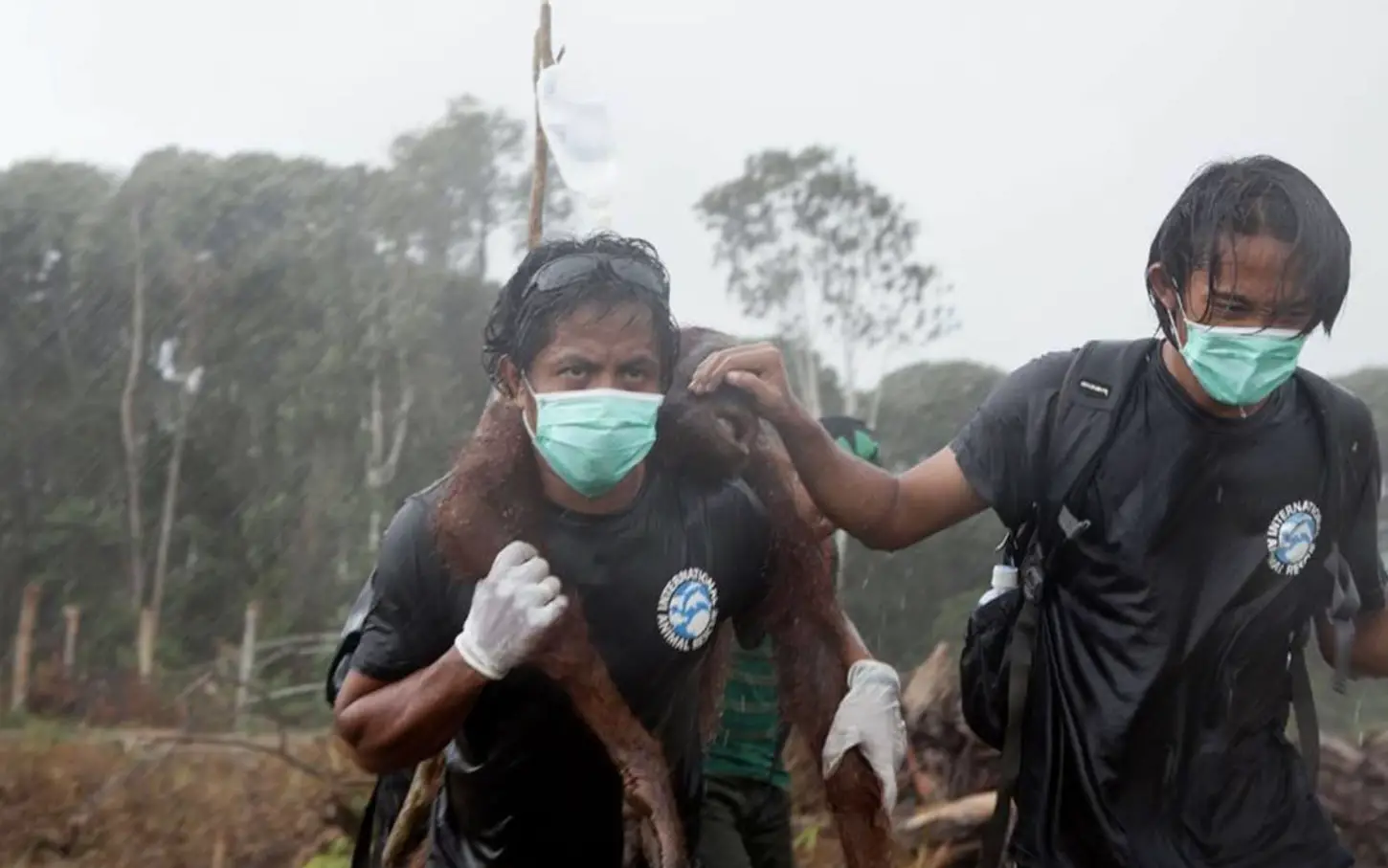
"Sadness as an Orangutan Tries to Fight the Digger Destroying Its Habitat"
The orangutan's plight highlights the urgent need for action to protect our forests and the creatures that call them home. Deforestation threatens biodiversity and contributes to climate change by releasing carbon dioxide into the atmosphere.
Governments, businesses, and individuals must work together to find sustainable solutions to deforestation. This could involve supporting initiatives that promote responsible land management, reducing the consumption of products linked to deforestation, and advocating for stronger environmental protections.
Ultimately, the fate of species like the orangutan rests in our hands. By taking action now, we can help ensure a brighter future for both wildlife and our planet as a whole.
Psychological Framework & Solutions
As we witness the heartbreaking struggle of wildlife against human encroachment, it's imperative to act decisively. Experts like Dr. Frans de Waal remind us that preserving biodiversity is not just about saving individual species but ensuring the health of our planet. Understanding the interconnectedness of ecosystems can drive better decision-making in conservation.
By adopting sustainable practices and supporting conservation initiatives, we can create a future where both humans and wildlife thrive together. The time to act is now, and every effort counts in this critical battle against deforestation.