
Pad Thai Sauce Reveals Who The Company Lunch Thief Was When She Was Hospitalized After Stealing And Eating Co-Worker's Food
A recipe for a disaster and really good peanut sauce

Jesse Ubani
- Published on
Office drama can be quite boring, but it is indeed relatable. The gossiping, high school-like cliques, and the number of adult problems keep a mundane 9 to 5 job a little more eventful.
We see movies start with an office problem that develops into a ‘finding yourself’ type of story, and how we wish it could always be like that. But what if your problem is having your lunch stolen and eventually getting reprimanded for it?
A Redditor posted in the subreddit r/AITA about an incident with a co-worker that turned the tables on him and led to an unfair scolding from her boss. A little backstory: OP works during the day in the office and also lends a helping hand in her friend’s restaurant at night.
This is where she learned a peanut butter sauce that she loved. More context is provided in the post, but OP has had her lunches stolen for a while, either half-eaten or not there at all.
She brought it up to her boss, who told her to take it to HR, but nothing happened. OP went on with her days, but one time her lunch was stolen, container and all.
That wasn’t the worst part; it was when her boss approached her and ranted that it was her fault that his daughter, a.k.a. one of the new girls, went into anaphylactic shock. She was the culprit who stole OP’s lunch, which contained peanut butter sauce, to which she was severely allergic.
Here’s how the crazy story went
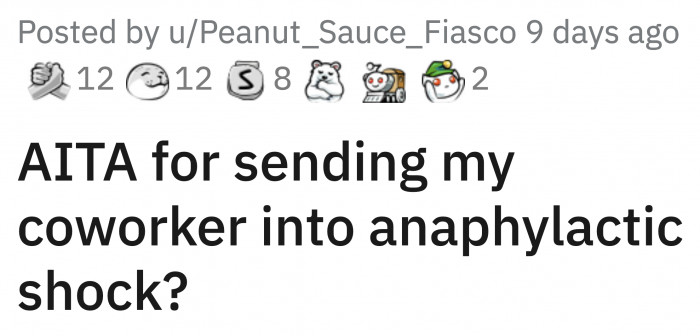
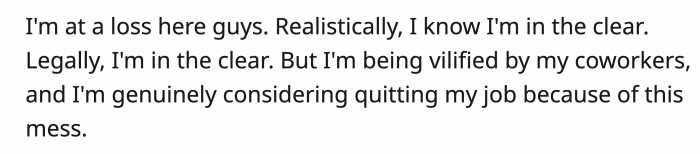
First of all, OP isn’t in any deep trouble, but everything is stressful, to say the least
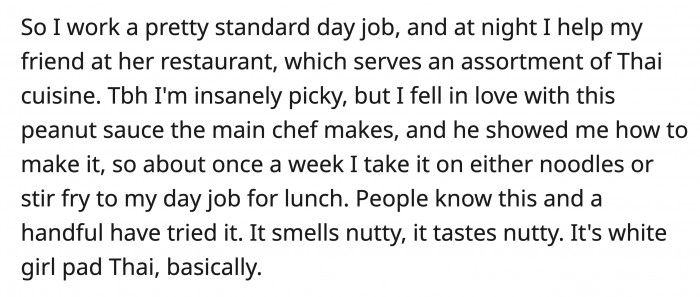
OP recalled how she came about the peanut butter sauce she loved
Understanding Workplace Dynamics
The case of the lunch thief is a compelling illustration of workplace dynamics and social psychology. According to research published in the Journal of Personality and Social Psychology, organizational culture significantly impacts employee behavior, including ethical decision-making. When individuals perceive a lack of accountability or transparency in their environment, it can lead to a breakdown of personal ethics and a rise in opportunistic behaviors, such as stealing a co-worker's lunch.
Furthermore, studies indicate that in environments where competition is high, individuals may resort to unethical behaviors out of desperation or perceived necessity, often rationalizing their actions as a means of survival. This highlights the importance of fostering a culture of trust and mutual respect within workplaces, which can serve as a buffer against such unethical conduct.
When OP’s lunch was disappearing, she never knew who took it
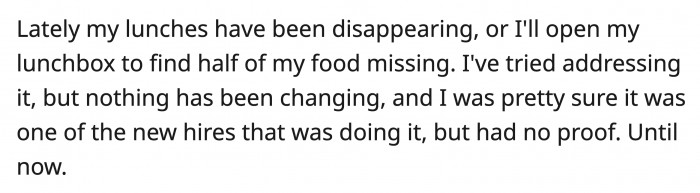
One time when OP made the noodles with the peanut sauce to bring, the whole thing went missing.
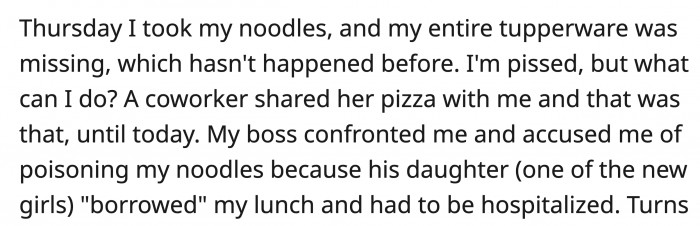
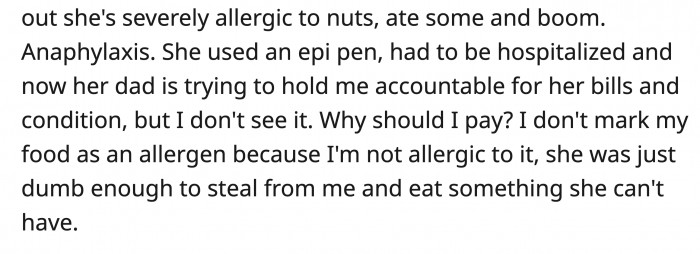
Turns out it was one of the new girls
Behavioral economics provides another lens through which to view this incident. The concept of 'loss aversion' suggests that individuals are more motivated to avoid losses than to acquire equivalent gains. In a workplace where employees feel their contributions or needs are undervalued, they may resort to stealing food as a misguided attempt to reclaim a sense of agency or satisfaction. According to Dr. Daniel Goleman, an emotional intelligence expert, "When people feel deprived or undervalued, they may justify unethical actions as a means of regaining control." This highlights the critical role that workplace satisfaction and equitable treatment play in preventing behaviors like lunch theft.
The new girl is also the boss’s daughter, and he wanted OP to be held accountable, thinking she did it on purpose
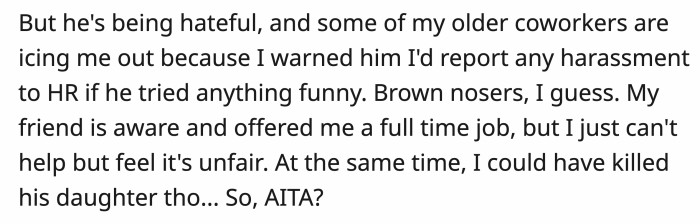
OP made an edit and clarified some things

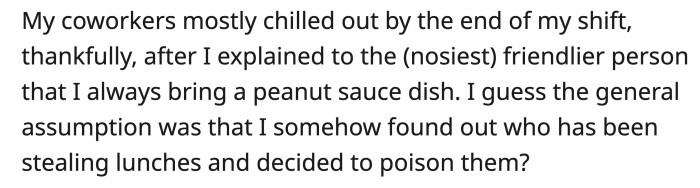
Her co-workers saw her side of things after making good use of office gossip
The Role of Social Norms
Social norms play a critical role in shaping behavior in group settings, including workplaces. A study conducted by researchers at Harvard University found that individuals are heavily influenced by the perceived norms of their peers, which can lead to conformity in both ethical and unethical behavior. When theft or dishonesty becomes normalized within a group, it often leads to a cascading effect where more individuals feel justified in similar actions.
This incident serves as a reminder of the necessity for organizations to actively cultivate positive social norms that discourage unethical behavior. Implementing team-building exercises and open discussions about workplace values can help reinforce the importance of integrity and accountability among employees.
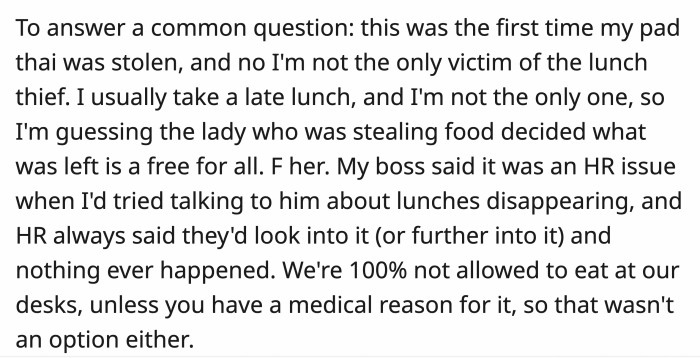
For those who needed more clarification about how OP handled her missing food lunches before
She doesn’t know the status of the girl who had the allergic reaction

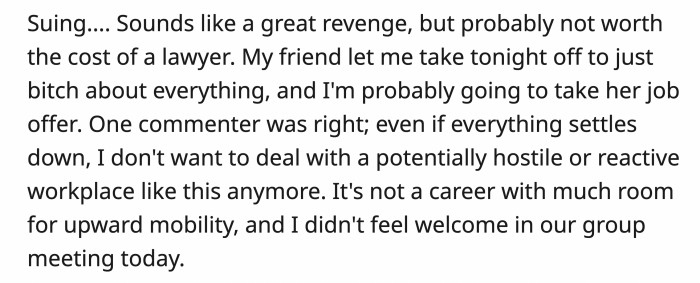
OP didn’t want to consider suing as much; it’ll be tedious and expensive
Understanding the psychological underpinnings of envy can also shed light on the circumstances surrounding lunch theft. Envy is a powerful emotion that can drive individuals to act against their better judgment. According to Dr. Richard Smith, a leading researcher in the field of social psychology, envy can emerge from perceived inequalities among colleagues, such as differences in privilege or recognition.
When individuals feel they are being treated unfairly or not receiving the same acknowledgment as their peers, they may resort to actions like stealing as a way to 'level the playing field.' Addressing feelings of inequality through equitable recognition and support can help mitigate such behaviors and promote a healthier workplace environment.
She doesn’t have anything to gain if she would lie about…
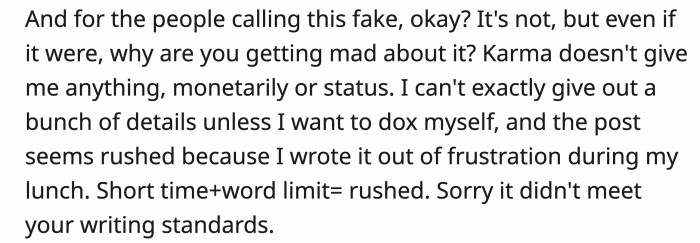
things like these if people are doubting the authenticity of this story
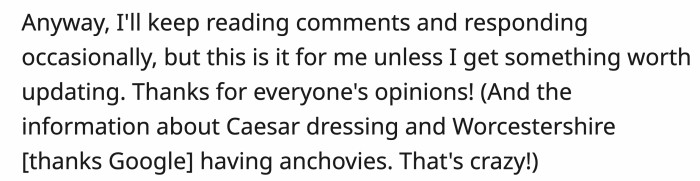
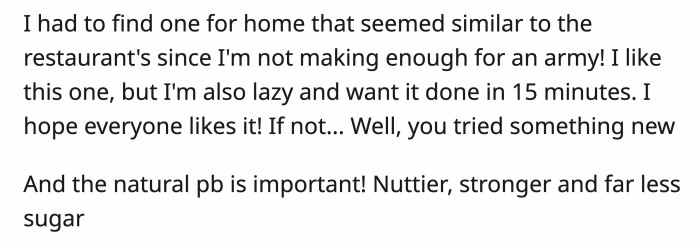
Here’s the recipe for the sauce for those who want to recreate it at home

Practical Solutions to Prevent Theft
To effectively address the issue of lunch theft in the workplace, organizations can introduce clear communication strategies and explicit policies regarding shared spaces and personal belongings. Research indicates that establishing well-defined boundaries and expectations can significantly reduce instances of theft and misappropriation in communal areas. Dr. Robert Cialdini, a renowned influence researcher, states, "When individuals are made aware of the ethical implications of their actions, they are more likely to adhere to communal norms." Regular training sessions that emphasize ethical behavior and the importance of respecting colleagues' property can foster a culture of accountability and respect. For more insights, visit Robert Cialdini's professional website.
Make sure it doesn’t accidentally send anyone to the hospital
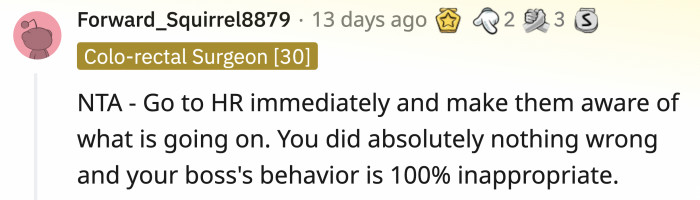
Before OP’s edit, a lot of the comments suggested that she report the incident to HR
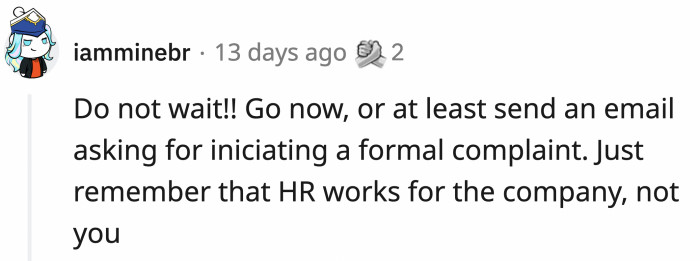
OP told them that she would inform them when HR gets back, but they suggested at least taking immediate action, like sending an email
It's important to recognize the emotional and psychological ramifications that arise from workplace theft, not just for the victim but also for the perpetrator. Individuals who engage in such behavior may experience guilt or shame, which can lead to further emotional distress and impact their work performance. As noted by Dr. Rick Hanson, a neuropsychologist, "Guilt can create a cycle of anxiety that undermines job satisfaction and overall well-being." Thus, addressing the underlying emotional issues that contribute to such behaviors is crucial. Implementing support systems, such as employee assistance programs (EAPs), can provide resources for both the victim and the perpetrator, allowing for healing and growth rather than punitive measures alone.
Although they think that HR couldn’t do much...
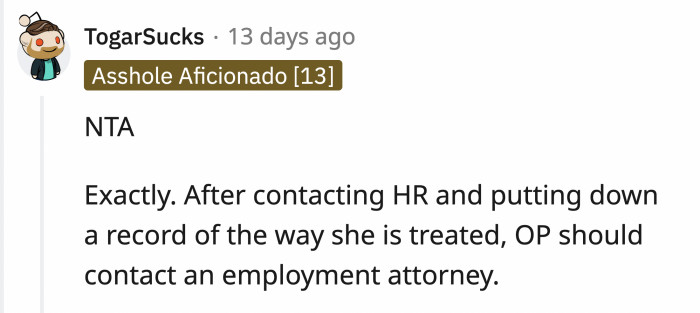
to change the toxic personality of the boss, OP should still be protected
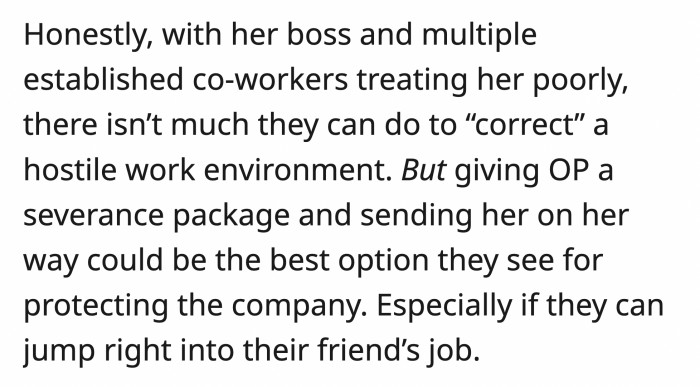
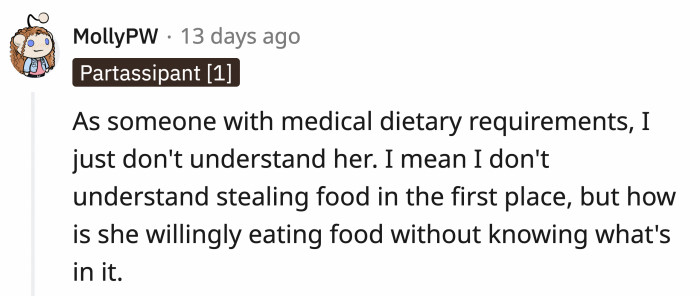
Some Redditors doubted that someone with an allergy that severe would put themselves in danger
The Impact of Office Culture
The way an office culture is structured can significantly influence interpersonal relationships and behaviors among staff. Psychologists suggest that an inclusive and supportive environment can deter negative behaviors, such as lunch theft. A study from the University of Pennsylvania found that workplaces that prioritize psychological safety encourage employees to express their needs and grievances, reducing the likelihood of resentment and acting out.
Encouraging open dialogue through regular feedback sessions and team meetings can help build trust among employees, making them less likely to resort to theft as a means of addressing unmet needs. Creating an environment where employees feel valued and heard is essential for reducing workplace drama and fostering a collaborative atmosphere.
And others agree
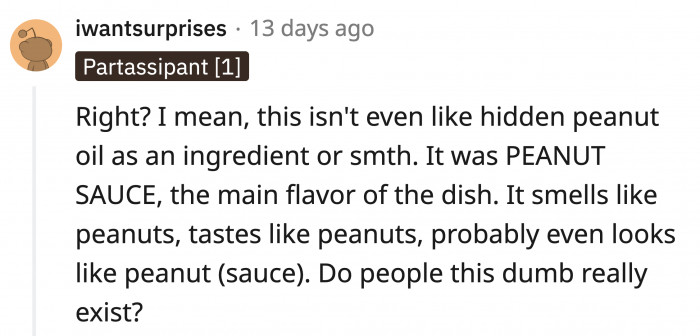
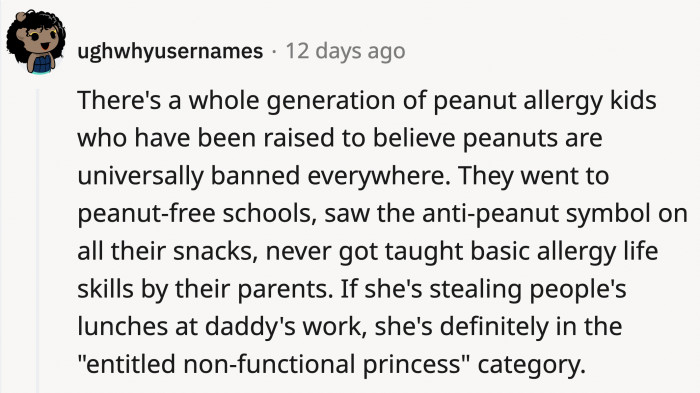
One of the Redditors recalled that there are people who have been brought up this way
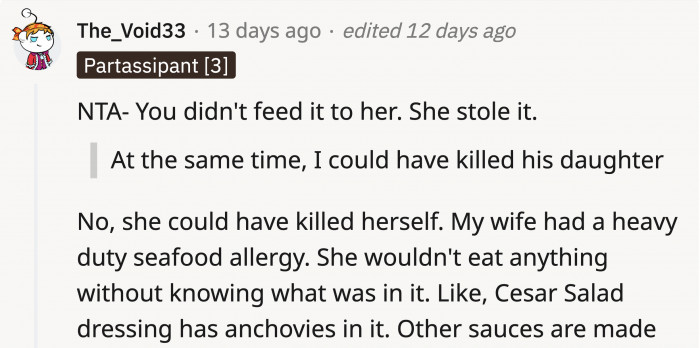
If OP is still doubting herself, someone provided their thoughts about the matter
Lastly, it's essential to remember that addressing issues like lunch theft often requires a multifaceted approach. A combination of policy changes, cultural shifts, and individual accountability can lead to more sustainable solutions. According to behavioral psychologists, addressing the root causes of unethical behavior—such as feelings of inadequacy or competition—can yield long-term improvements in workplace dynamics.
By fostering an environment that prioritizes collaboration over competition, organizations can reduce the likelihood of unethical behaviors, including theft. Practical steps like team-building activities and recognition programs can help create a sense of belonging and shared purpose, which ultimately benefits the entire organization.
Stating why OP isn't NTA
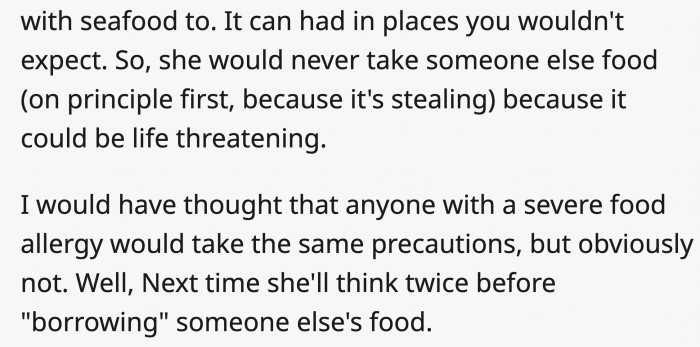
It was wrong in the first place that OP's food has been stolen constantly; it was even more unfair that she was blamed for others putting themselves in danger.
The majority of Redditors agree that OP has to take legal action or at least get HR involved to prevent the issue from worsening and to ensure that they take the fall. It helps that OP has the offer of her friend to consider if she leaves this job.
Expert Opinion
This incident of lunch theft really highlights how workplace dynamics can drive behavior. When people feel undervalued or overlooked, they might resort to unethical actions, like stealing, to reclaim some sense of control or recognition. It’s a reminder that fostering a supportive work environment where everyone feels heard and valued can significantly reduce such negative behaviors.Research-Based Understanding
The dynamics of lunch theft in the workplace reveal much about human behavior, social norms, and the psychological factors that drive individuals to act against their better judgment. Understanding these elements can help organizations implement thoughtful strategies to foster an ethical workplace culture.
Mental health professionals emphasize the importance of addressing underlying emotional issues while promoting open communication and mutual respect among colleagues. By doing so, companies can cultivate a positive environment that minimizes the likelihood of unethical behaviors, including the stealing of personal property.
Ultimately, creating a culture of trust and accountability not only enhances employee satisfaction but also contributes to a more harmonious workplace overall.