
Controversy Erupts: Pet Owner Adorns Hairless Cat with Tattoo Stickers
A pet owner's decision to decorate her hairless cat with tattoo stickers ignites a heated discussion.

Davy
- Published on
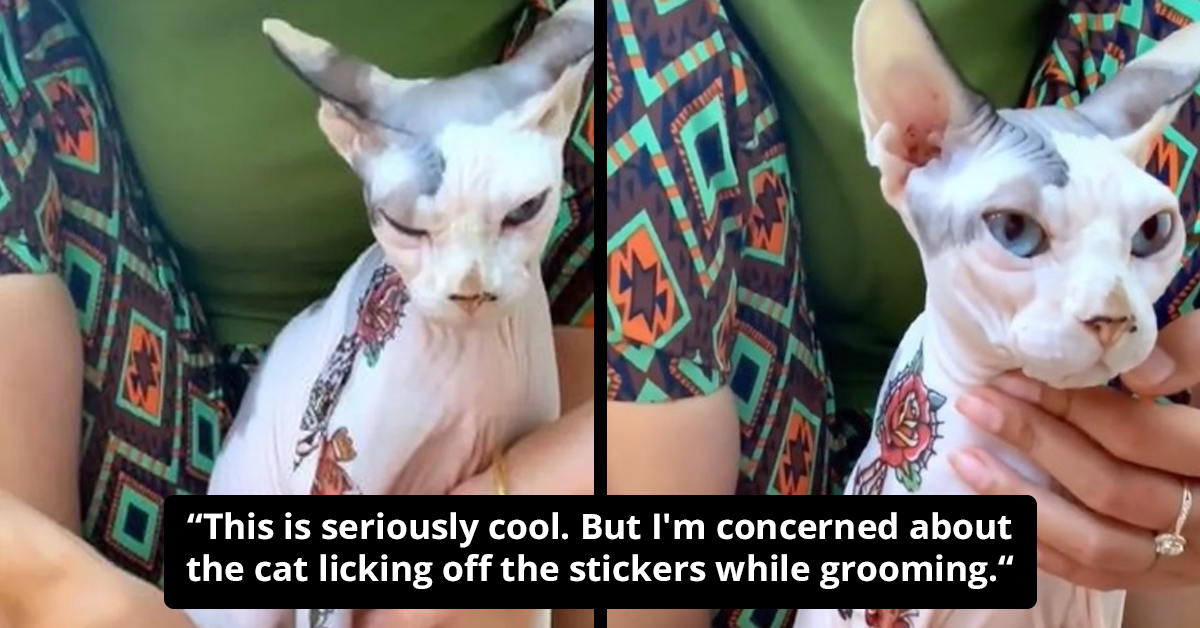
A pet owner's choice to embellish her hairless cat with tattoo stickers has ignited a fierce debate among animal lovers and advocates. The act of adorning pets with temporary tattoos has raised concerns over animal welfare and ethical treatment, prompting passionate discussions about the boundaries of pet grooming and expression.
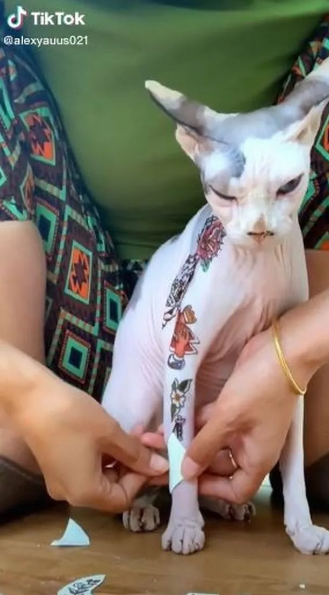
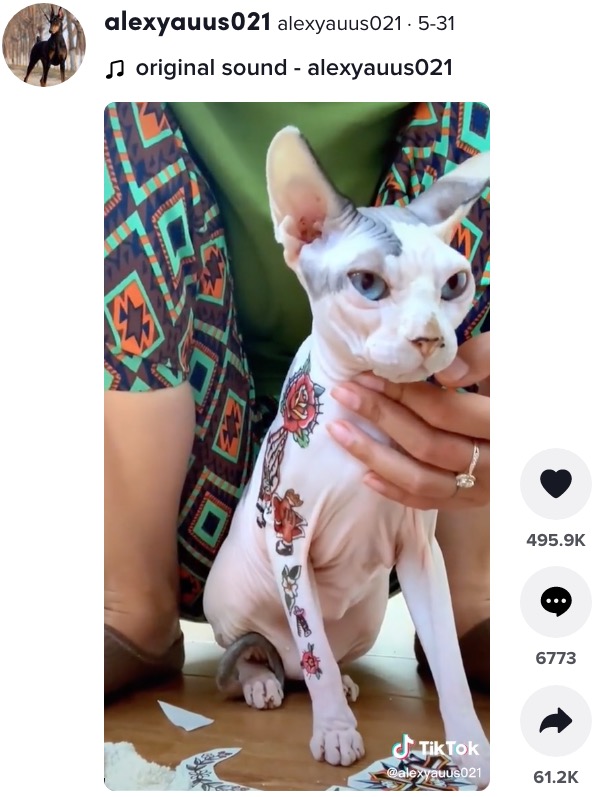
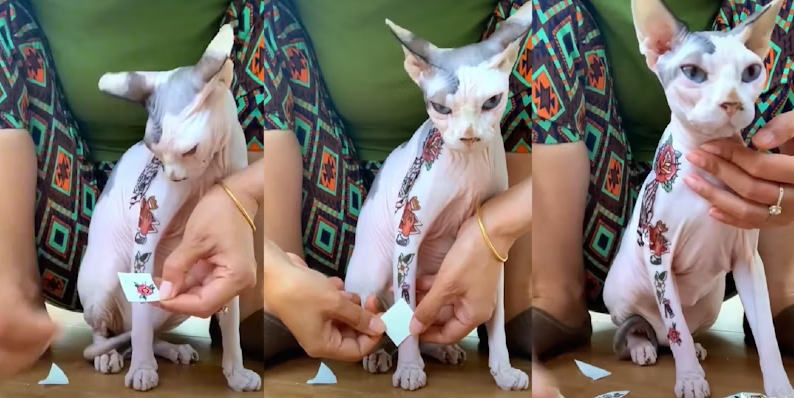
A pet owner has sparked a lively debate online by giving her hairless cat a "badass" makeover with tattoo stickers. The TikToker shared a video on Wednesday demonstrating how she applied floral stickers to her Sphynx cat.
The temporary tattoos are carefully pressed onto the cat's hairless skin, extending from its back down to its right front leg. In the video, the owner holds her pet steady while she applies a small rose tattoo sticker, peeling off the clear film before placing it on the cat's leg.
The video has prompted a discussion among pet lovers in the comments, with many questioning the safety of the stickers for the animal.
Animal rights advocates underscore the importance of understanding the psychological impact of our choices on pets. The American Society for the Prevention of Cruelty to Animals (ASPCA) states that animals express discomfort non-verbally, and their well-being should always come first.
To address concerns raised by acts like tattooing pets, ASPCA suggests focusing on enriching activities that promote healthy interactions, such as playing, training, and socialization. These practices foster a deeper bond and respect between pets and their owners.
One person remarked, "This is seriously cool. But I'm concerned about the cat licking off the stickers while grooming. Could that be harmful?"
Another commented, "This feels like it's crossing a line. But I have to admit, the cat does look pretty tough."
A third questioned, "Is animal mistreatment becoming a trend?"
Meanwhile, those who are convinced of the safety of the tattoo stickers for pets expressed interest in owning a Sphynx cat.
"I've never wanted a hairless cat more than I do now," exclaimed one viewer.
Vets and animal organizations strongly advise against tattooing pets, whether for identification or aesthetic purposes. Tattoo inks contain pigment particles that permanently remain in the skin to create the desired color.
Over time, these pigments can partially escape through the lymphatic system, accumulating in the lymph nodes. Additionally, minute amounts of chemicals from the ink may slowly release, potentially causing allergies or other harm. These pigments can also enter the bloodstream, posing risks to other parts of the body.
Ethical Considerations
Dr. Marc Bekoff, a renowned cognitive ethologist, emphasizes that pets are not mere accessories; they are sentient beings deserving of respect and care. He argues that adorning pets with tattoos, even temporary ones, can blur ethical lines regarding animal welfare.
Bekoff explains that such practices can lead to discomfort or stress for the animal, which contradicts the responsibilities of pet ownership. He encourages pet owners to consider alternatives that prioritize the animal's well-being, like using safe, non-invasive grooming options.
The debate surrounding adorning pets with tattoo stickers highlights a crucial aspect of pet ownership: the responsibility to prioritize animal welfare. Experts like Dr. Bekoff and organizations such as the ASPCA advocate for practices that ensure the well-being and comfort of animals.
As pet owners, it's vital to engage in behaviors that respect our pets as sentient beings. By focusing on enriching their lives through affection, play, and proper care, we can create a nurturing environment that honors their needs and enhances our companionship.