
Cat Owner Afraid Neighbor’s New Pit Bull Would Pose Threat To Her Kittens, Asks Dog Lovers If She Should Be Worried
Dog lovers then started discussing the common misconceptions surrounding pit bulls.

Sophia Cantiller
- Published on
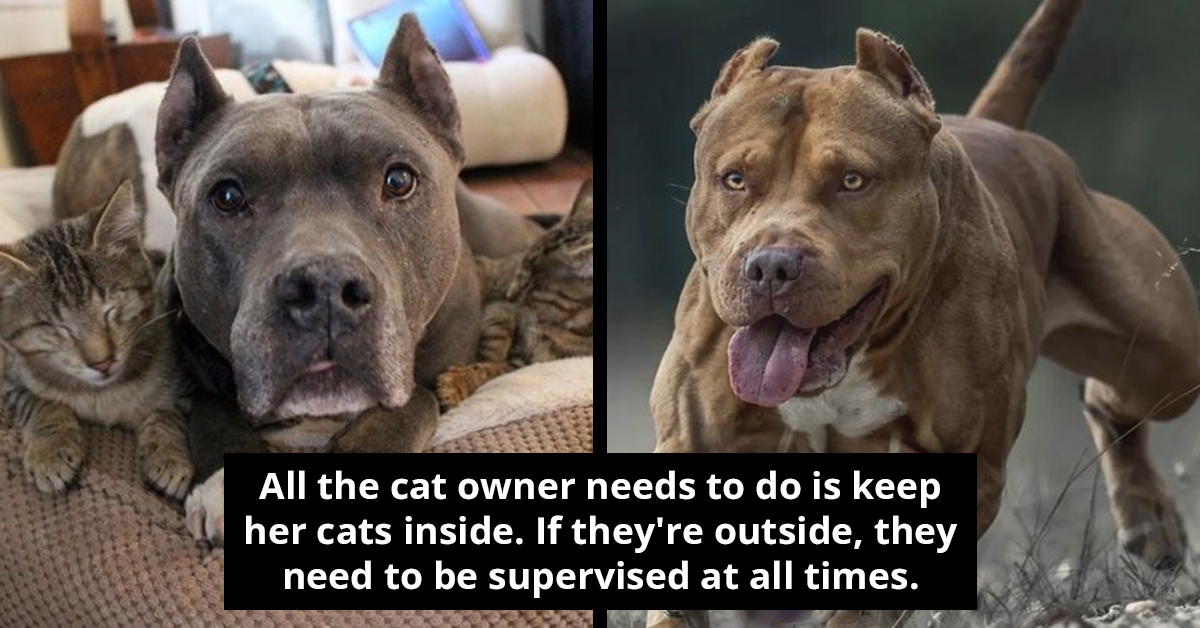
Pit bulls often get a bad reputation, but there’s so much misinformation out there that it can be hard to separate fact from fiction. With their wide smiles and adorable floppy ears, those of us who adore pit bulls know just how loving, playful, and silly they can be.
The term “pit bull” officially refers to three breeds: American Pit Bull Terrier, American Staffordshire Terrier, and Staffordshire Bull Terrier. Any dog with traits or looks resembling these breeds might be called a “pit bull.”
Sadly, because of human actions, this label often comes with unfair assumptions of danger and aggression. Some think they’re naturally more dangerous, but studies show that mistreatment and mishandling are key factors in incidents, not their breed.
Also, while some believe they’re more aggressive, it’s often fear-based behavior that can be addressed with proper training and care, just like with any other dog. Understanding and love can really change the narrative for these lovable pups!
Over at Quora, a cat owner who's worried about her cats asked this question after she saw what breed her neighbor got:
My neighbor just bought a pit bull. We have two kittens and a four-foot fence separating our property. Should I be concerned?
Let's see the responses of some dog lovers.
Pit bulls are chill and friendly.
My experience with pit bulls is that they are pretty friendly and laid back. Unless someone makes them mean, they are very sweet.
However, if you are concerned, keep your kittens inside. There are worse things outside to worry about than dogs.
A neighbor of mine will shoot any cat he sees close to his property.
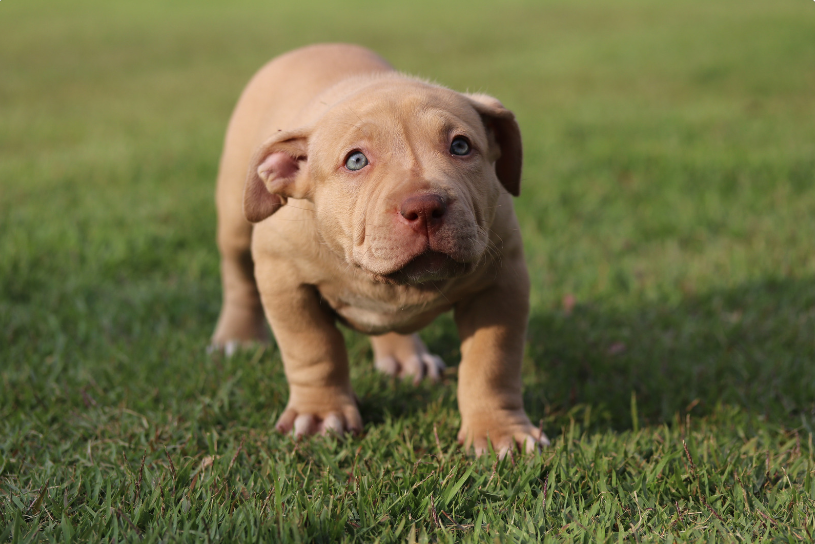
One user wanted to specifically know which kind of pit bull the neighbor took home.
Now, did your neighbor buy this kind of a “pit bull”?

She showed two types of pit bulls.
Or this kind of a pit bull:

Dr. Patricia McConnell, an animal behaviorist, emphasizes that misconceptions about pit bulls often stem from media portrayal rather than actual behavior. She notes that the breed's history as a loyal companion and working dog shows their potential for kindness and affection.
McConnell’s research indicates that a dog’s temperament is more influenced by upbringing and socialization than by breed alone. Proper training and exposure to various environments can greatly enhance a pit bull’s behavior, making them loving pets, even around smaller animals.
Animal behaviorists suggest that educating yourself on canine body language can significantly diminish anxiety about potential threats from new dogs. For instance, understanding signs of relaxation versus stress can help you gauge a dog’s comfort level around other animals.
Dr. Temple Grandin, an expert in animal behavior, emphasizes that observing tail positions, ear movements, and overall body posture can provide insights into whether a dog is feeling friendly or threatened. This knowledge empowers pet owners to make informed decisions about pet interactions.
The discussion centers on which kind of pit bulls can be considered risky to the original poster's kittens.
It’s a very common misconception that these big, blue shelter pibbles are pit bulls, when in reality they are far from that. The shelter dogs are not Pit Bull Terriers; shelters mislabel their dogs constantly.
Most are bully mutts, American Bullies, American Staffordshire Terriers, and other bull breeds or a mix of them. So it’s really important to know what kind of dog we are talking about here.
Those shelter bully mutts can be unstable, and it’s naive to deny that. Due to a lack of socialization and training, since shelters won’t do that, it will cause reactive dogs.
But if the dog is an actual American Pit Bull Terrier, there is a very high risk that it’s an animal-aggressive individual, and that combined with a high prey drive is not good. And that’s the case with most bull and terrier breeds, even in Staffordshire Bull Terriers and American Staffordshire Terriers.
Genetics can’t be changed but can be managed.
Now, it shouldn’t be your responsibility to worry about your kittens' safety since the dog is not yours. Maybe try informing your neighbor that you have kittens and would appreciate some space.

All the cat owner needs to do is keep her cats inside. If they're outside, they need to be supervised at all times.
If you allow your kittens to have unsupervised access to your yard, you should have ALREADY been concerned about hawks, owls, raccoons, possums, skunks, and other cats.
That Pittie is likely the LEAST of your problems…
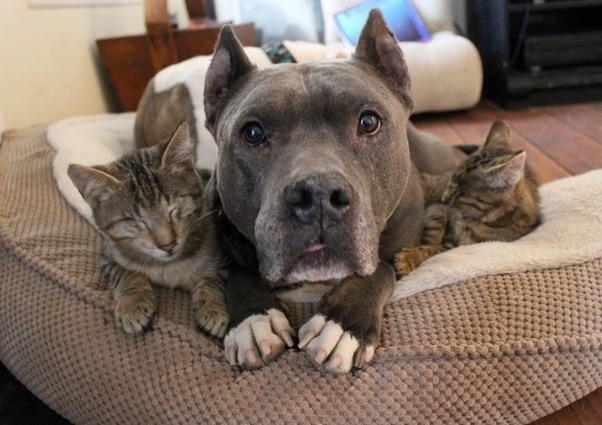
One Quora user shares a tale of a brave pit bull.
Friend, tell you what. Google: pit bull cat coyote Arizona.
I heard the story; it seemed almost too good to be true, but it made the local news.
A family has a pit bull and a cat. They get along.
The cat walks to the edge of the yard; the pit bull is sitting by the door watching. A coyote grabs the cat — guess what happened to that coyote? The dog then picked the cat up, laid her on a pillow, and stayed next to her for two days as she healed.
By the way, that coyote will never be grabbing a cat again.
A dog is a reflection of the owner's personality.

One effective method to alleviate fears about dog behavior is through gradual introductions. Dog trainers often recommend supervised meetings between the new dog and other pets. This technique allows both animals to assess each other’s temperament in a controlled environment.
Experts like Dr. Ian Dunbar, a renowned veterinary behaviorist, suggest using positive reinforcement during these introductions to foster a sense of safety and trust. This way, pet owners can build a harmonious environment for all their animals, ensuring everyone's comfort and reducing anxiety.
A dog owner shares their views based on experience.
I’ve had many pit bulls and Rottweilers; none have ever attacked anything or anyone on my property unless they were breaking in or we told them to protect.

She can even trust her dog to be around her granddaughter.
My six-year-old granddaughter takes a 150-pound Rottweiler for walks in town; never had a problem.

It's hard to answer the question without getting to know the dog. So it's best to be friends with both the pit bull and its owner.
No. The best thing you could do is get together with your neighbors, your kittens, and their pittie and have a meet and greet. Pitties are really sweet dogs, and there is no reason to fear them.
It would be best to hold your kittens the entire time for the first several meetings. Eventually, you will let the kittens down, but kittens freak out on dogs, hissing and swiping.
The kittens need to feel comfortable around the pit so THEY don’t go into full attack mode. All dogs have instincts, lol. And cats seem to entice the chase.
They need to be friends. Ask your neighbors if you can give their dog a treat when you see him, and ask what treats they prefer and buy a bag of those.
You will find the love and adoration a pit bull gives is a bit addictive, and maybe you will have one of your own someday. I honestly can say I would have one, but they are far too strong for me.
I am a small, older (nearly elder) woman who has a chihuahua, lol. It’s always best to have a dog you can control physically just in case it decides to chase that rabbit or squirrel.
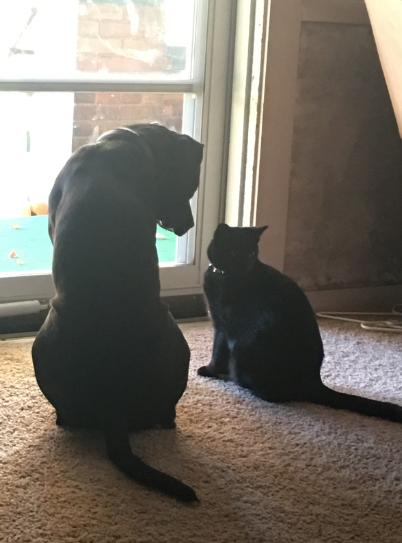
To sum up, make friends with your new neighbor's dog and be sure it gets to know your cats. Once he makes friends with your cats, he or she will protect them to the ends of the earth.
According to Dr. Chris Packham, a naturalist and wildlife expert, it’s crucial to understand that every dog, regardless of breed, has its unique personality shaped by genetics and experiences. Dr. Packham stresses that fear often arises from misunderstanding these animals' behaviors, especially when they are new to a neighborhood.
He advocates for community education on responsible pet ownership, promoting awareness that responsible training and socialization can lead to safer interactions among pets and their surroundings. This approach helps create a more compassionate community.
There's no way of knowing whether the pit bull will be a threat to the cats. Just because it's a pit bull doesn't mean it's dangerous, as the misconceptions suggest.
If the cat owner doesn't want to deal with the neighbor, then she needs to ensure that her kitties stay indoors.
Analysis & Alternative Approaches
In conclusion, understanding the behaviors and needs of different dog breeds, especially pit bulls, can foster better relationships not only among pets but also within the community. Experts like Dr. McConnell and Dr. Packham encourage proactive approaches, such as education and gradual introductions, to ease fears around new dogs.
By fostering a culture of responsible pet ownership, we can ensure the safety and happiness of all animals involved, leading to more harmonious living conditions for everyone. Educating ourselves and others is crucial for building trust between different species.