
How Scammers Get What They Deserve - The Best Stories
You might learn something, and you'll definitely have a good laugh.

Damjan Milenkovic
- Published on
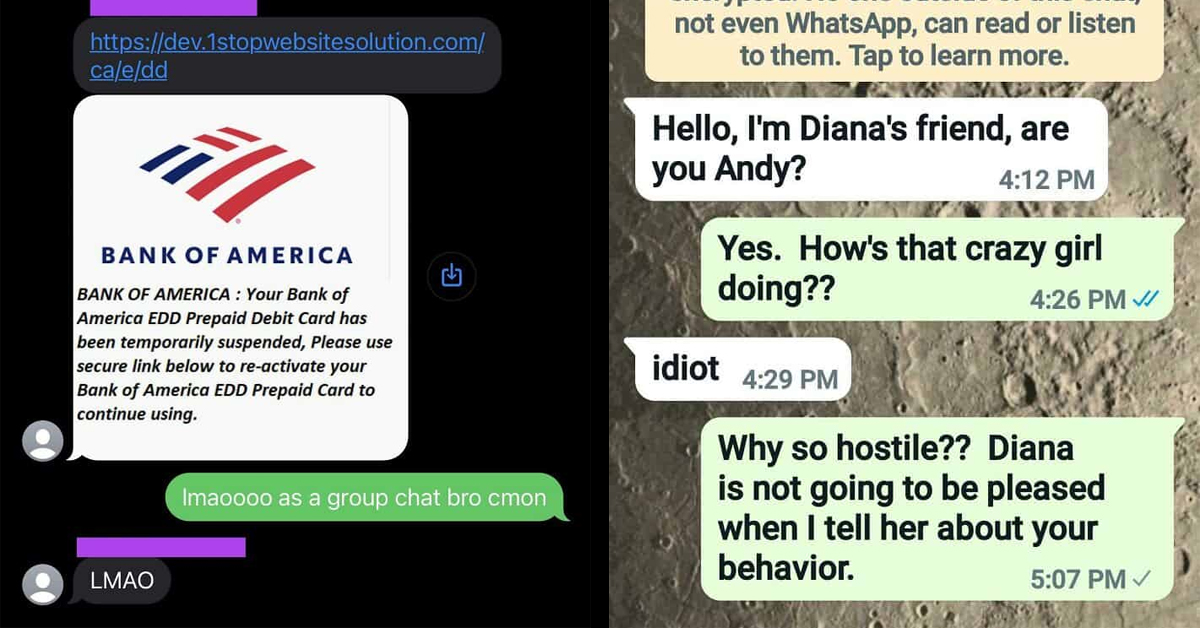
Navigating the internet can sometimes feel like walking through a digital jungle full of information and hidden dangers. Among these dangers are scam artists who constantly try to trick people with fake emails or messages on social media.
This alone should make anyone feel cautious whenever they go online. But recently, people have found a clever way to fight back against these scammers—by using humor.
On platforms like Reddit’s r/Scams subreddit, users share funny stories of how they trick scammers right back. These stories show how ordinary people can outsmart those trying to scam them.
One famous trick is to play along with the scammers, giving them fake information or wasting their time in humorous ways. This exposes the scammers and provides people with a sense of satisfaction, knowing they’ve turned the tables.
These stories are relatable because many people have faced similar scams online. They demonstrate that humor can be a powerful defense against online threats, turning stressful situations into something more light-hearted.
Beyond being funny, these stories teach us to be careful online and to think critically about whom we trust. They remind us that behind every scam attempt, a real person is trying to deceive others.
By sharing their experiences, people on forums like r/Scams help everyone learn how to stay safe online. Check some of these out. You might learn something, and you'll definitely have a good laugh.
1. "So.. Nigerian Princess??"
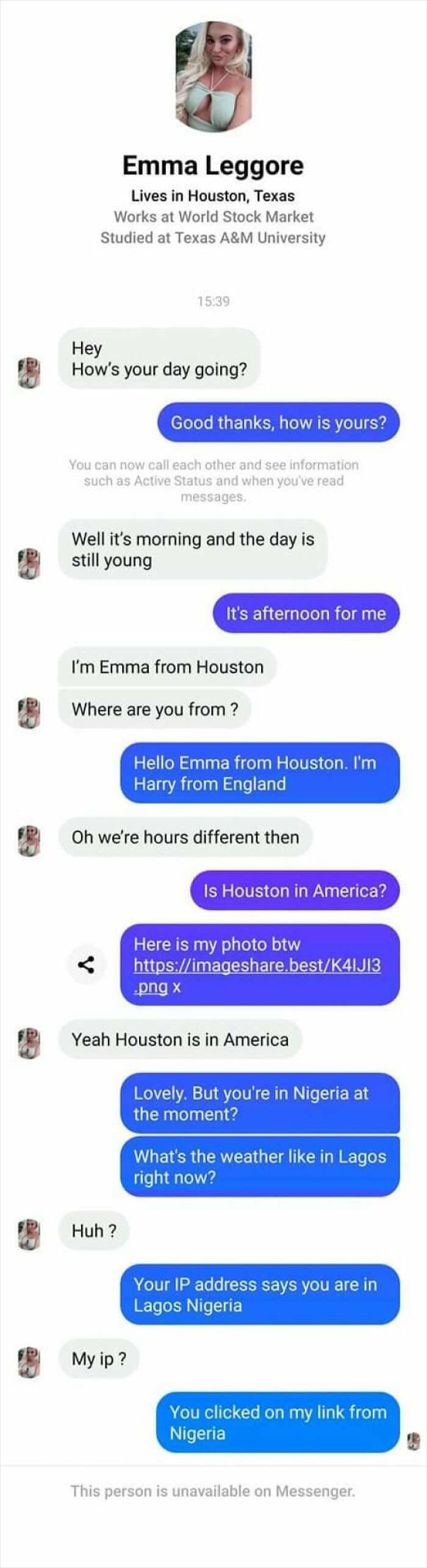
2. "Still Getting Those Random Messages. How Do You Deal With Yours?"
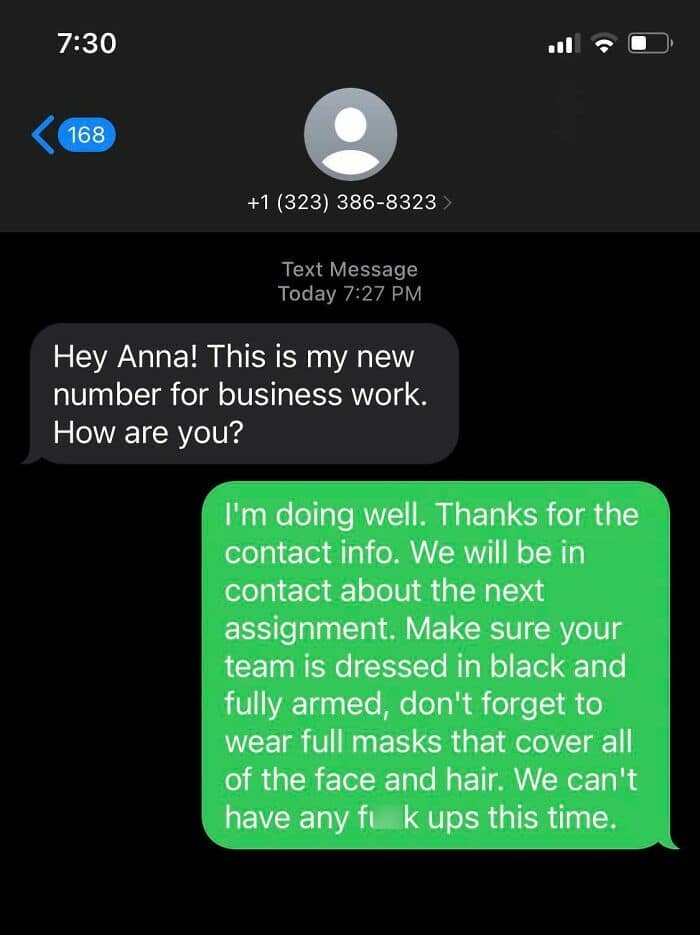
3. "Had To Be Reminded"
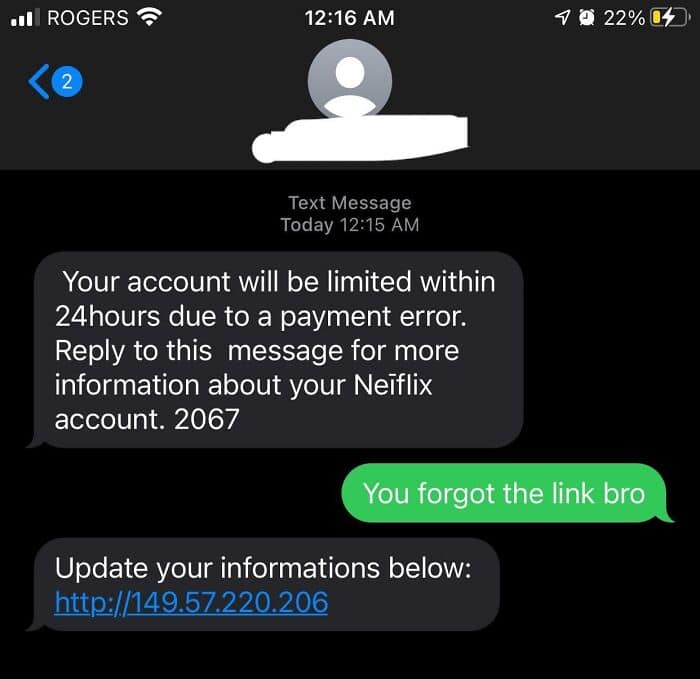
Scammers and Psychological Manipulation
Behavioral experts highlight that scammers often exploit psychological principles such as authority and urgency to manipulate their victims. According to Dr. Robert Cialdini, a renowned social psychologist, these tactics are effective because they tap into human instinctual responses.
When individuals feel rushed or pressured, their critical thinking can diminish, making them more susceptible to scams. Awareness of these tactics is crucial for online safety, as it empowers people to recognize and resist manipulation.
4. "I Don’t Know If This Is A Money Thing Or A Serial Killing Attempt, But It Gave Me A Good Laugh Today"
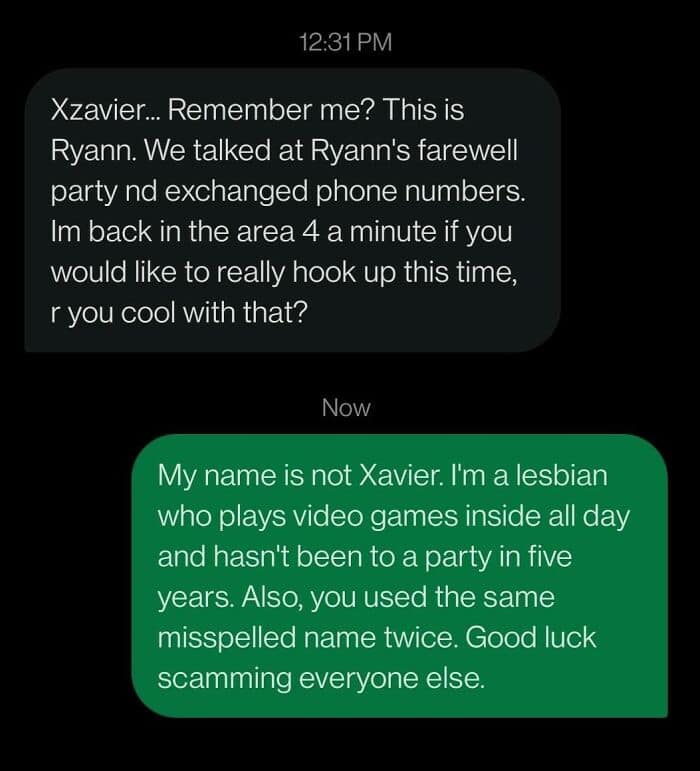
5. "Scam Text Message. Tricking Them With Cat Facts!"
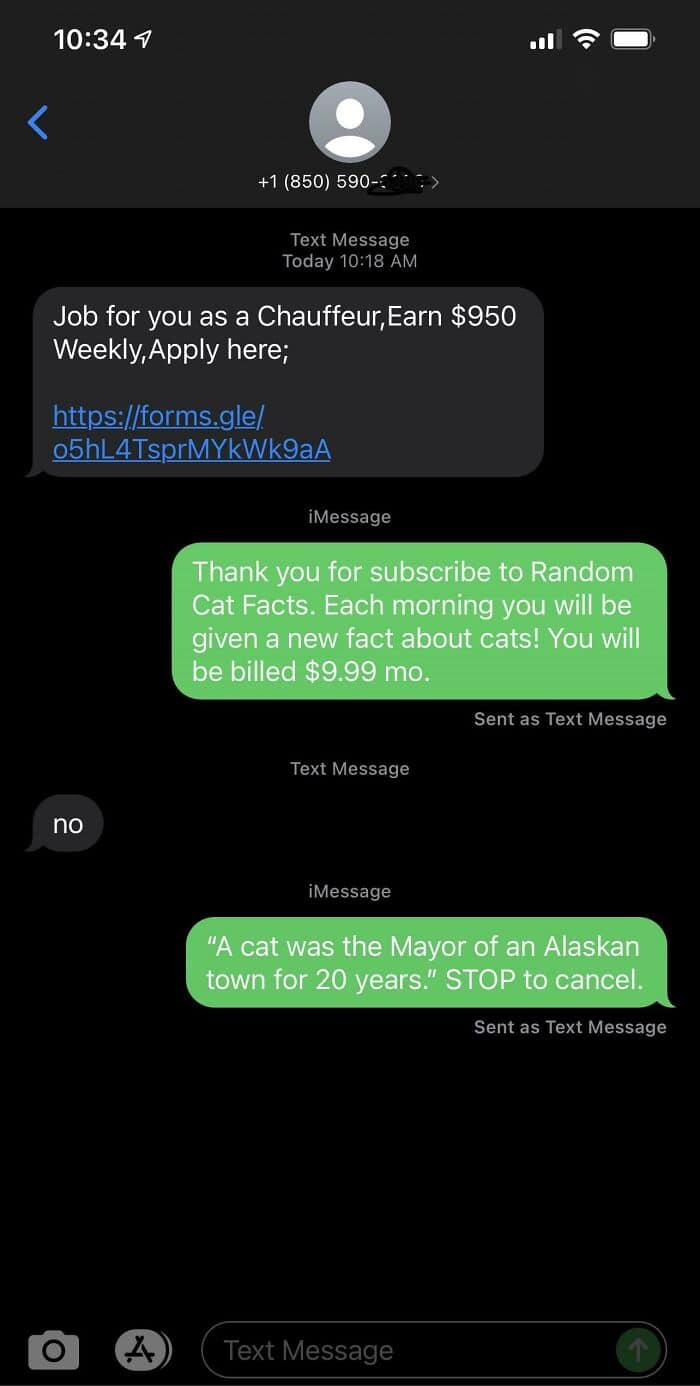
6. "In Tumblr"
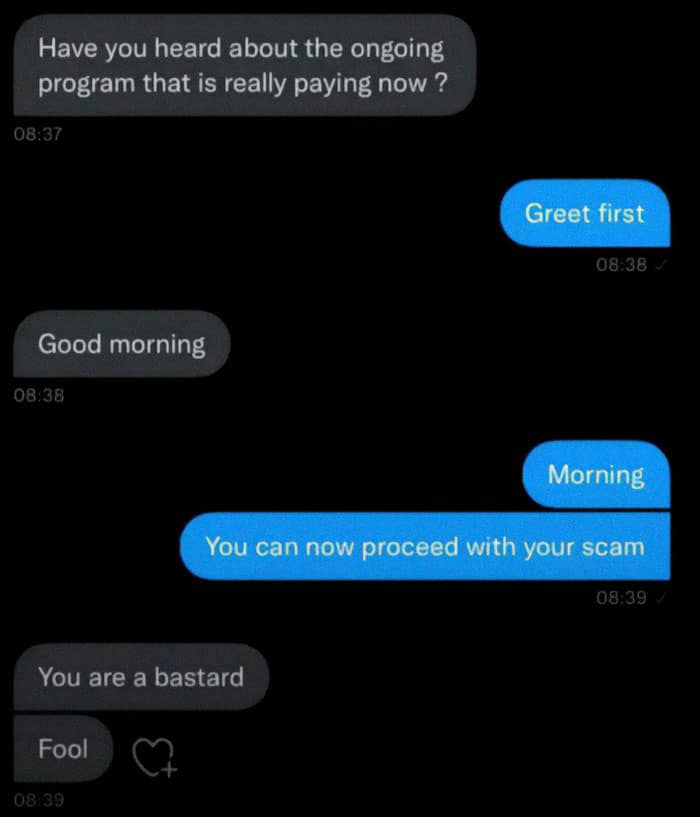
Cybersecurity experts emphasize the importance of digital literacy in combating online scams. For instance, Cybersecurity and Infrastructure Security Agency (CISA) recommends educational programs to help individuals identify phishing attempts and fraudulent schemes.
These initiatives aim to create a more informed public, equipping people with the knowledge to spot and report scams, ultimately leading to a safer online environment.
7. "Was Surprised To Get A Message From A High School Friend’s Father"
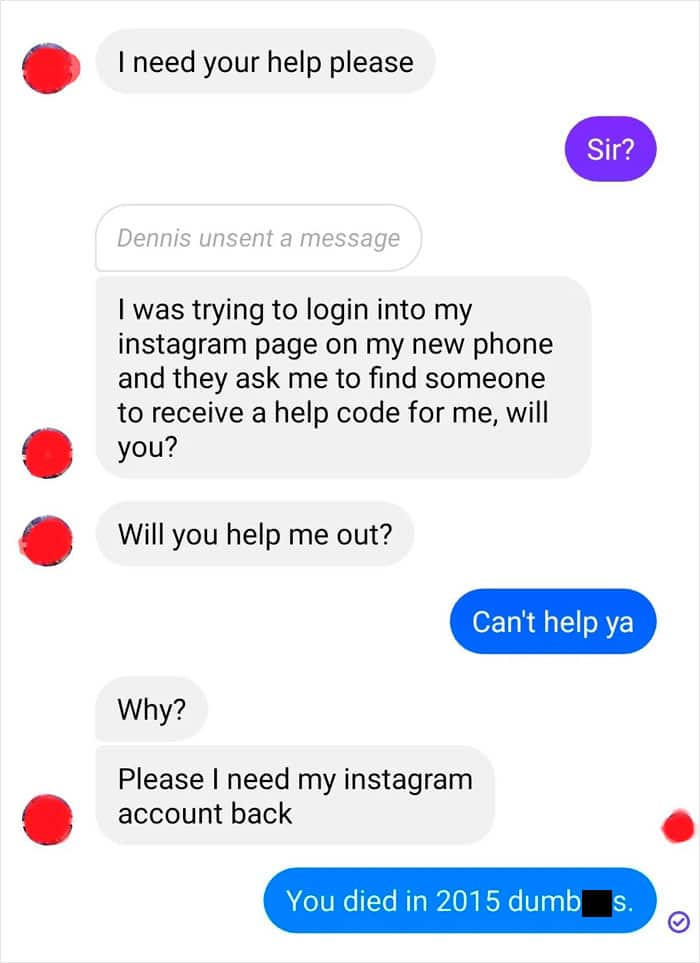
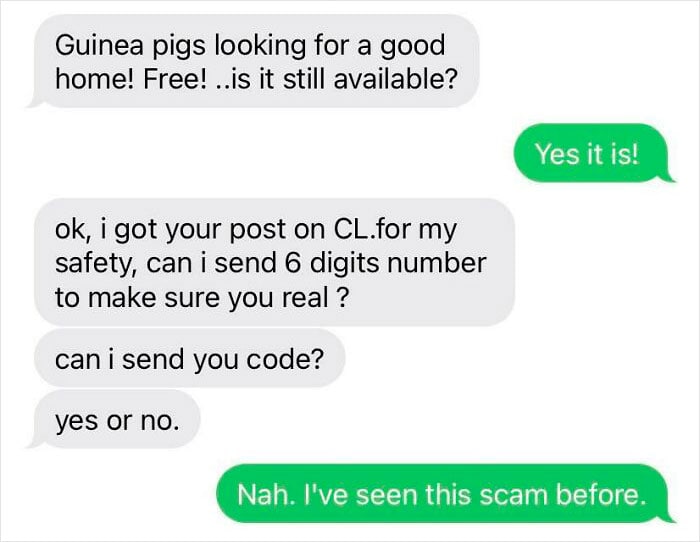
8. "Got This Yesterday. I Just Want To Rehome Some Guinea Pigs, Not Looking For This Nonsense"
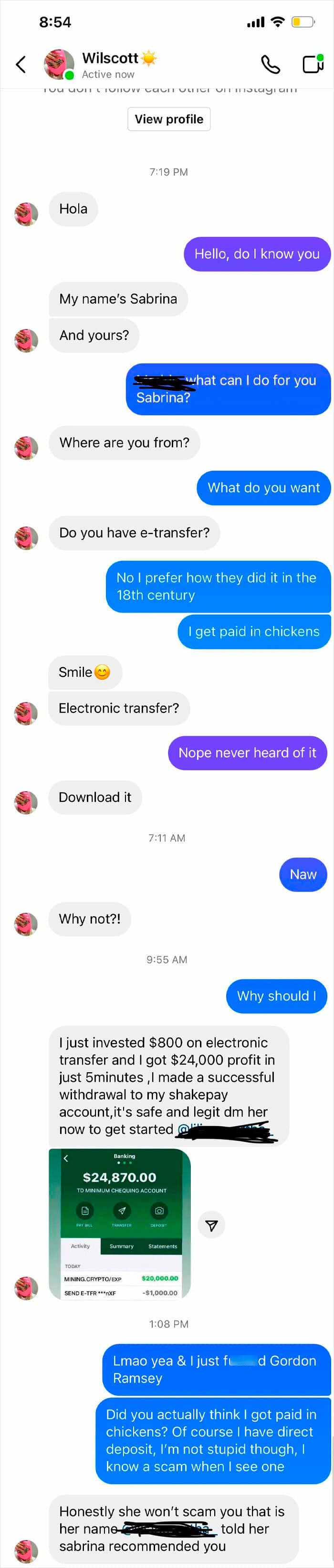
9. "These Scammers Man"
The Role of Humor in Resisting Scammers
Humor can be a powerful tool against scammers, as it not only lightens the mood but also helps individuals cope with the stress of being targeted. Dr. John McGhee, a psychologist, suggests that laughter can reduce anxiety and empower victims to share their experiences, making them feel less isolated.
When people use humor in discussing their encounters with scams, it fosters community support, creating a platform for learning and sharing strategies to avoid future pitfalls.
10. "F*****g With Scammers Is Fun"
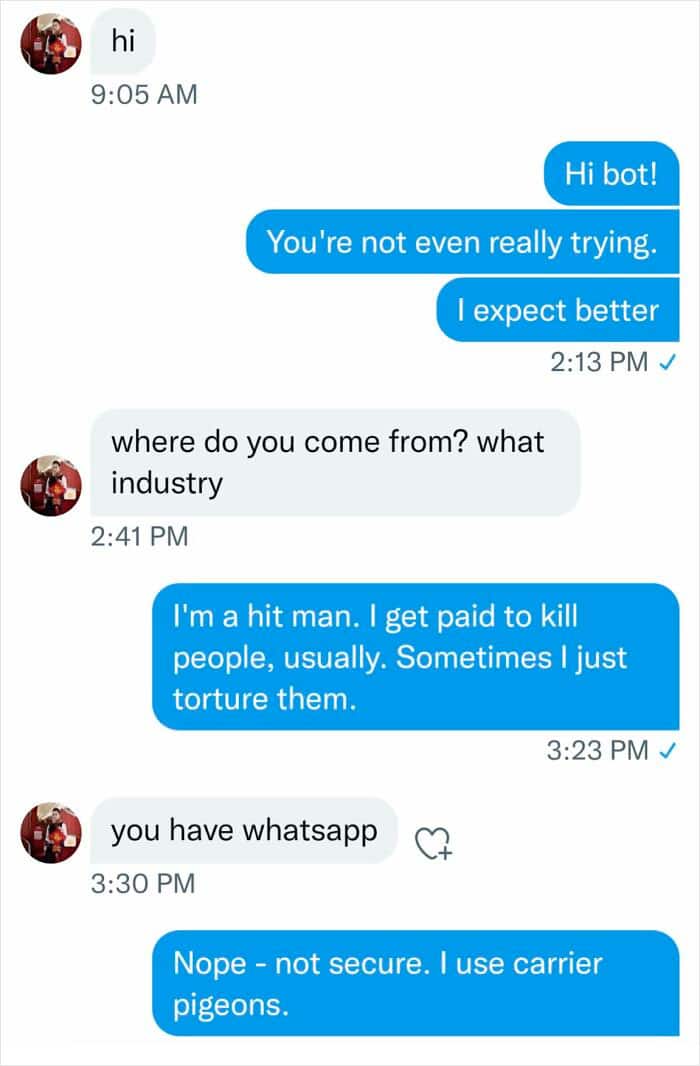
11. "How My Buddy Deals With Scams"

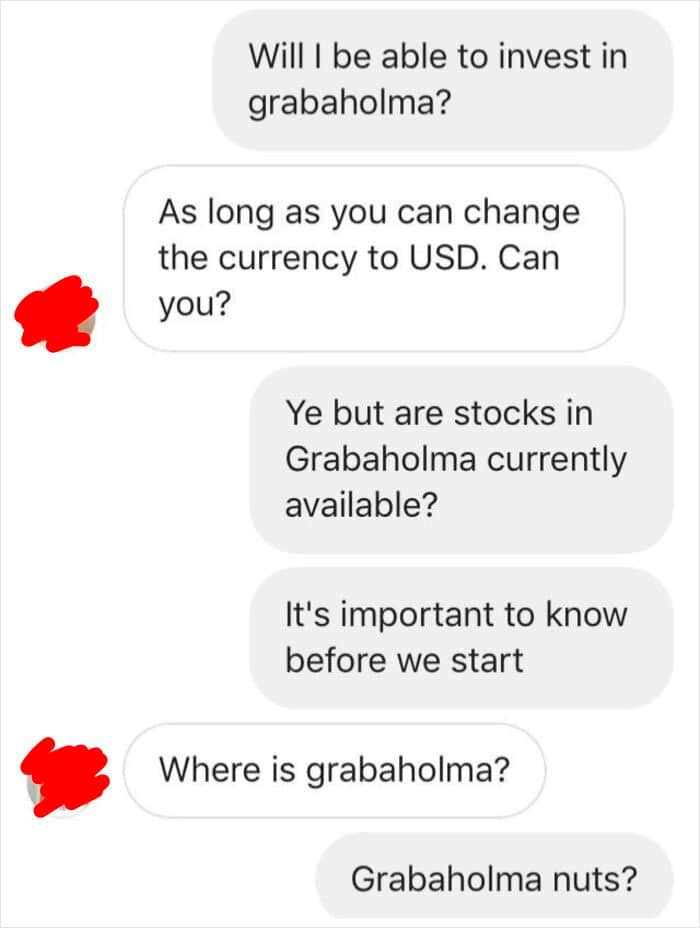
12. "Scammer Was Asking Me To “Invest $300”. Had To Do It To ‘Em"
Financial experts stress the importance of skepticism when dealing with unsolicited messages or offers. The Consumer Financial Protection Bureau advises individuals to question the legitimacy of unexpected communications, especially those requesting personal information.
By adopting a cautious mindset, consumers can protect themselves from falling victim to scams that prey on trust and curiosity.
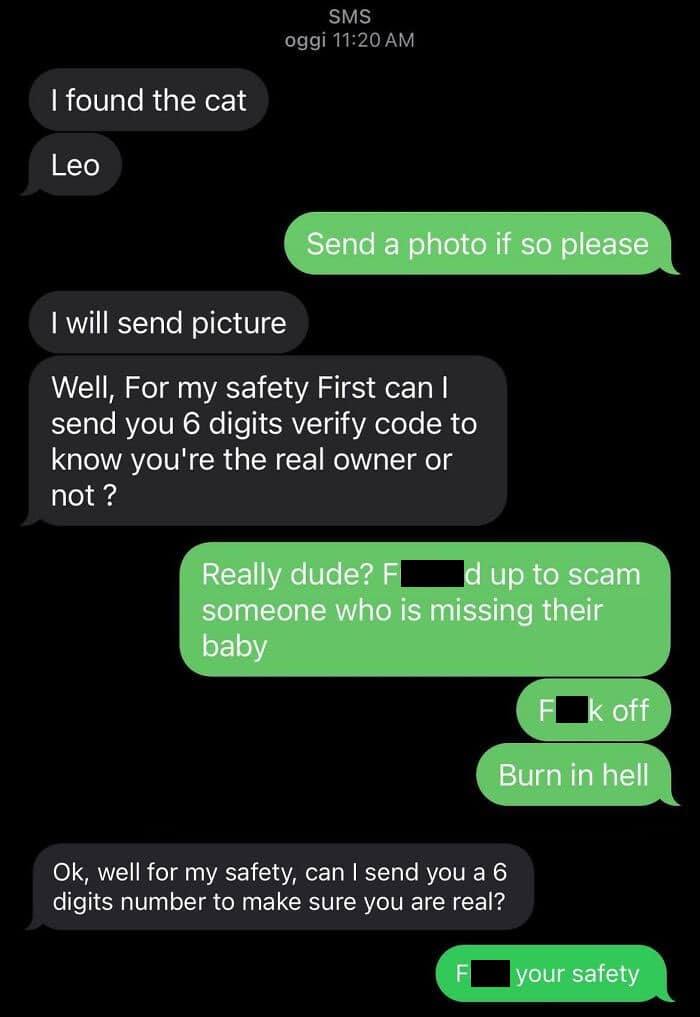
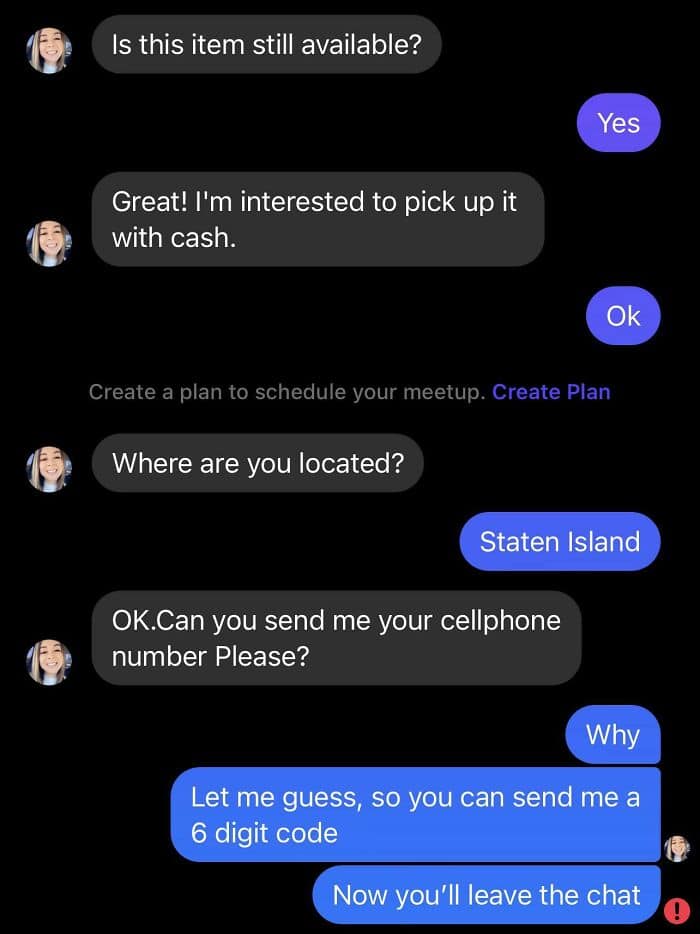
13. "Most Common Lost Pet Scam (Verification Codes)"
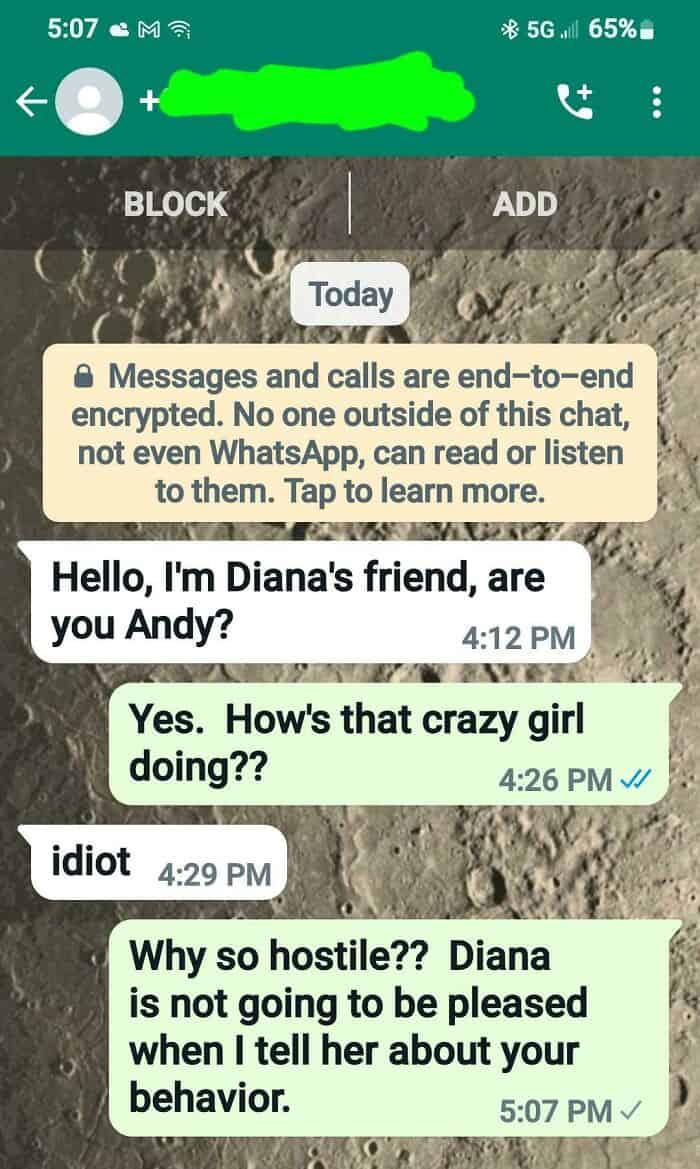
14. "Scammers Really Dislike It When You Force Them To Venture Off Script"
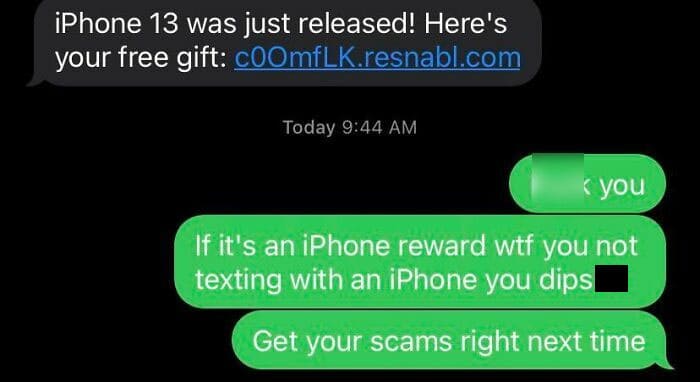
15. "Scammers Gonna Scam"
The Psychology of Trust in Scams
Trust plays a crucial role in the effectiveness of scams. Psychologist Dr. Paul Zak notes that our brains are wired to trust others, which scammers exploit. They often create a façade of credibility to foster this trust.
Understanding this psychological aspect can help individuals recognize red flags in potentially fraudulent communications, leading to better decision-making in high-stake situations.
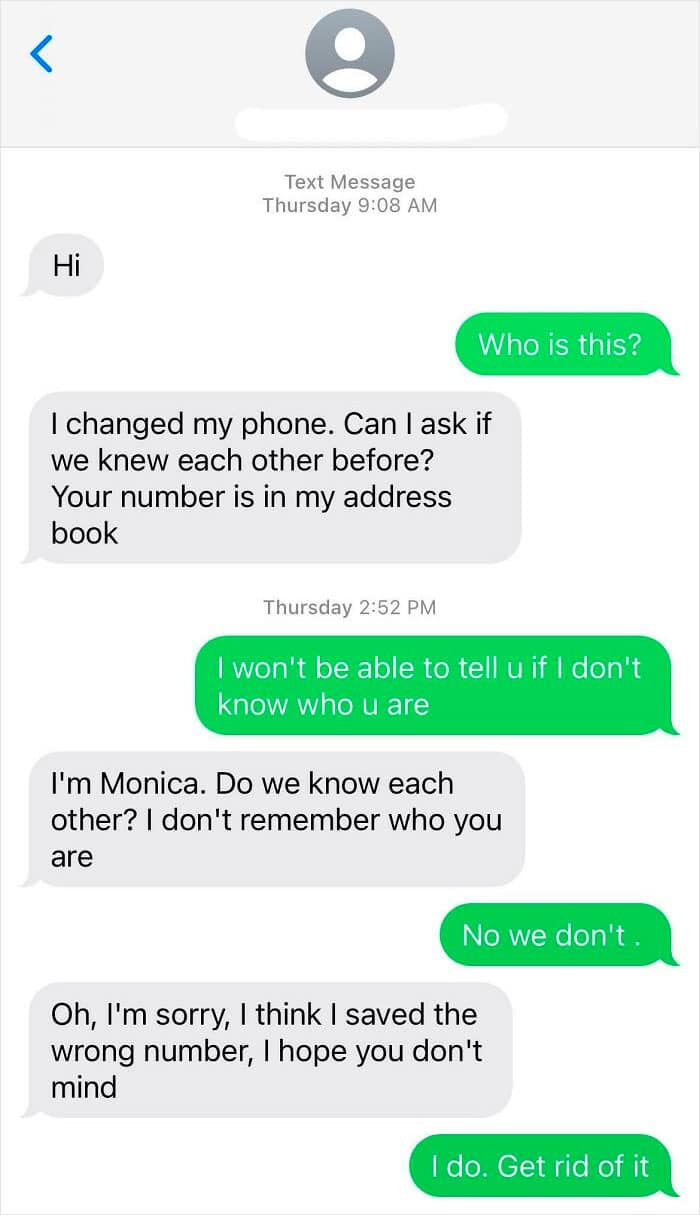
16. "Thanks To This Sub I Knew Exactly What This Was. Wrong Number Scam"
17. "My Name Is Not Adora"
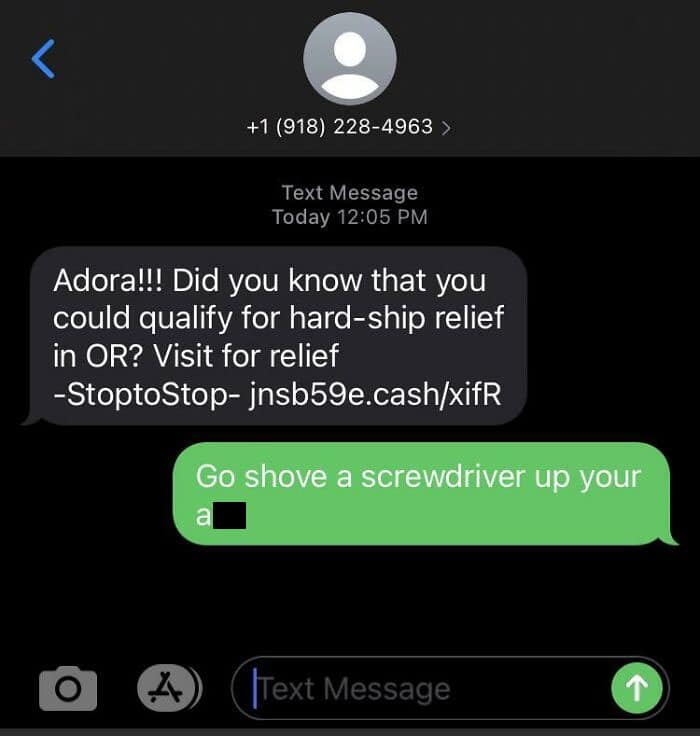
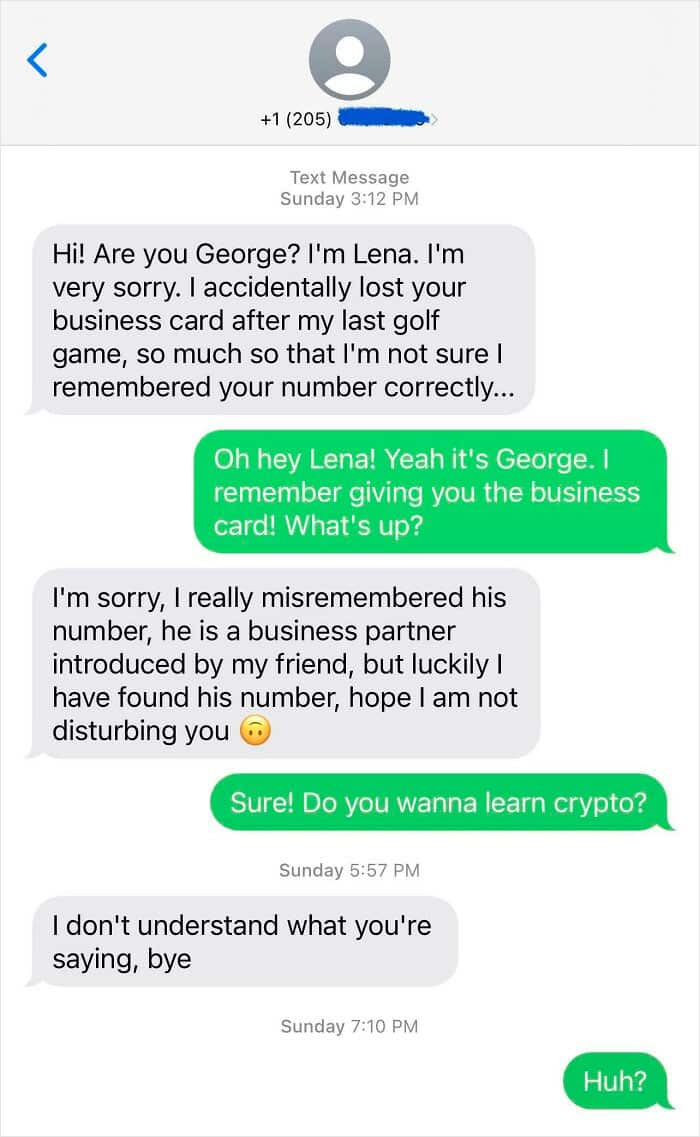
18. "I Finally Received One Of These! I Feel Like A Full Member Of Society Now"
Experts recommend that individuals regularly update their cybersecurity practices to protect against scams. For instance, the National Institute of Standards and Technology (NIST) suggests using strong, unique passwords and enabling two-factor authentication to add an extra layer of security.
Implementing these measures can significantly reduce the risk of falling victim to online fraud.
19. "When You Just Know So You Reverse The Roles"
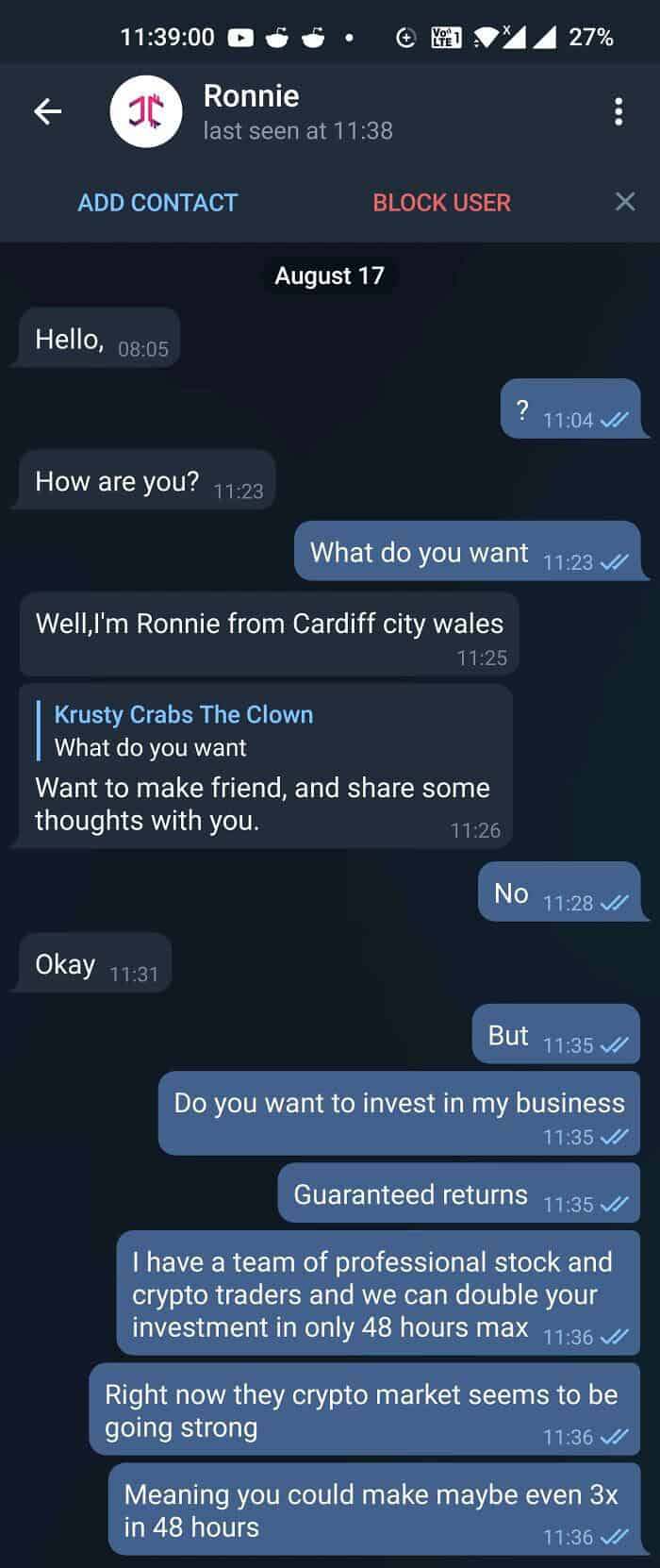
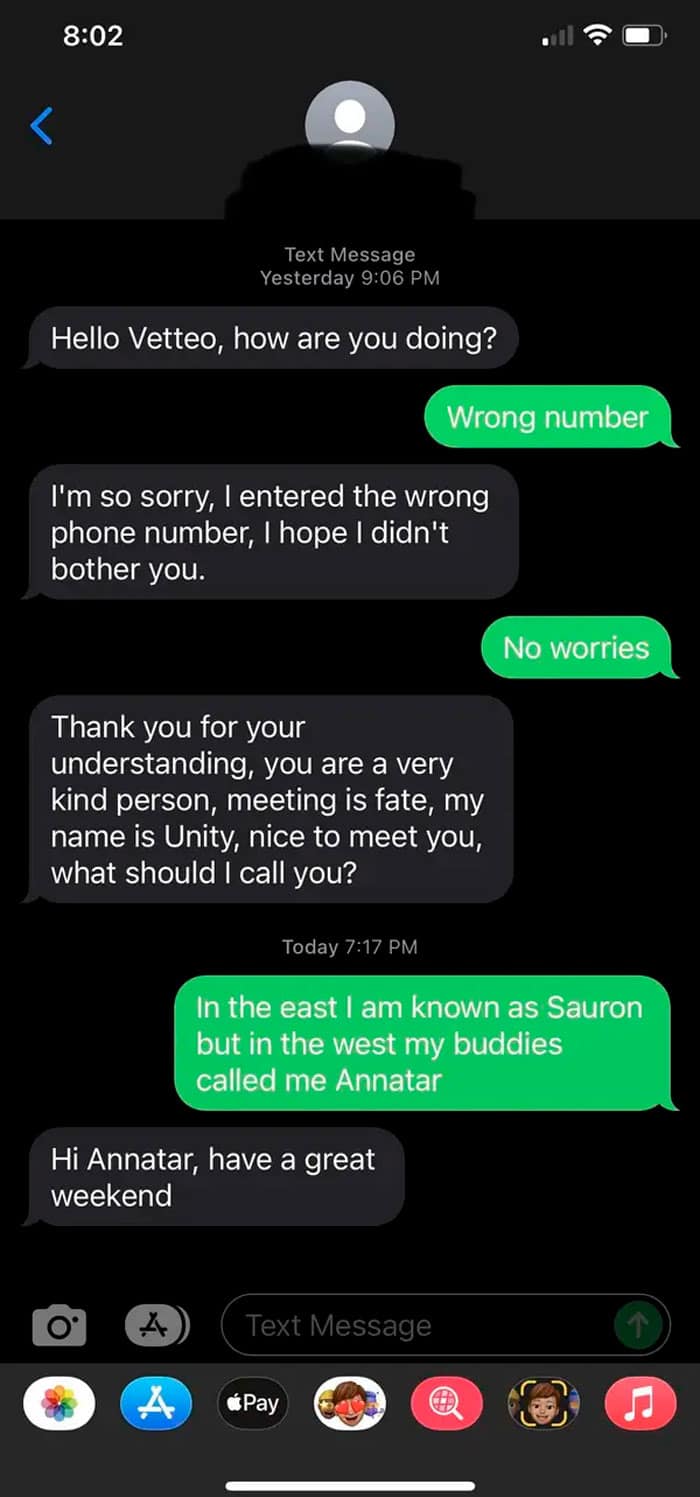
20. "The Person Who Found A Scammer Willing To Go To The End Of Middle-Earth To Scam Them"
21. "Update, My Friend Did In Fact Get A Text. Details Inside"
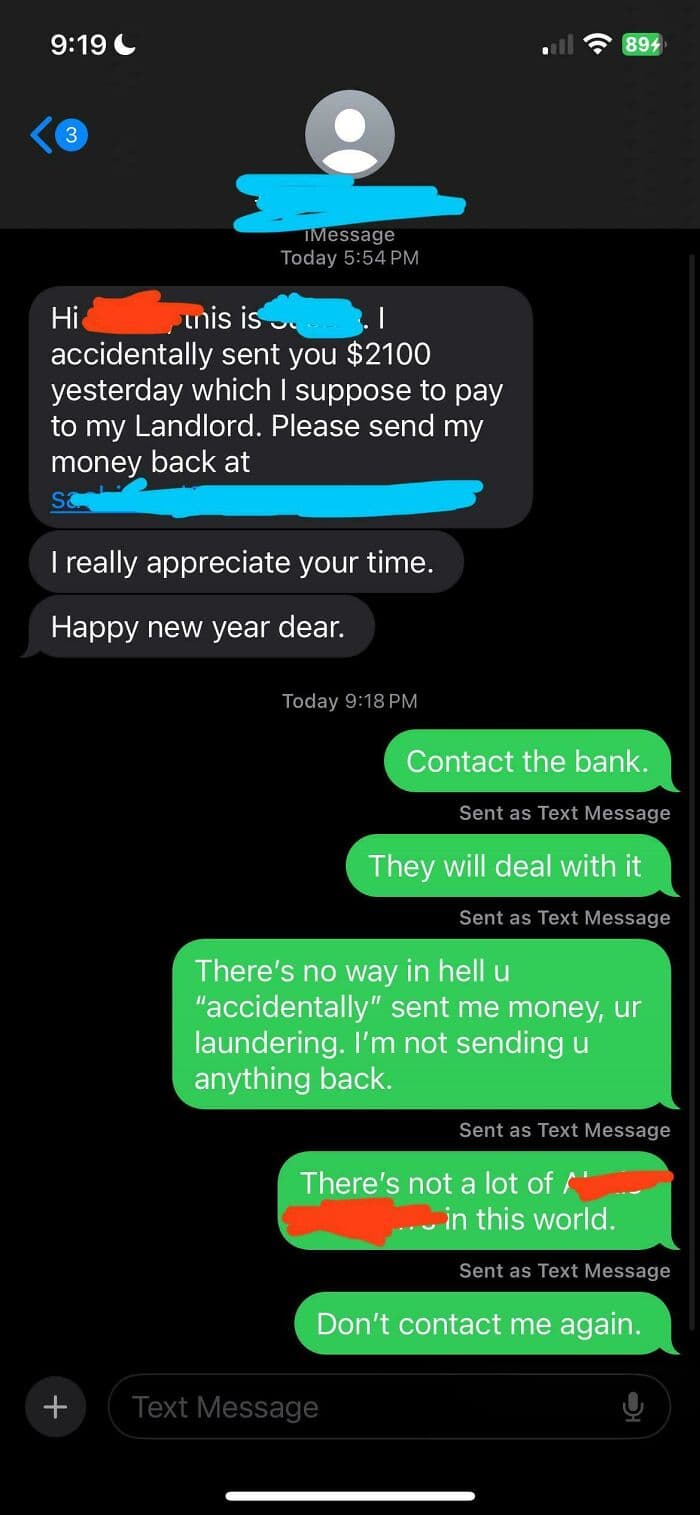
Learning from Scam Victims
Listening to the stories of scam victims can provide invaluable insights into the tactics used by con artists. Dr. Jennifer Holland, a wildlife journalist and author, emphasizes the importance of sharing these experiences to raise awareness and educate others.
By creating forums for victims to share their stories, communities can collectively learn and develop strategies to protect themselves and others from similar situations.
22. "They Didn’t Even Try"
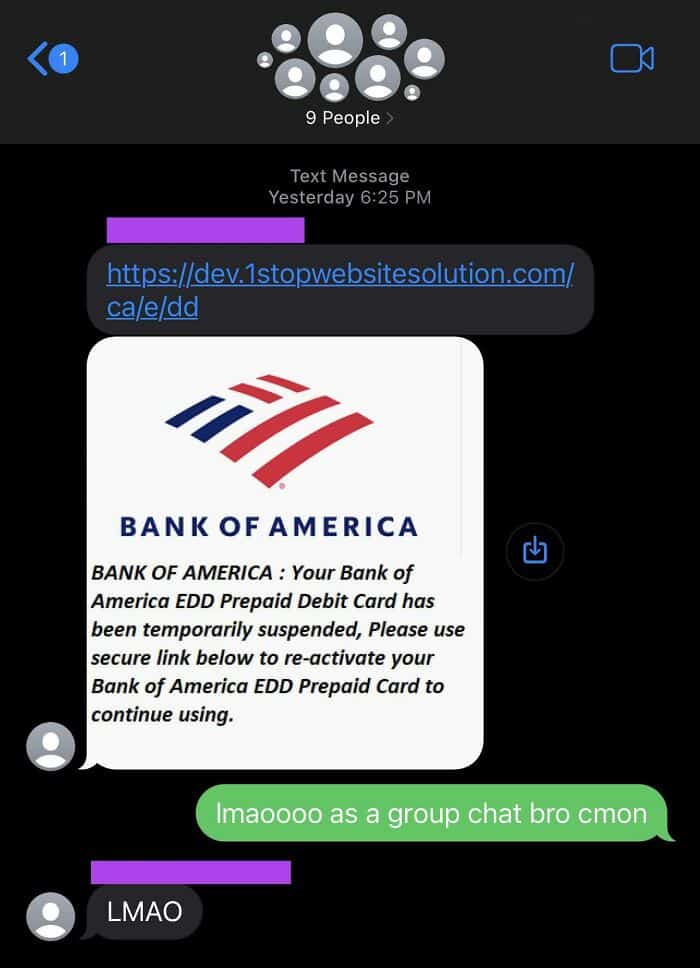
23. "I Hate When Scammers Don’t Do The Smallest Bit Of Research Ahead Of Time"
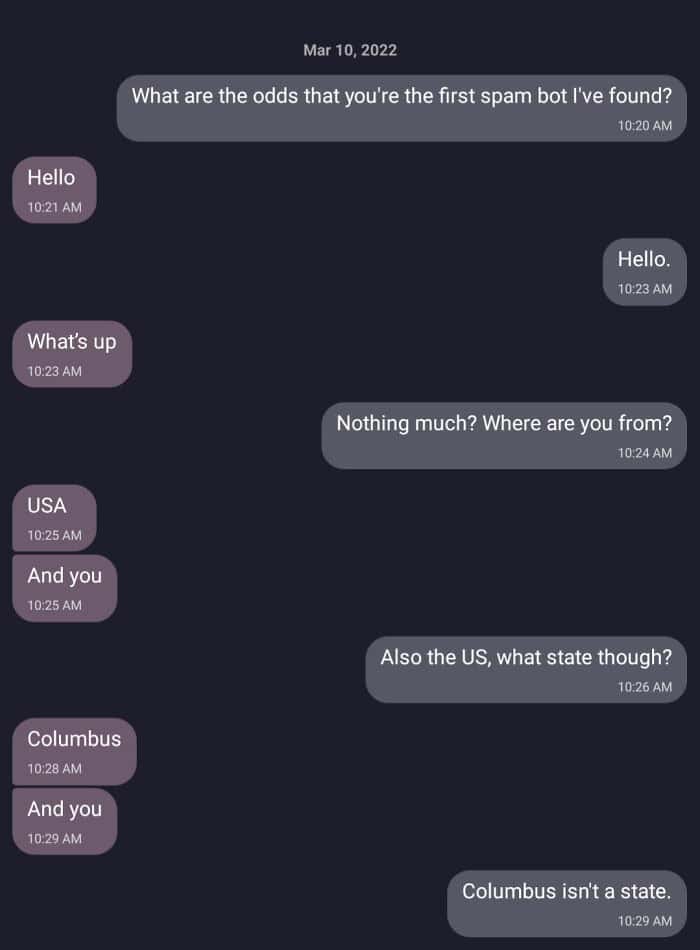
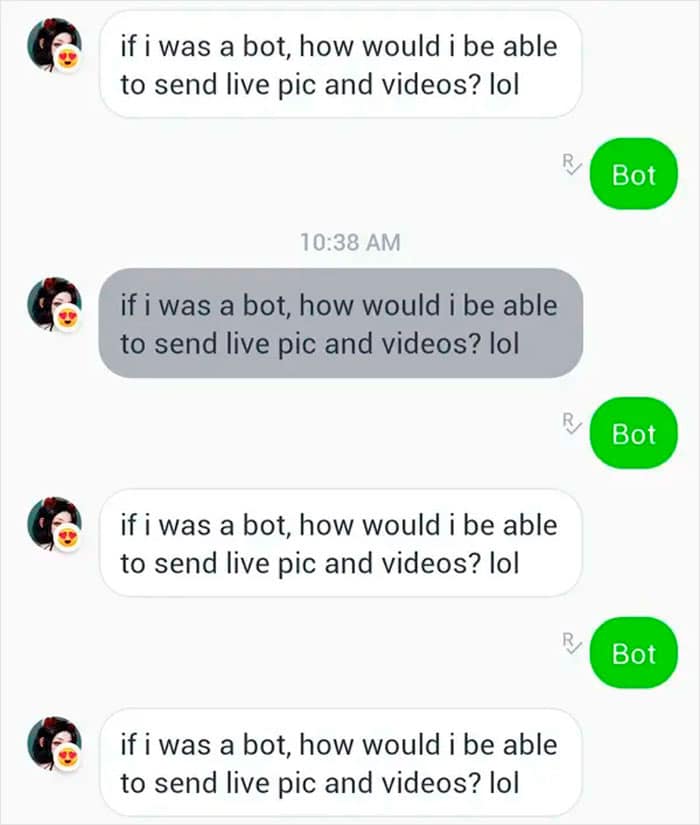
24. "The Person Who Definitely Wasn’t Talking With A Bot"
Media experts highlight the role of storytelling in engaging audiences around the issue of scams. Katie Couric, an accomplished journalist, asserts that personal narratives can humanize the issue, making it more relatable and impactful.
By presenting stories in accessible formats, media can foster empathy and encourage proactive behavior among viewers.
25. "The Person Who Was Kind Enough To Connect A Scammer With Some Other Scammers"
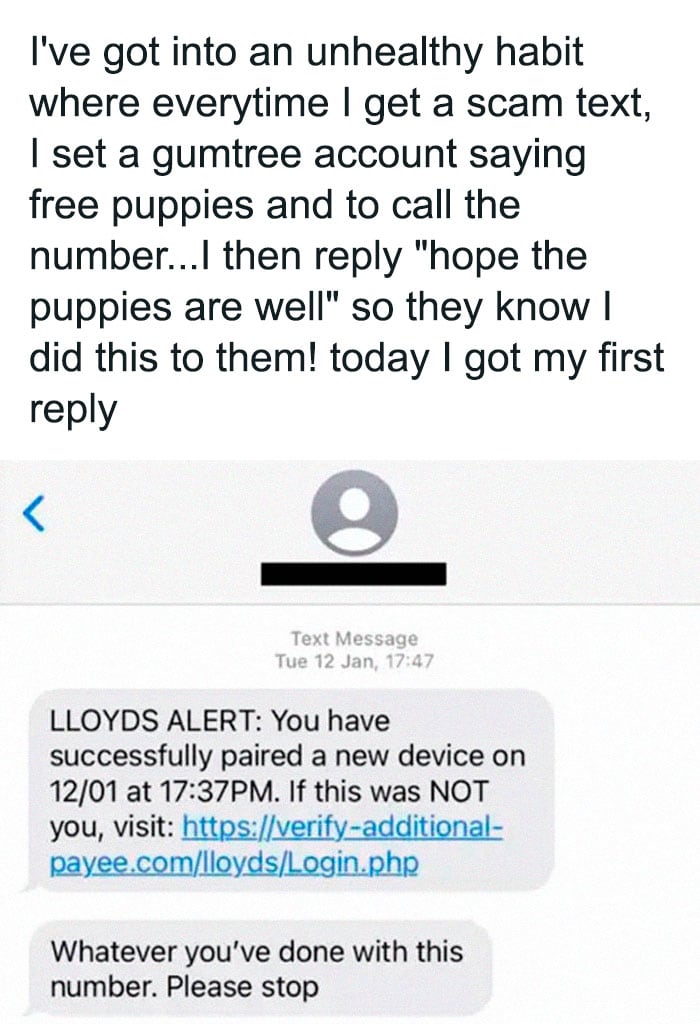
26. "It’s Not A Story The Scammers Would Tell You…"
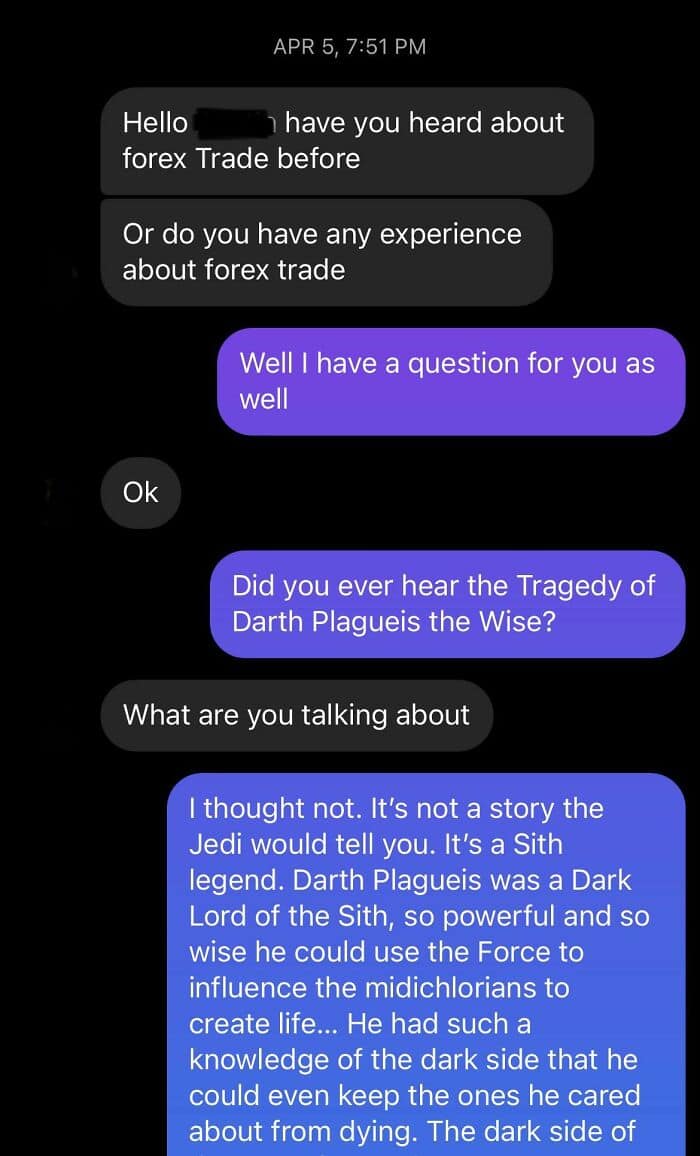
27. "Some Intense Scam, Be Aware!"
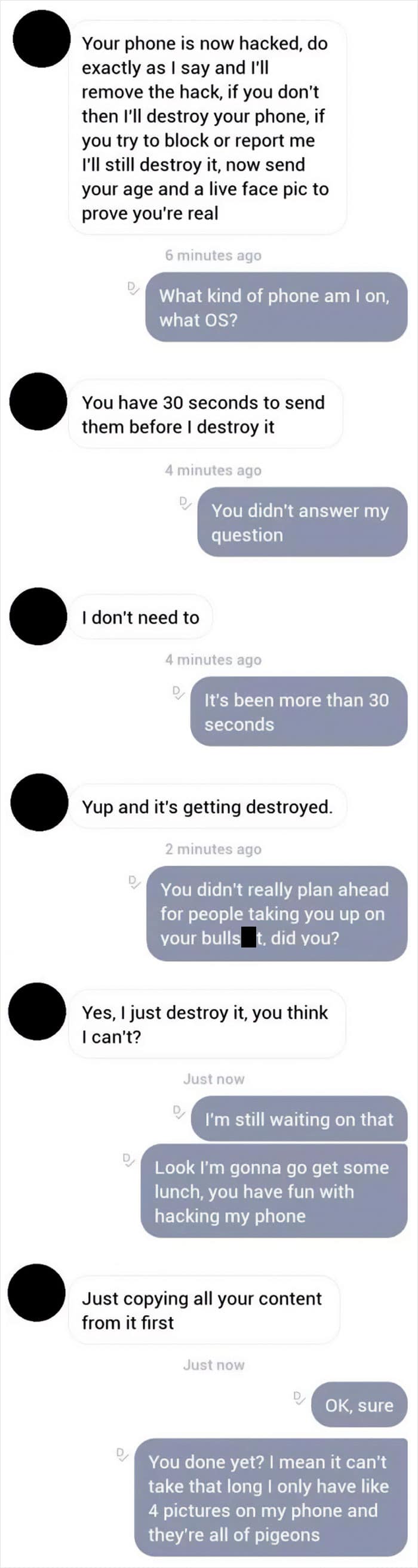
The Importance of Reporting Scams
Experts stress that reporting scams is essential for combating them effectively. Dr. Heather Cox Richardson, a historian, points out that without data on scams, law enforcement and policymakers can't create effective strategies to address these issues.
Encouraging individuals to report their experiences can help shape a clearer picture of the landscape of scams, ultimately leading to increased protections for consumers.
28. "I Can Tell He’s “Seriously"
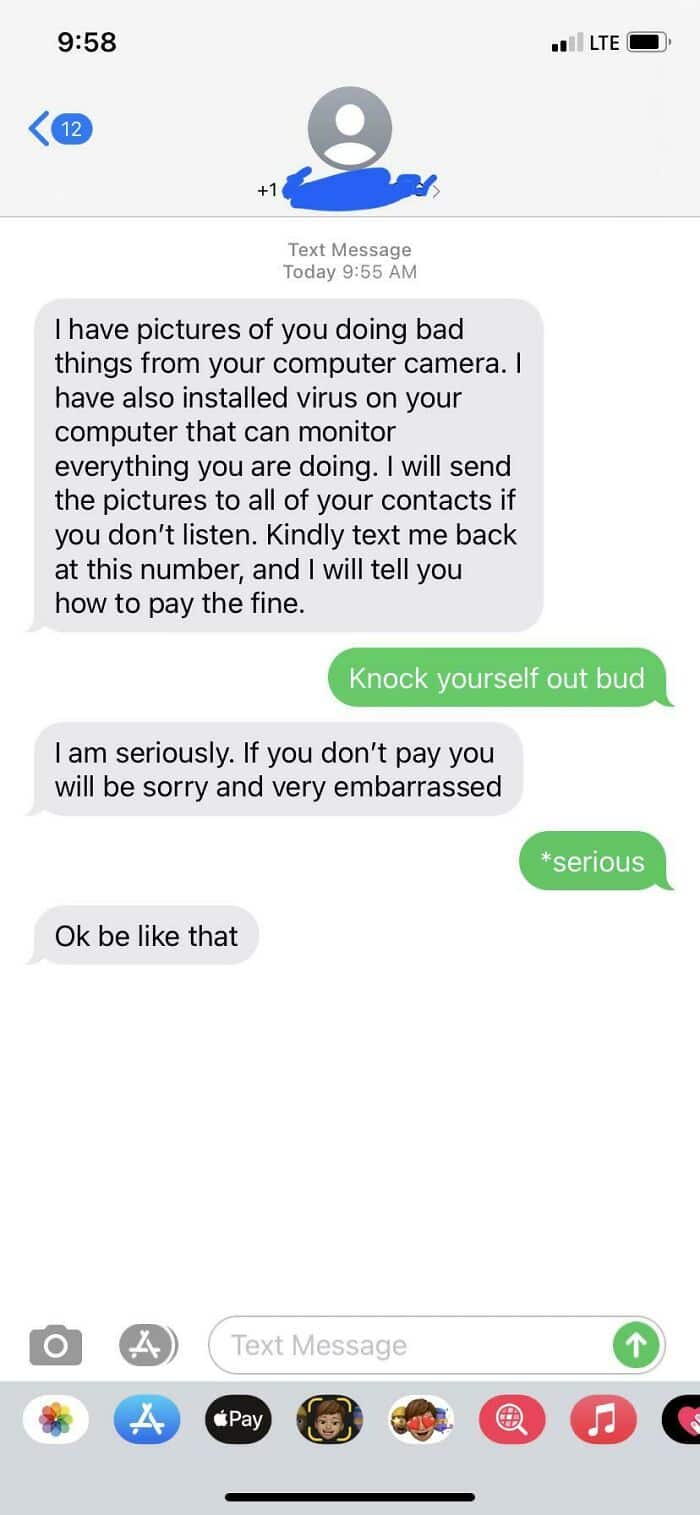
29. "Apple Pay Scammer Gets Pissed"
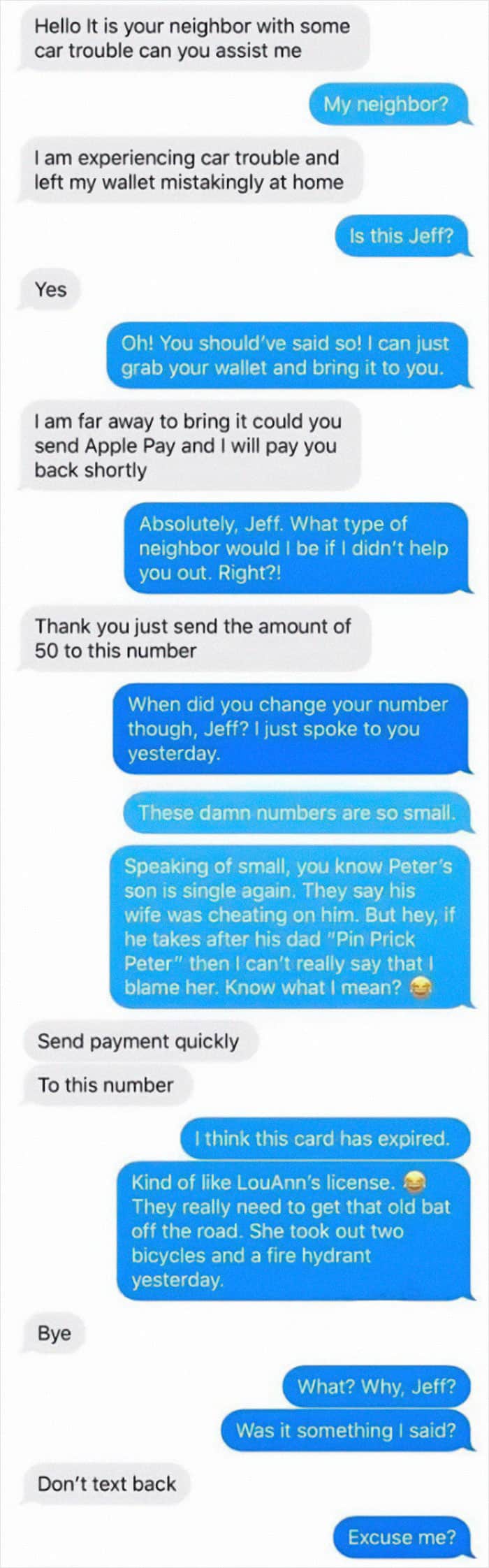
30. "This Sub Has Made Me Aware Of Literally Every Scam Before It Happens"
Financial literacy is a key component in preventing scams. According to the Jump$tart Coalition, achieving financial literacy empowers individuals to make informed decisions regarding their finances and recognize warning signs of scams.
By integrating financial education into school curriculums, society can better prepare future generations to navigate the complex world of personal finance safely.
31. "I Love Messing With Scammers. The Phone # Is A Spam Number That I Pulled From My Contacts"
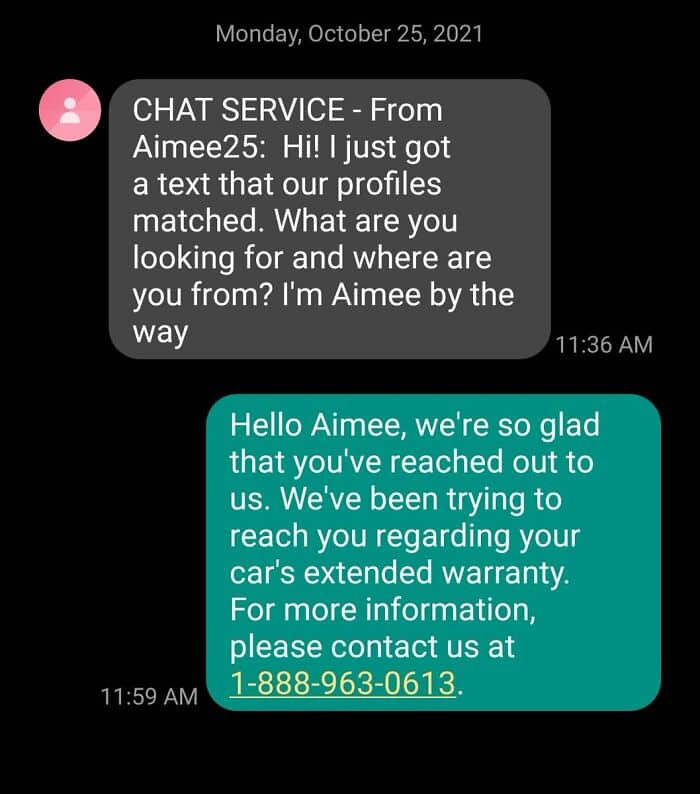
32. "Whatsapp Scam, I Don’t Know Why They Didn’t Respond?"
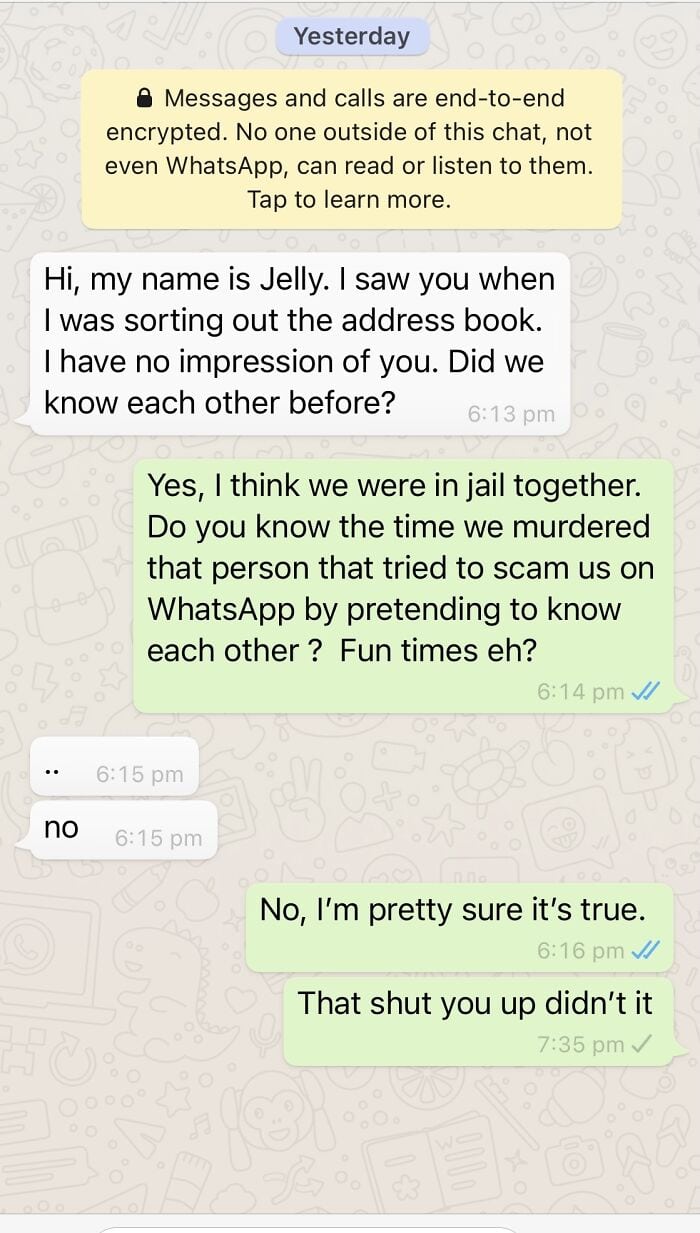
33. "What A Nice Lady"
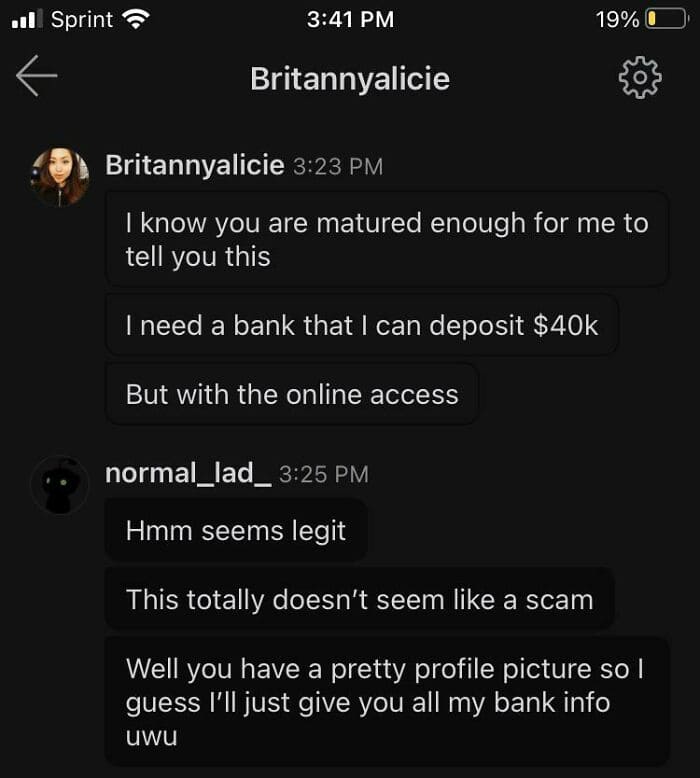
How to Spot a Scam
Experts suggest several key indicators to help identify scams. Dr. Patricia McConnell, an animal behaviorist, notes that high-pressure tactics, requests for personal information, and unsolicited offers are common red flags.
By being vigilant and skeptical, individuals can protect themselves from falling prey to these deceptive practices while fostering a culture of caution among peers.
34. "Kindly Hit Her With That Uno Reverse Card"
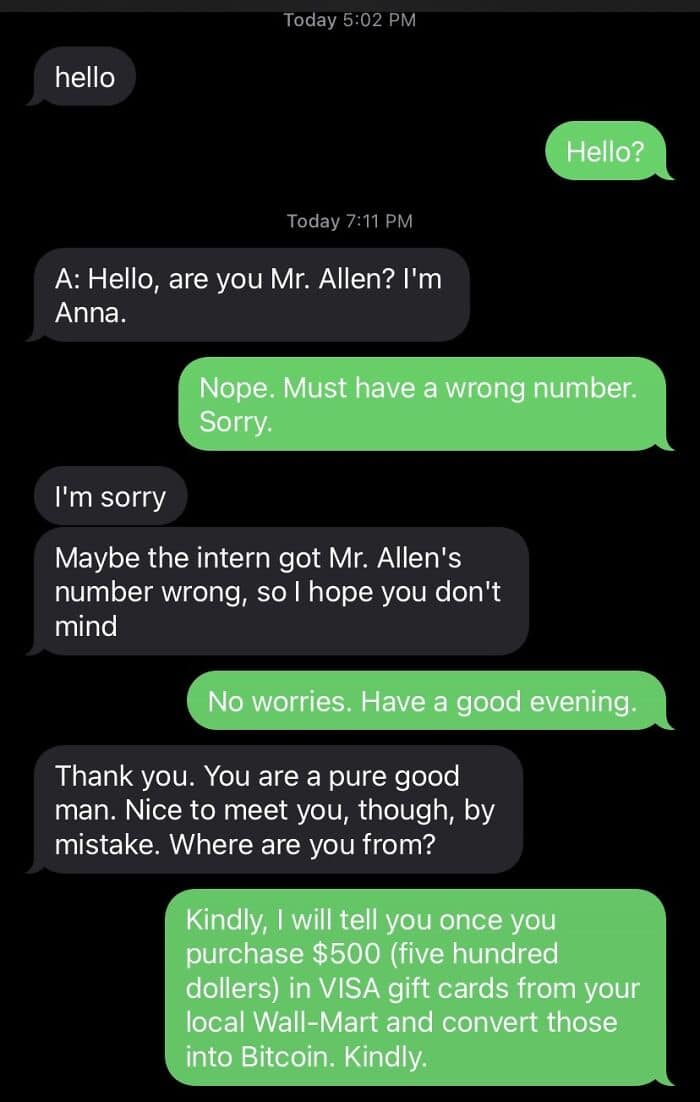
35. "These Scams Are Getting Complex"
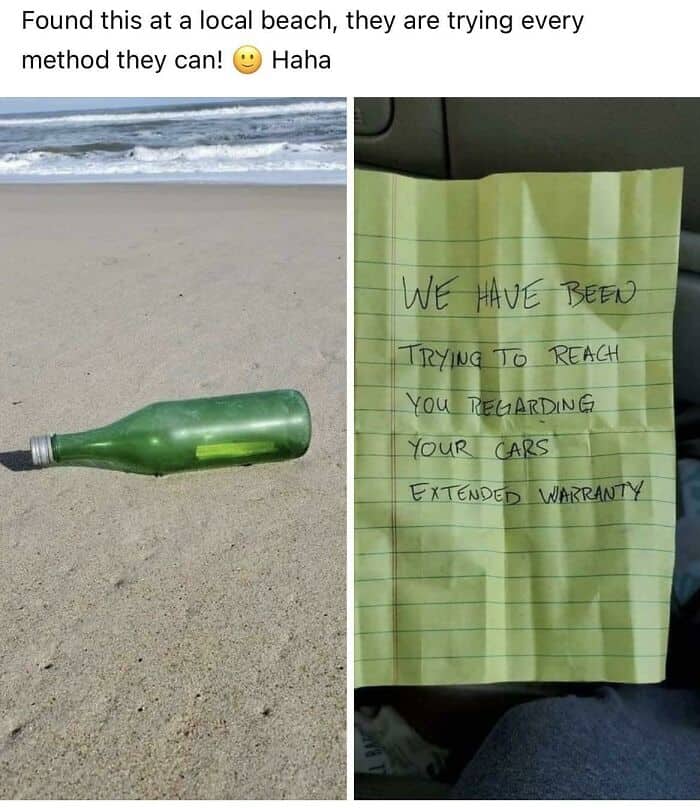
36. "Kevin???"
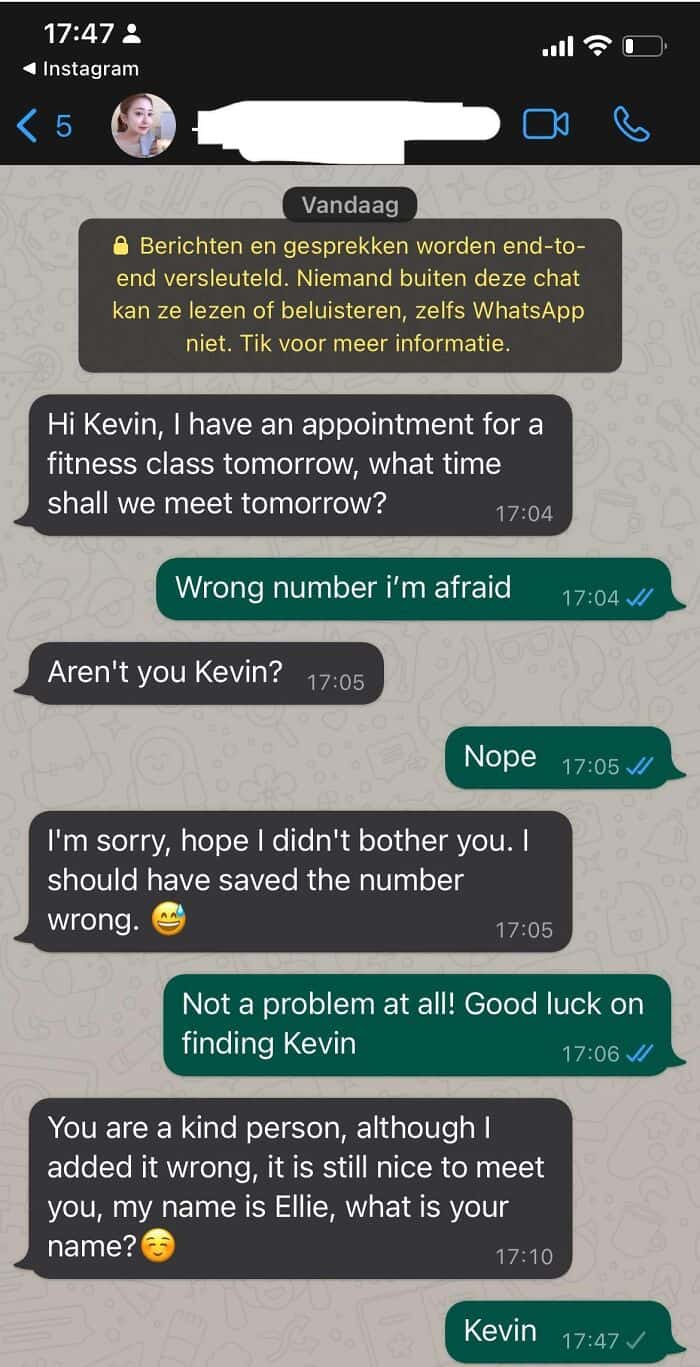
Social media platforms have a responsibility to combat scams on their sites. Facebook's Community Standards aim to promote safety and prevent scams, but users also play a vital role in reporting suspicious activity.
By actively participating in these efforts, users can contribute to a safer online environment for everyone.
37. "If Messing With Scammers Is Wrong I Don’t Want To Be Right"
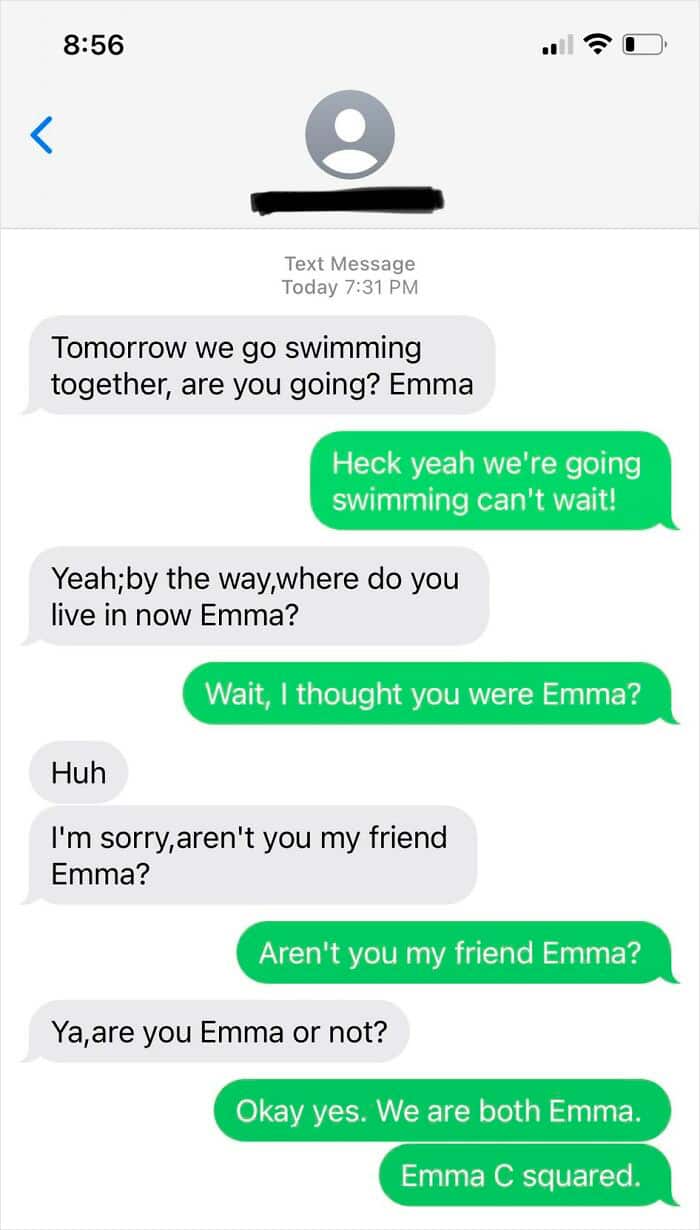
38. "Meatball"

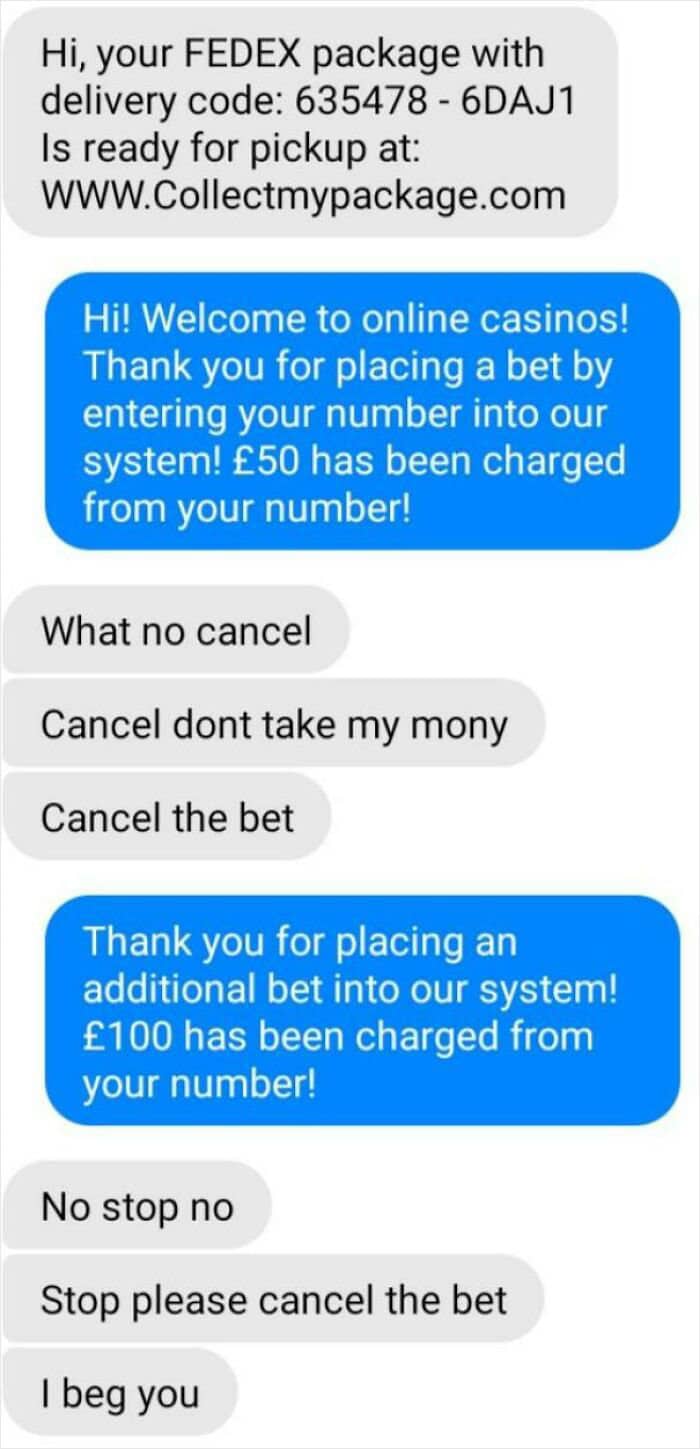
39. "Got A Message From A Scammer, Decided To Play With 'Em A Little"
Building Resilience Against Scammers
Building resilience is essential in navigating the tricky landscape of online scams. Dr. Brené Brown, a research professor, emphasizes the importance of vulnerability and courage in discussing personal experiences with scams.
By sharing these stories, individuals help break the stigma and encourage others to seek help, ultimately fostering a more supportive community.
40. "If You Weren’t 100% Convinced These People Aren’t Pieces Of S**t"
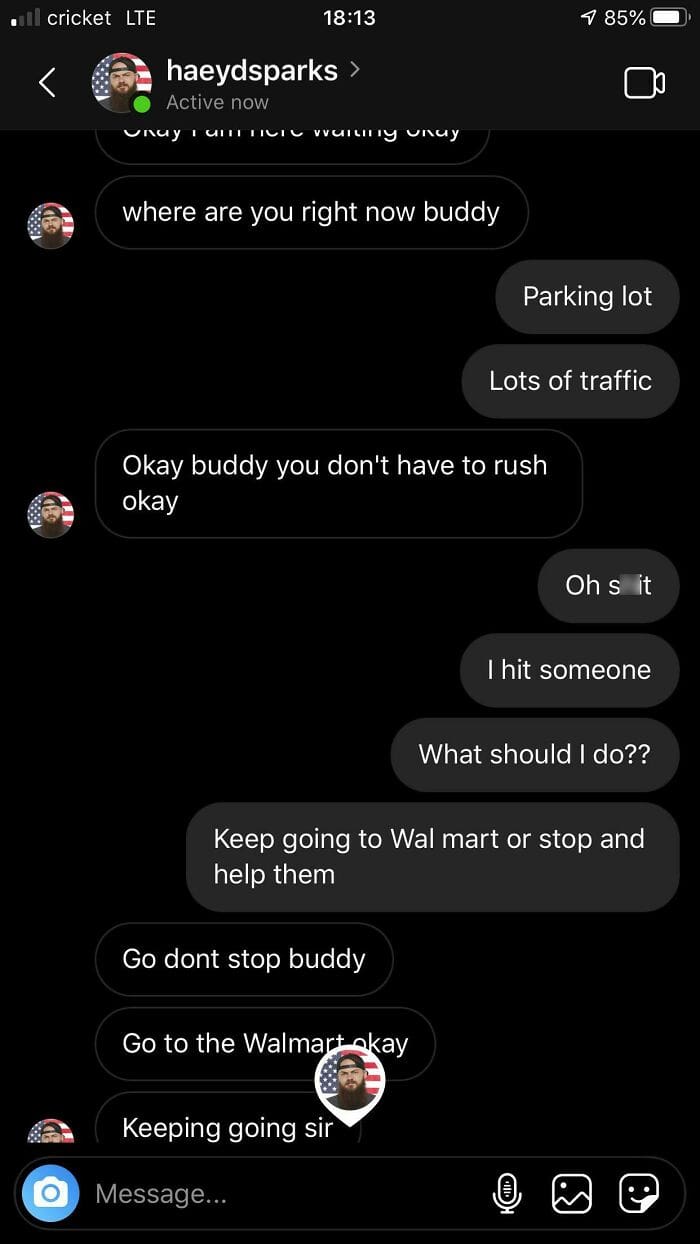
41. "A Pleasant Conversation I Had With A Whatsapp Scammer Today"

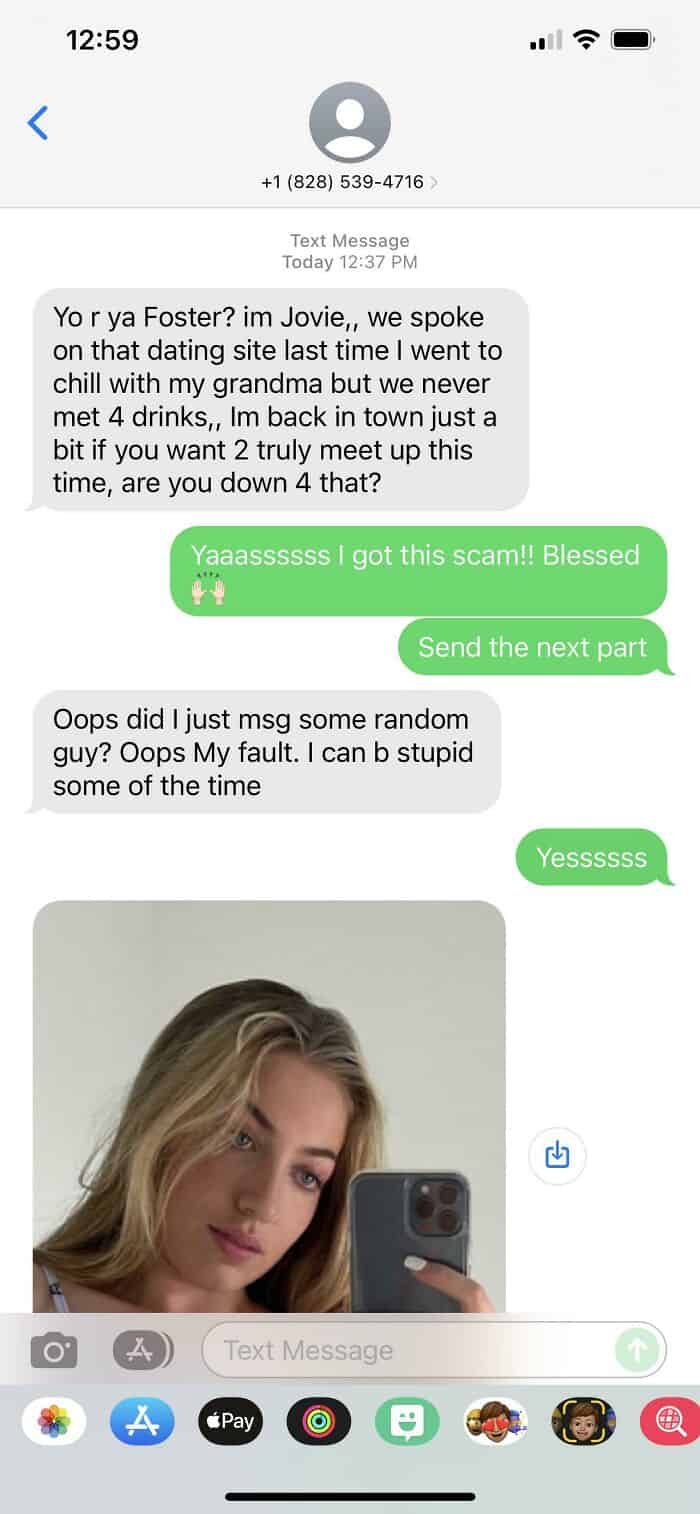
42. "It Finally Happened! I Got The Text! I Really Never Thought I’d Get This Text. #blessed"
Experts advise that critical thinking is crucial in avoiding scams. According to Dr. Carol Dweck, a motivation researcher, fostering a growth mindset can aid individuals in questioning assumptions and evaluating information critically.
Encouraging this mindset can empower people to be more discerning consumers, reducing the likelihood of falling victim to scams.
43. "Have Suddenly Been Receiving Lots Of Fake Check Scams, Probably Because I Respond To All Of Them. This One Is Gold"
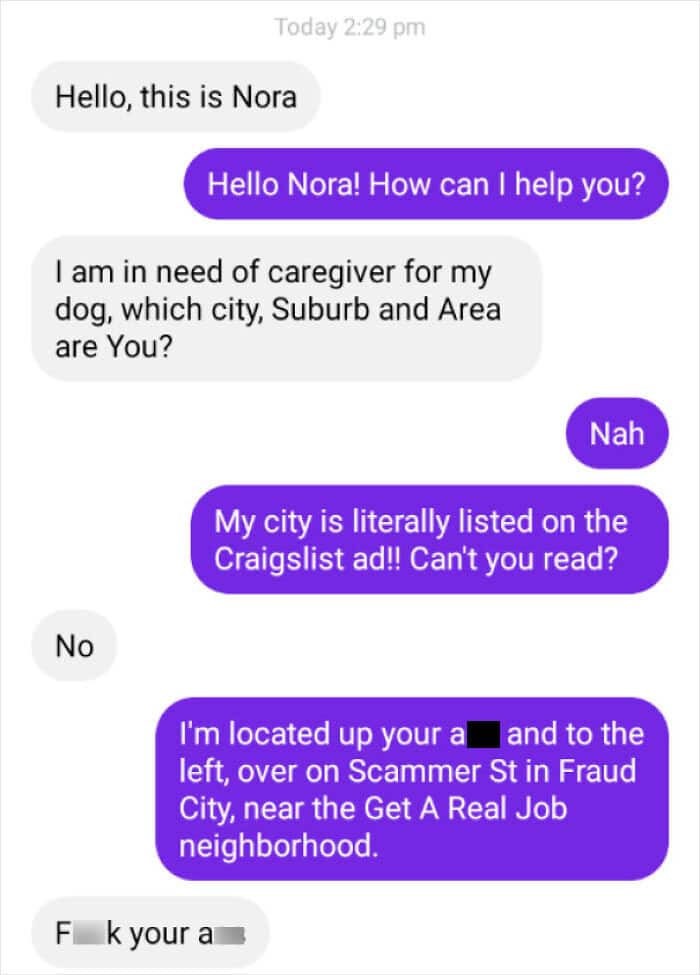
44. "What Is Going On Here? (Birthday Cake Message)"
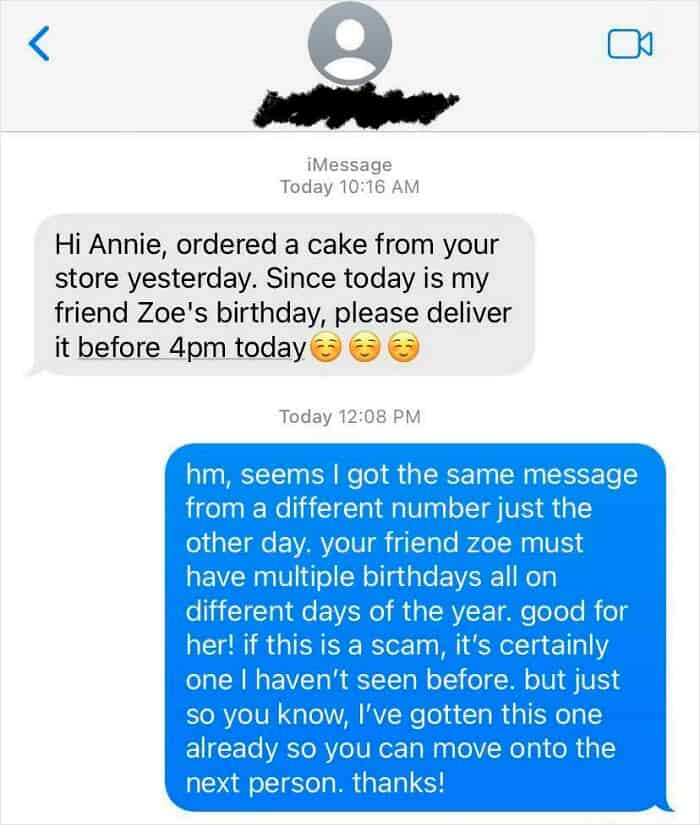
45. "I Just Caught This In The Wild"
The Impact of Scams on Victims
The psychological toll of falling victim to a scam can be profound. Dr. Judith Beck, a cognitive therapist, notes that victims often experience feelings of shame and embarrassment, which can hinder their recovery.
It’s essential for individuals to seek professional support and share their experiences with trusted friends to mitigate these feelings and facilitate healing.
46. "Very Bold"
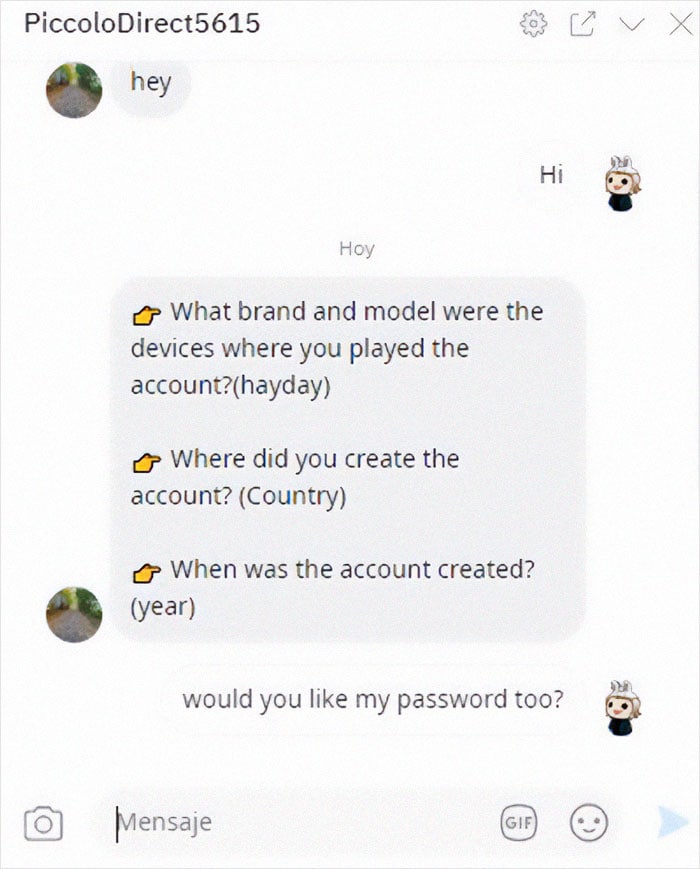
47. "I’m On The Books Guys. I Cannot Wait For My Appointment"
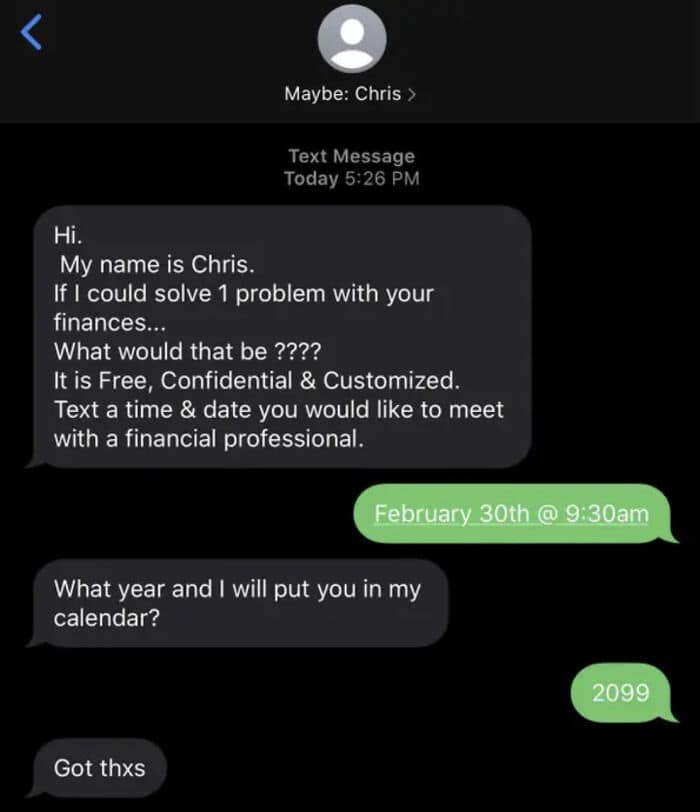
48. "Why Bother Making A Bot To Message This?"

Financial experts suggest that setting up alerts for suspicious account activity can help individuals stay ahead of potential scams. NerdWallet recommends using features offered by banks and credit cards to monitor transactions closely.
This proactive approach not only aids in detecting scams early but also helps individuals regain control over their financial well-being.
49. "I Used To Live In Los Angeles. I’ve Never Owned A House. I Get These Texts All The Time"

50. "Omg They Sent It Again"
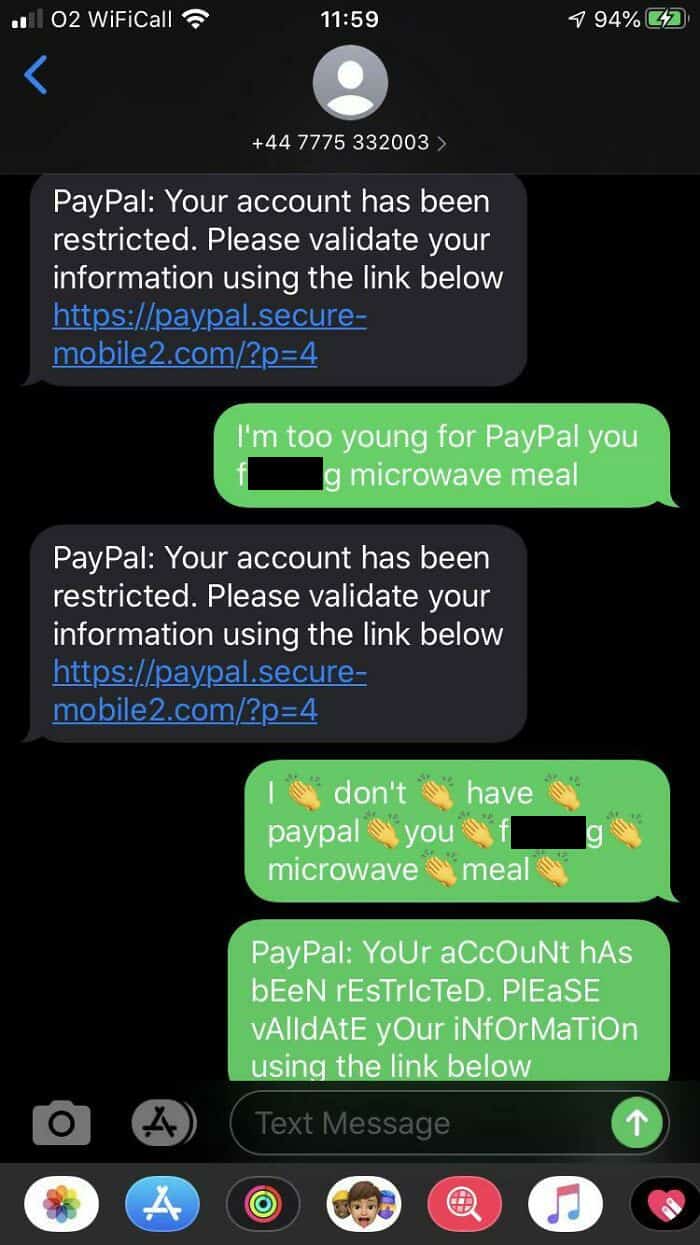
51. "Have A Cat With Similar Needs"
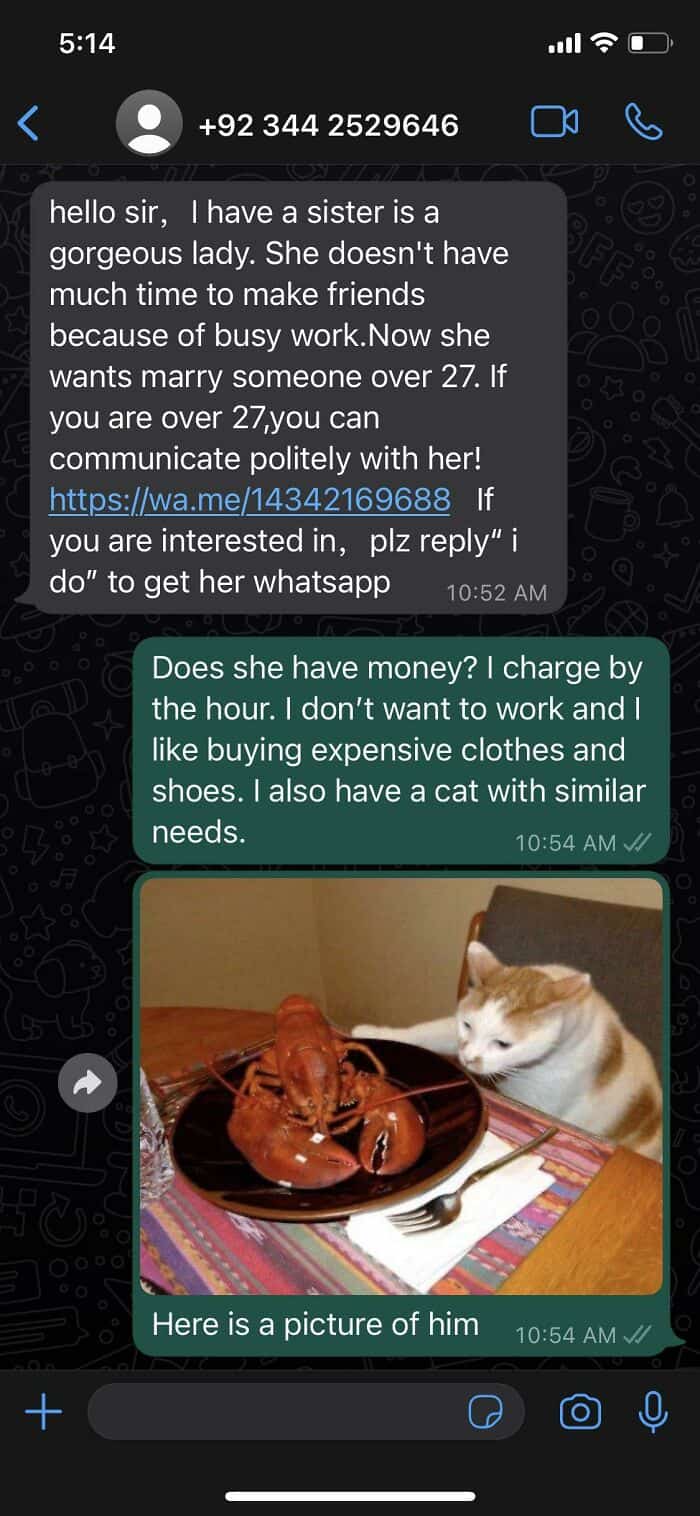
52. "The Person Who Made Sure The Scammer Was Well Fed"
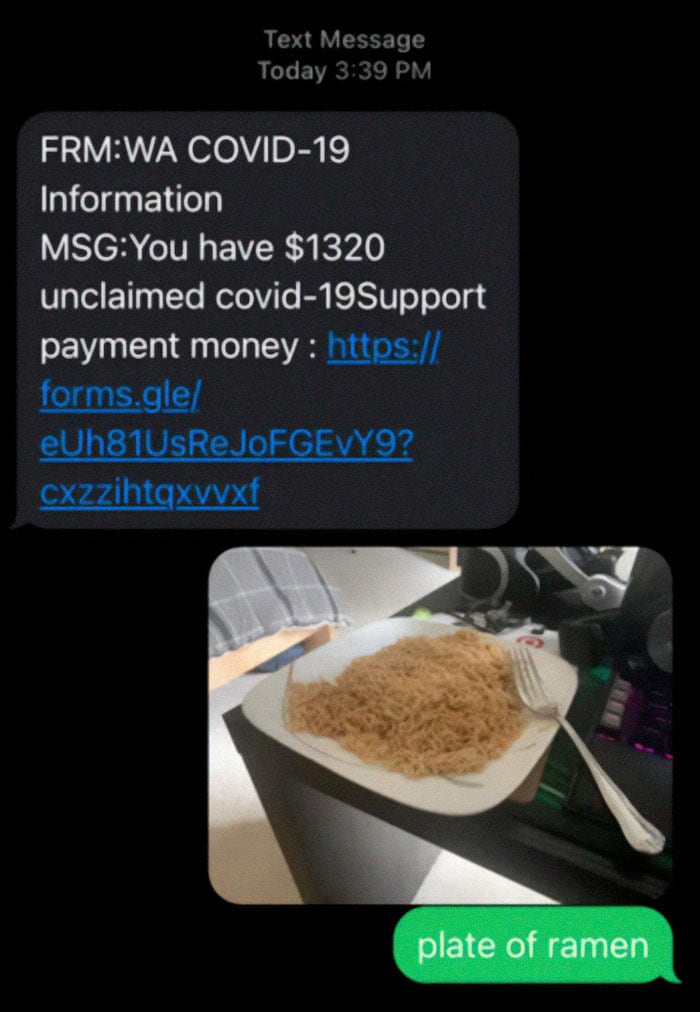
53. "Nice One Geoffrey"
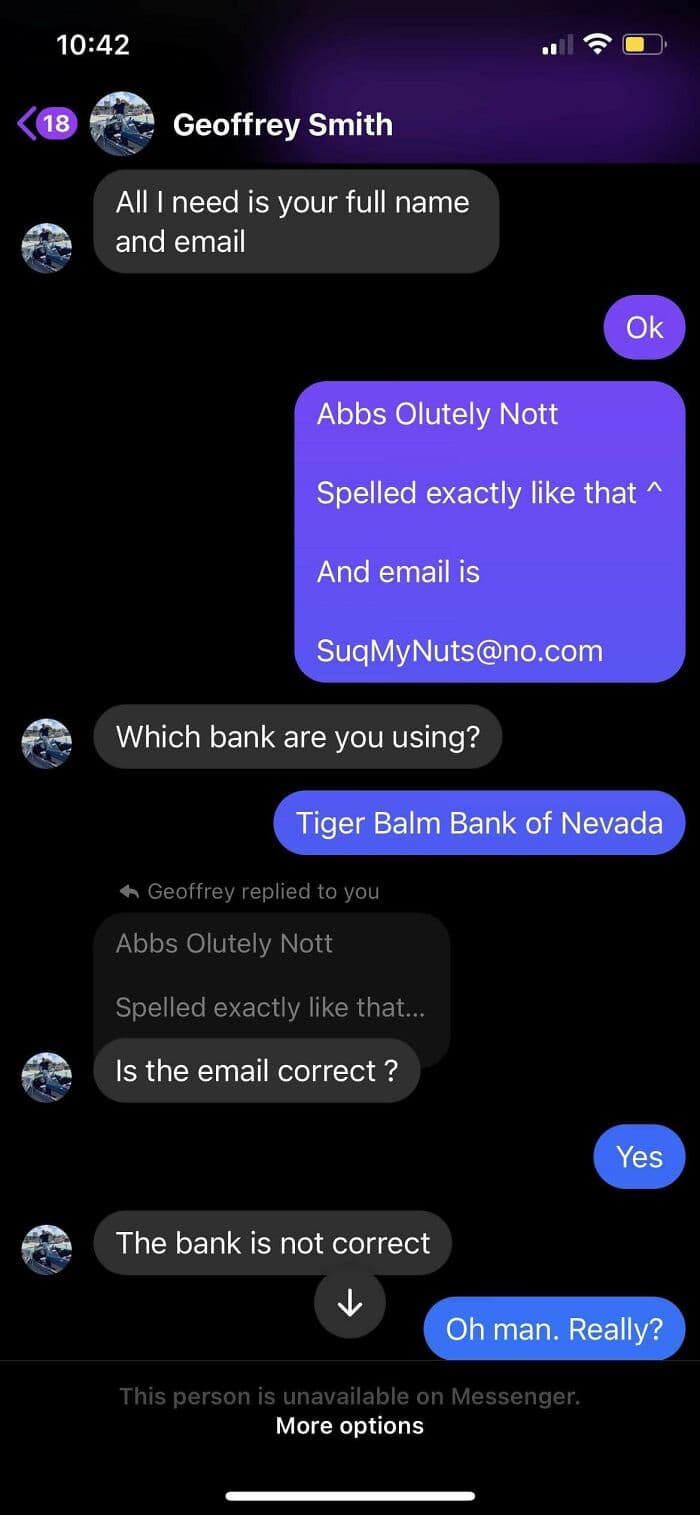
54. "I’m Sooo Tired Of This S**t"
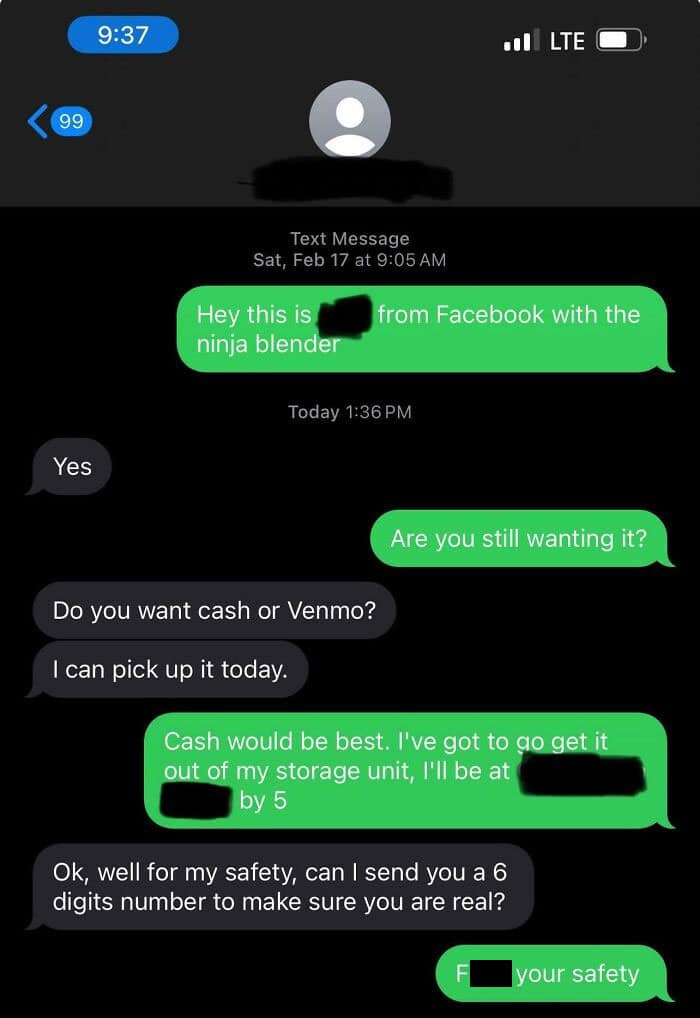
55. "The Person Who Deployed Eighth-Grade Humor To Great Effectiveness"
These stories highlight that the internet, despite its risks, can also be a place for creativity and humor. They demonstrate that with some cleverness, we can tackle online challenges and turn them into amusing tales.
So, the next time you receive a suspicious message, think of these stories—they might bring a smile to your face and boost your confidence in handling the digital world.
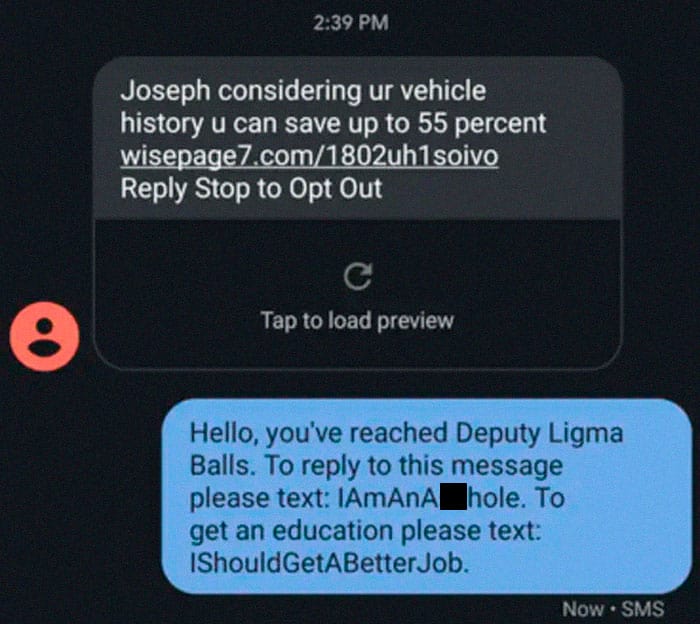
Understanding the tactics used by scammers and sharing personal experiences can significantly empower individuals to protect themselves. Experts emphasize that community support, education, and vigilance are crucial in combating scams.
By fostering a culture of awareness and promoting financial literacy, we can create a safer online environment for everyone. Remember, the best defense against scams is knowledge, so stay informed and share your insights with others.